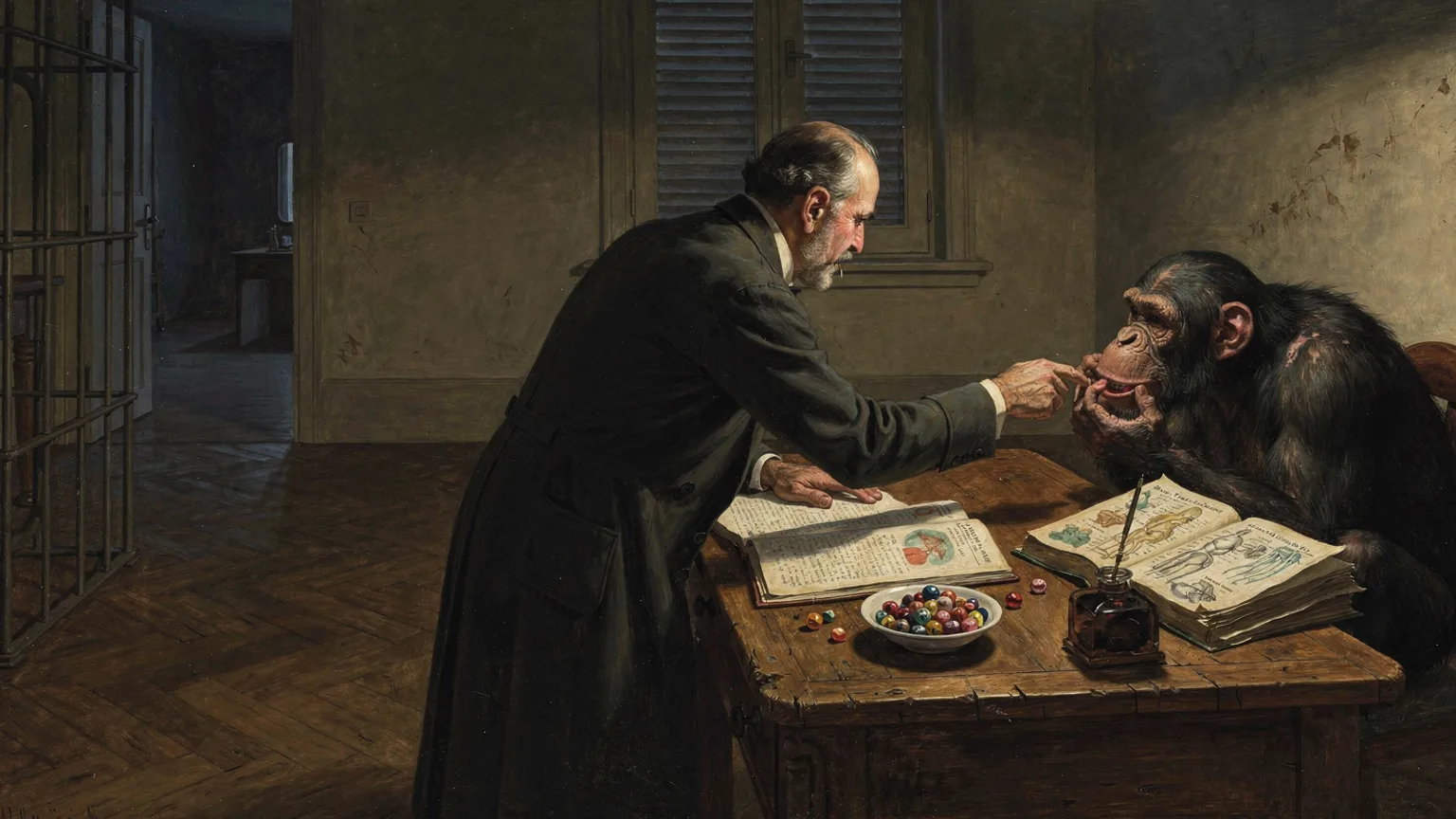
Yzur
About this story
A ruined circus goes under the hammer, and a hard-headed merchant walks away with a chimpanzee named Yzur — and a strange conviction: that monkeys are not beasts but fallen men, creatures who long ago renounced speech to escape the yoke of labor, and so fell silent forever. For years he drills the animal's lips and tongue, bribing each vowel with a sweet, certain he can coax the first word back across a million years of instinct. Then one night the cook swears he heard Yzur talk. What follows is a chilling parable of language, cruelty and the hunger to dominate. Written in 1906 by Leopoldo Lugones — hailed by Borges as «the greatest Argentine writer» — it is a founding text of Latin American fantastic fiction.
By the numbers
About the author
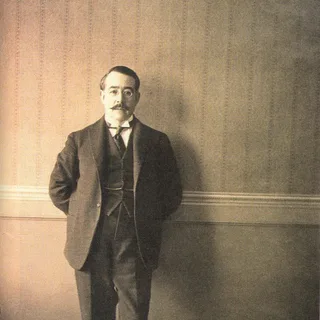
Leopoldo Lugones (1874–1938) was an Argentine poet, essayist and short-story writer, widely regarded as the leading figure of Spanish-American modernismo after Rubén Darío and, in Borges's phrase, «the greatest Argentine writer». His signature works include the poetry collections «Las montañas del oro» (1897) and «Lunario sentimental» (1909), and the short-story collection «Las fuerzas extrañas» (1906). «Yzur» belongs to that 1906 volume, now recognized as a foundational text of Latin American fantastic literature and science fiction. In it Lugones fuses ornate modernista prose with pseudo-scientific speculation, a mode that directly shaped later writers such as Jorge Luis Borges and Julio Cortázar.
Recognition
Lugones was the greatest Argentine writer.
The only national case that influenced his work was «Las fuerzas extrañas» (1906) by Leopoldo Lugones, which already belongs to the twentieth century.
«Las fuerzas extrañas» is an example of perfection, both in its prose and in the plots of its stories.
«Yzur» stands out for its potential as a conceptual trigger for reflecting on language, on its conditions of possibility and its limits.
Practice typing
Type this retelling one piece at a time — your progress is saved as you go.
If you liked this
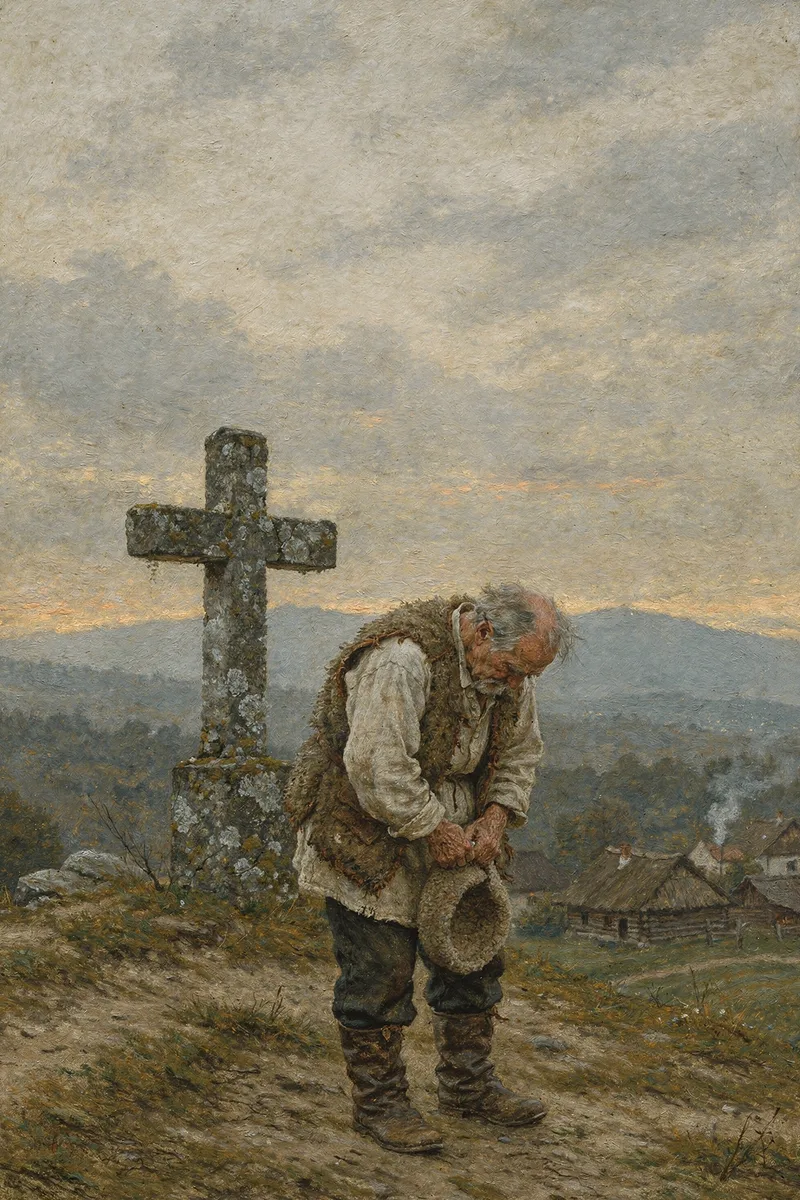
Ivan Didukh has spent his life breaking his back on a worthless sandy hill — the only land he inherited — until he is bent double and the village calls him «the Broken One».
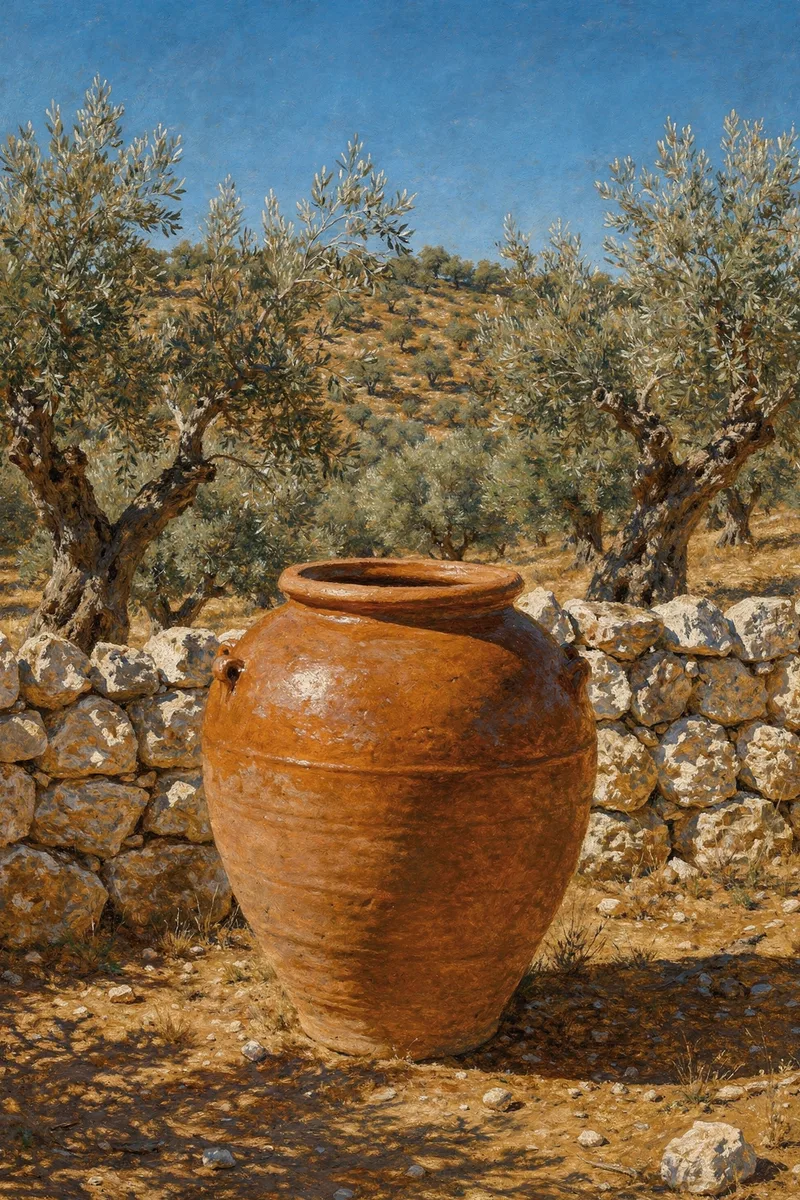
In the golden heat of the Sicilian olive harvest, the rich, miserly landowner Don Lollò Zirafa takes delivery of a magnificent new jar, taller than a man — only to find it split clean in two the very next morning.
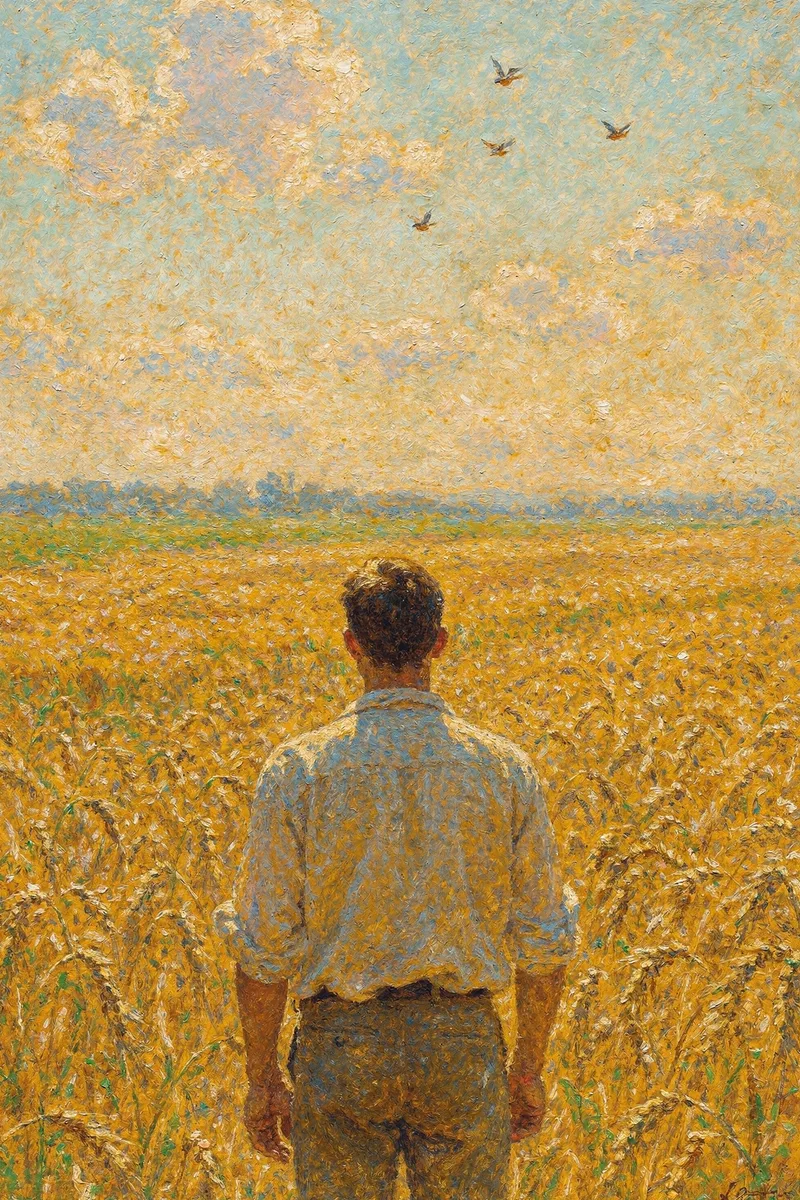
Worn down by the city and by the weight of other people's grief, a man flees to the quiet of the fields.
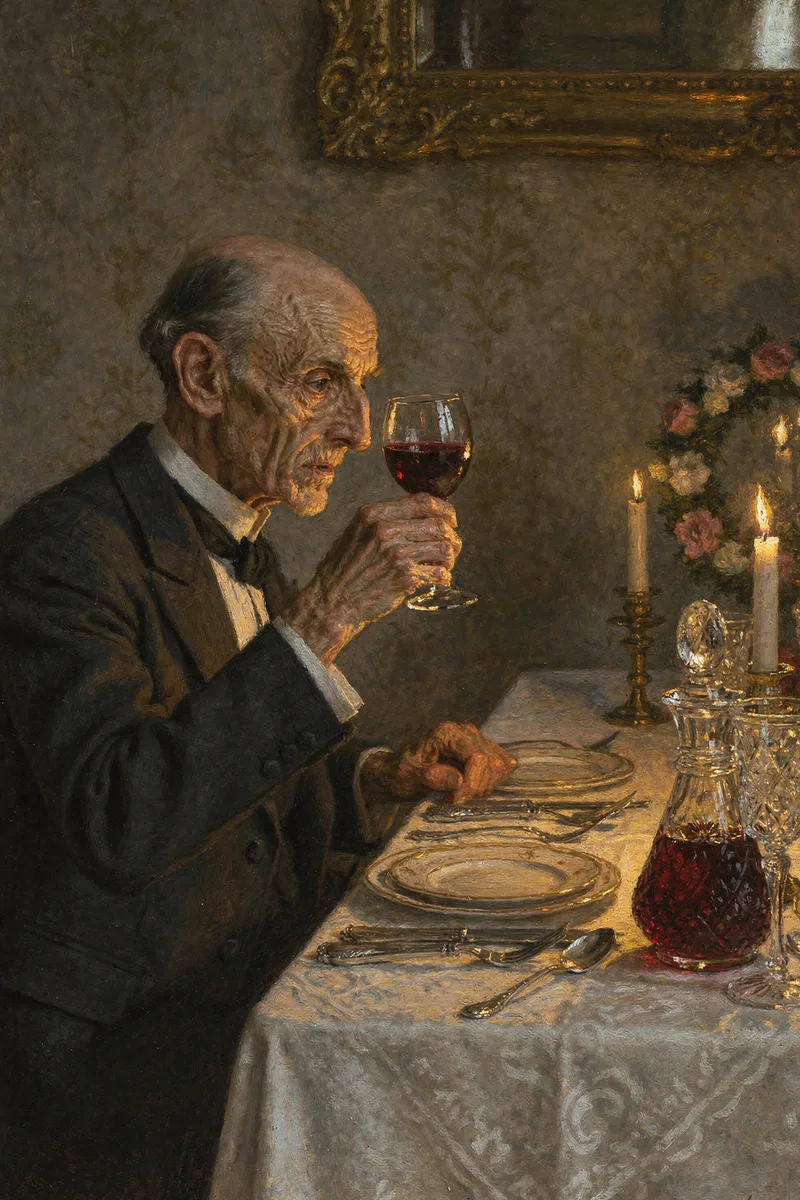
On the eve of a family wedding, an ailing old man is granted one night's freedom from his doctor's strict regime — and pours it, glass by glass, into a rebellion against age, illness and his own tenderness.