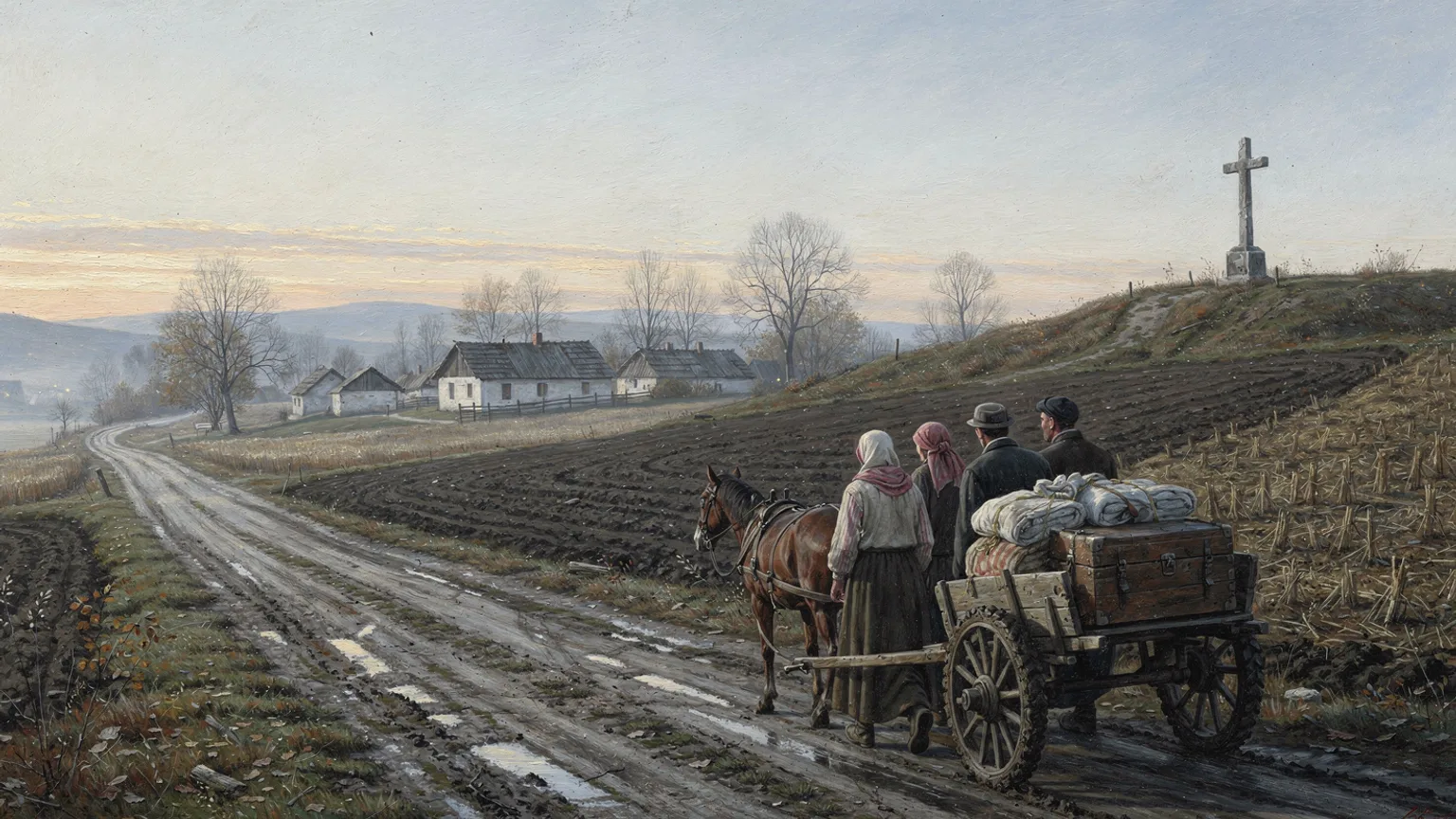
The Stone Cross
About this story
Ivan Didukh has spent his life breaking his back on a worthless sandy hill — the only land he inherited — until he is bent double and the village calls him «the Broken One». Now his sons are taking the family to Canada, and he must sell everything and leave forever both the hill and the stone cross he raised on it. Vasyl Stefanyk's «The Stone Cross» (1900) is the defining literary portrait of the great Ukrainian emigration: a farewell feast that turns into a wake for a man who is still alive. Stefanyk (1871–1936) is the master of the Ukrainian psychological short story.
By the numbers
About the author
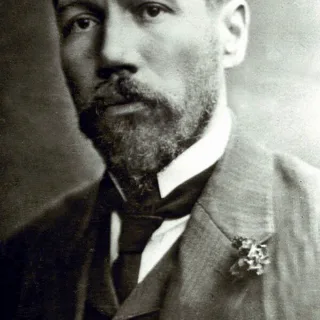
Vasyl Stefanyk (1871–1936) was a leading Ukrainian modernist and the acknowledged master of the short psychological 'novela', born to a peasant family in the village of Rusiv in Pokuttia, then part of Austro-Hungarian Galicia. In terse, tragic sketches rarely more than a few pages long — written in the living Pokuttian dialect of his native villagers — he distilled single crushing moments in the lives of the Western Ukrainian peasantry. His signature story «The Stone Cross» (1900) portrays the old farmer Ivan Didukh, who erects a stone cross on his hillside field as he prepares to emigrate to Canada, turning one family's departure into an image of irreversible loss. Stark, compassionate and unflinching, Stefanyk's expressionist prose remains a cornerstone of Ukrainian literature.
Recognition
Stefanyk was a master of a species of the short story genre, the Stefanyk novella, which is characterized by a succinct and highly dramatic form.
Stefanyk treated the theme of migrant labour and emigration to the New World in his collection of short stories «Synia knyzhechka» (The Blue Booklet) and the story «Kaminnyi khrest» (The Stone Cross).
The real-life prototype of Ivan Didukh was a fellow villager of the writer, Stefan Didukh, who emigrated with his family to Canada; the story depicts emigrant peasants bidding farewell to their native land at the turn of the twentieth century.
Practice typing
Type this retelling one piece at a time — your progress is saved as you go.
If you liked this
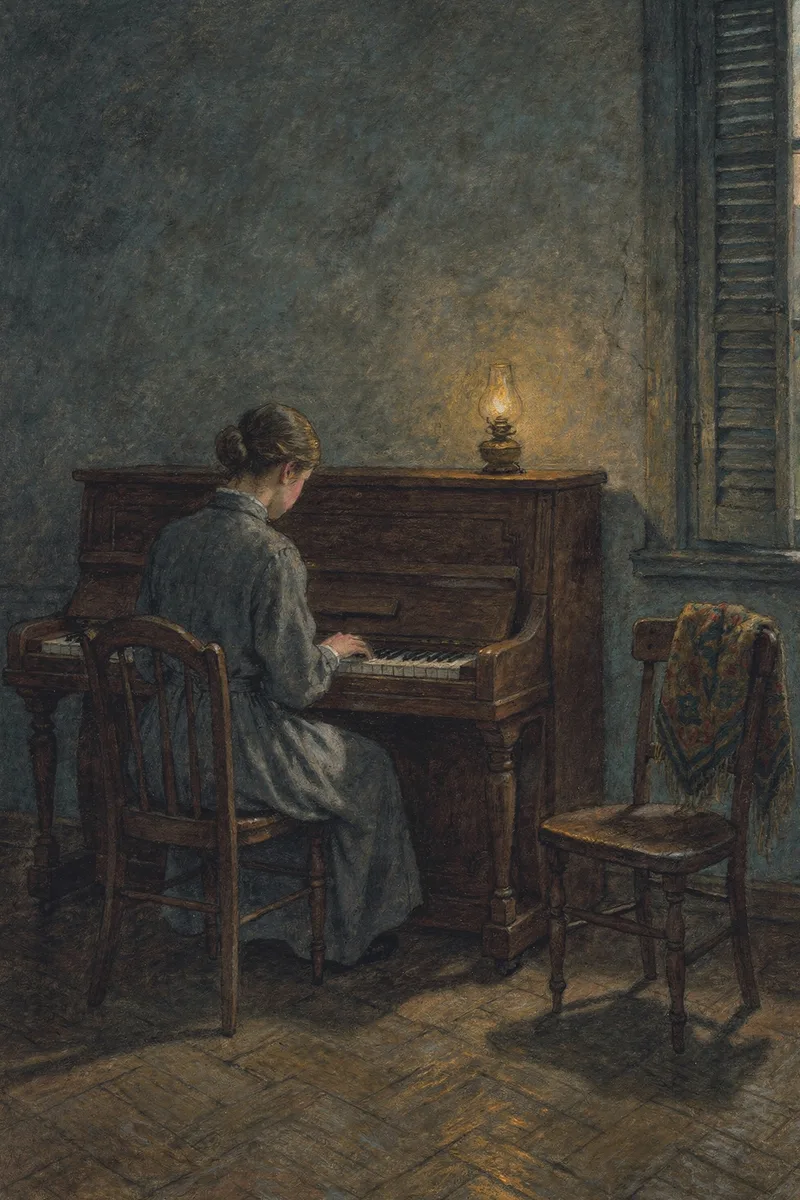
Three young women share a household in a town of 1890s western Ukraine: a painter who calls herself a «child of fortune», a quiet future schoolteacher, and a pianist who composes waltzes she refuses to write down.
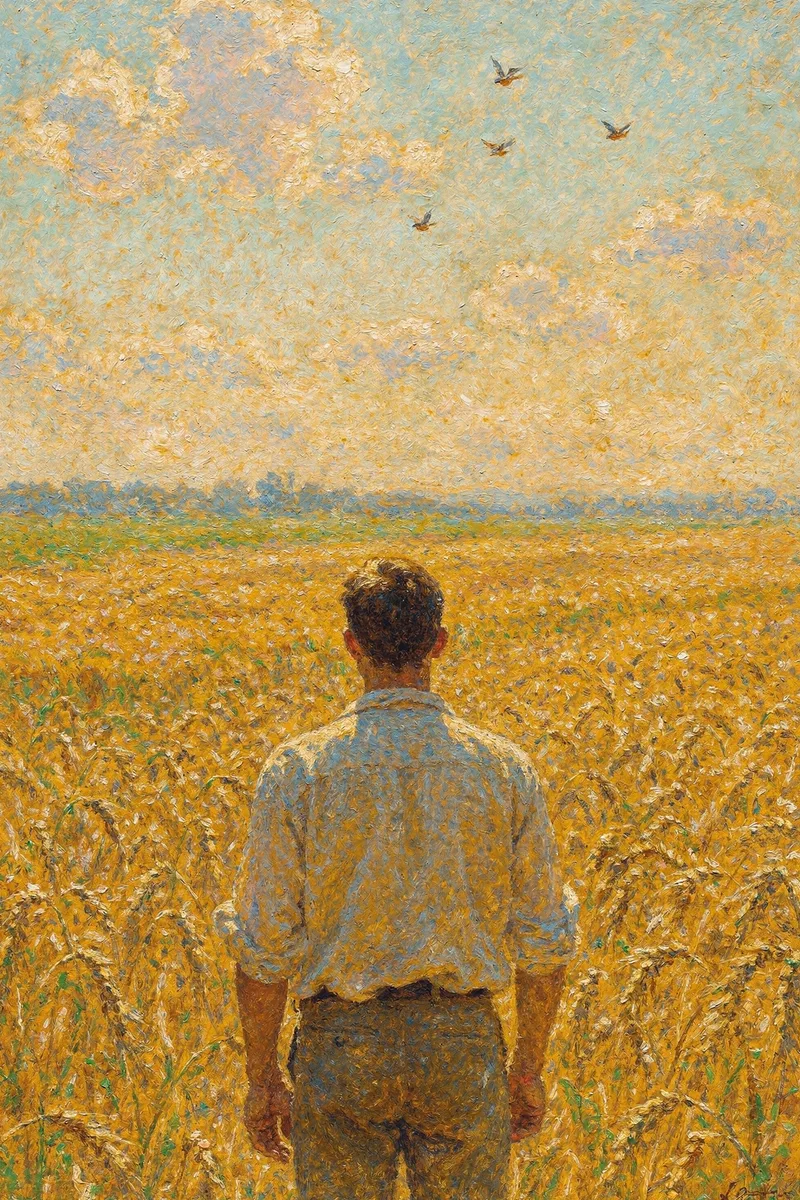
Worn down by the city and by the weight of other people's grief, a man flees to the quiet of the fields.
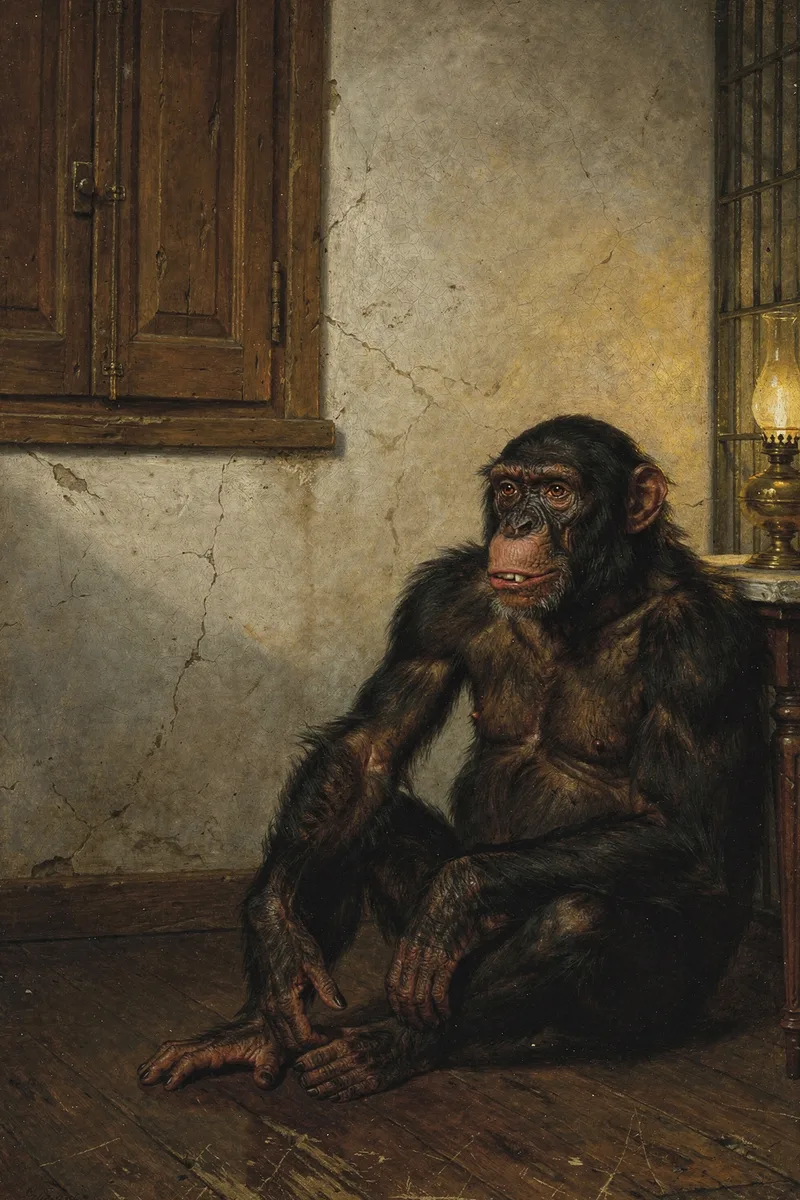
A ruined circus goes under the hammer, and a hard-headed merchant walks away with a chimpanzee named Yzur — and a strange conviction: that monkeys are not beasts but fallen men, creatures who long ago renounced speech to escape the yoke of labor, and so fell silent forever.
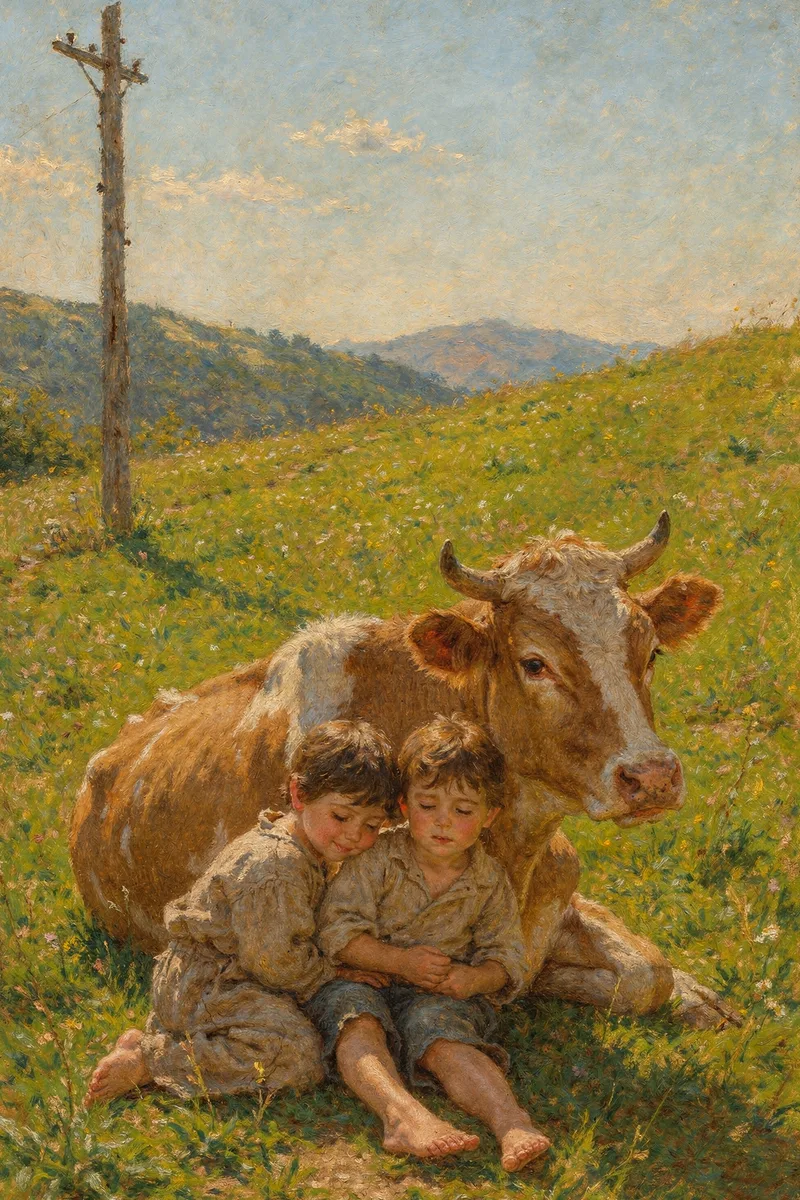
On a green triangular meadow called Somonte, cut at one corner by the Oviedo–Gijón railway, two motherless twins — Rosa and Pinín — and their gentle cow, la Cordera, are inseparable: «always the three of them».