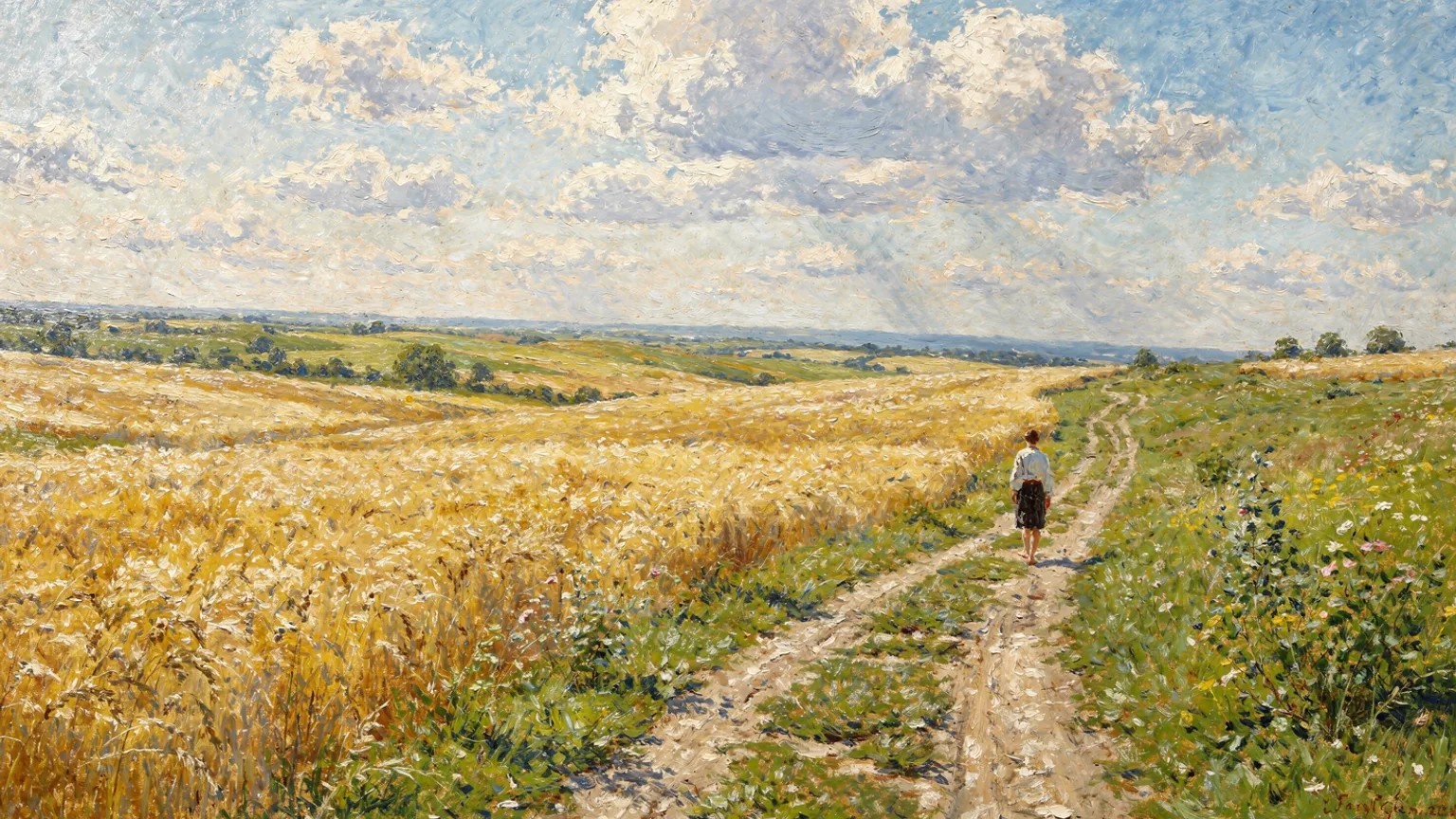
Intermezzo
About this story
Worn down by the city and by the weight of other people's grief, a man flees to the quiet of the fields. Among the sun, the larks, three sheepdogs and the endless green he slowly comes back to life — until a meeting with a single peasant pulls all the suffering of the village back into him. Mykhailo Kotsiubynsky's «Intermezzo» (1908) is a landmark of Ukrainian impressionist prose: a plotless, first-person poem about exhaustion, nature, and the impossibility of turning away from human pain. Kotsiubynsky (1864–1913) is one of the great modernists of Ukrainian literature.
By the numbers
About the author
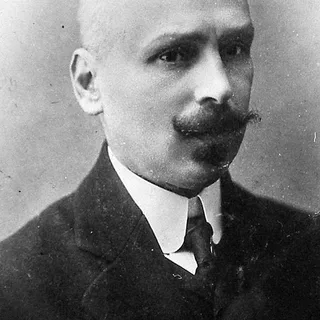
Mykhailo Kotsiubynsky (1864–1913) was a Ukrainian writer and one of the founders of modernism and impressionism in Ukrainian prose. Born in Vinnytsia and active largely in Chernihiv, he moved from early realism toward a refined psychological, lyrical style attentive to mood, colour, and inner experience. His major works include the novel «Fata Morgana», the novellas «Shadows of Forgotten Ancestors» (1911) and «Intermezzo» (1908). Plagued by asthma and tuberculosis, he travelled widely across Europe and died in Chernihiv in 1913, remembered as a «sun-worshipper» and a master of the Ukrainian short form.
Recognition
The academician Serhii Yefremov regarded the lyrical novella «Intermezzo» as the crowning achievement of Mykhailo Kotsiubynsky's work — the writer's highest artistic accomplishment.
Kotsiubynsky's style is «impressionism of the purest water»; his psychological impressionism is so original that it stands as the writer's own creation, one that renders the subtlest movements of the human soul.
Ivan Franko saw in Kotsiubynsky's psychological prose «the hand of a master», noting «a very subtle observation of a complex psychological process».
Kotsiubynsky evolved into one of the most talented Ukrainian modernist writers; his linguistically sophisticated works greatly influenced early-20th-century Ukrainian prose, and «Intermezzo», built on a combination of naturalism and impressionism, ranks among his most artistic works.
Practice typing
Type this retelling one piece at a time — your progress is saved as you go.
If you liked this
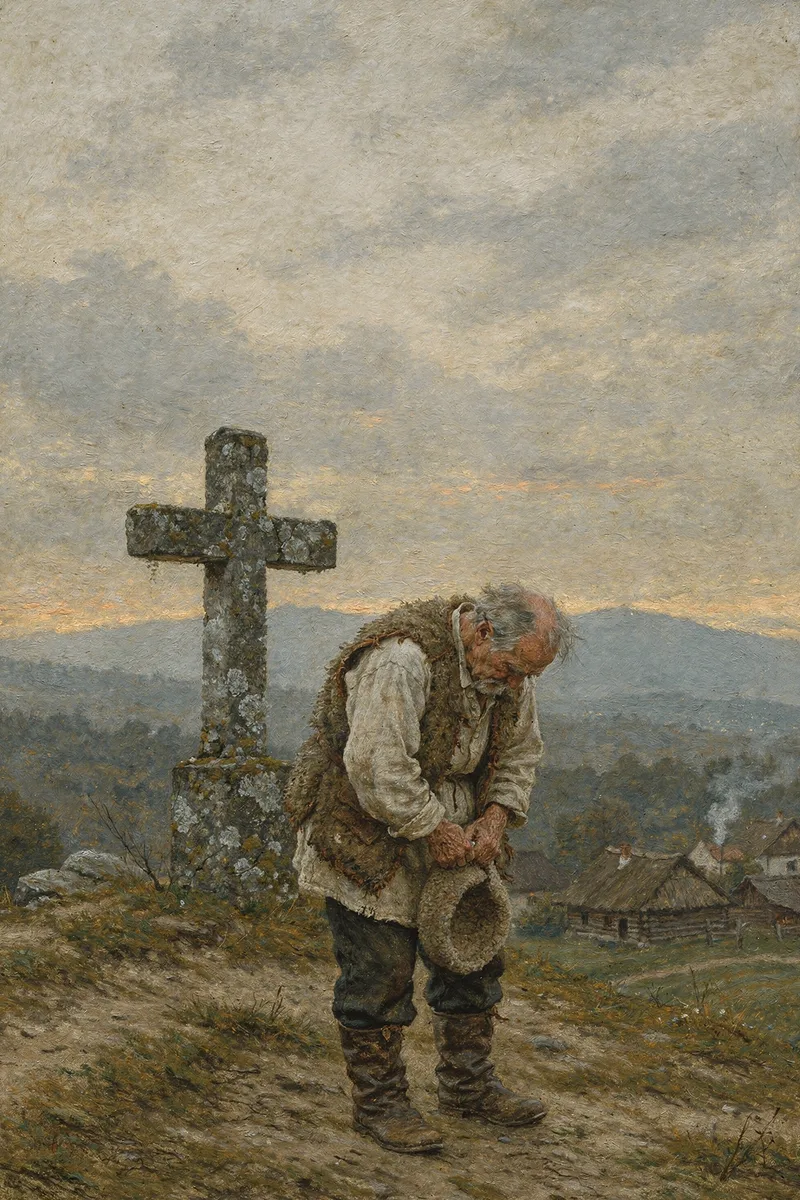
Ivan Didukh has spent his life breaking his back on a worthless sandy hill — the only land he inherited — until he is bent double and the village calls him «the Broken One».
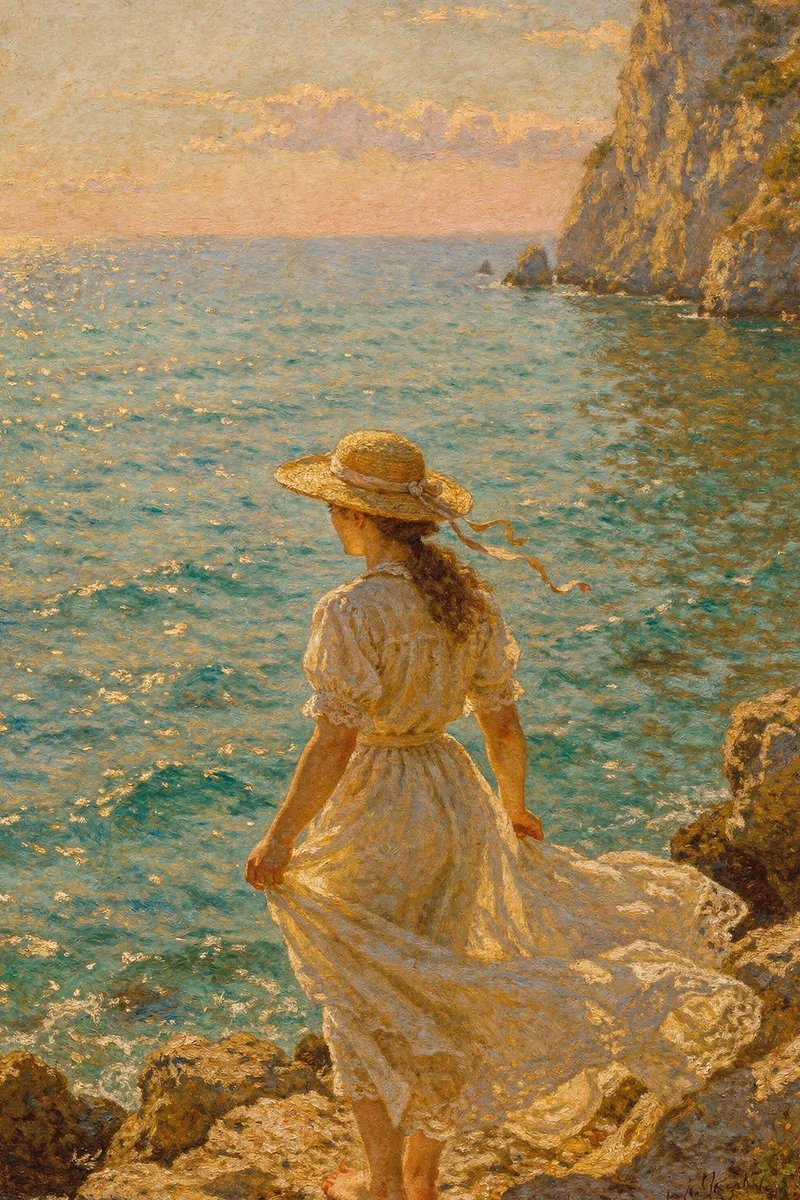
On a sun-struck Crimean shore, where consumptive patients come to breathe the sea air, the narrator falls in with a restless, coquettish young woman whom her own vanity will not let sit still for a moment.
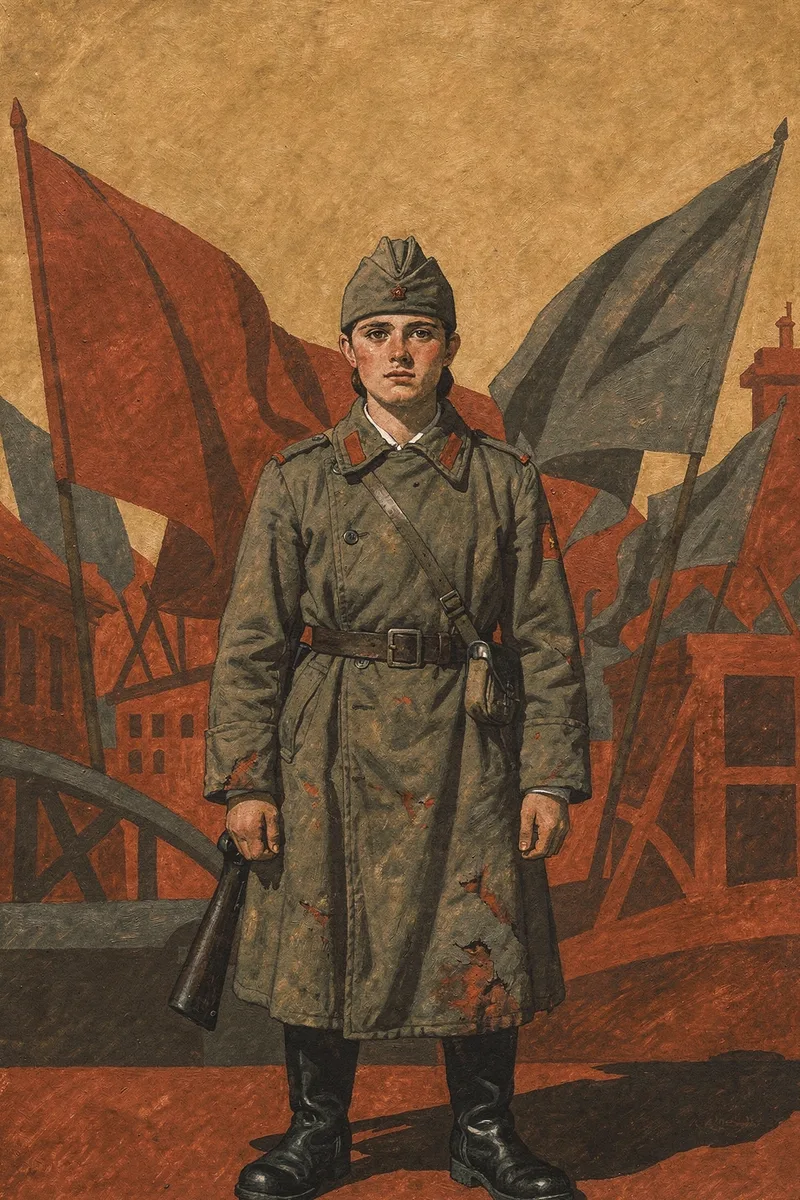
A small, plain woman in boots far too big for her — «Comrade Zhuchok» — tramps the roads of the revolution, tireless and utterly devoted, and the narrator sees in her the comic, touching figure of the fairy-tale «Puss in Boots».
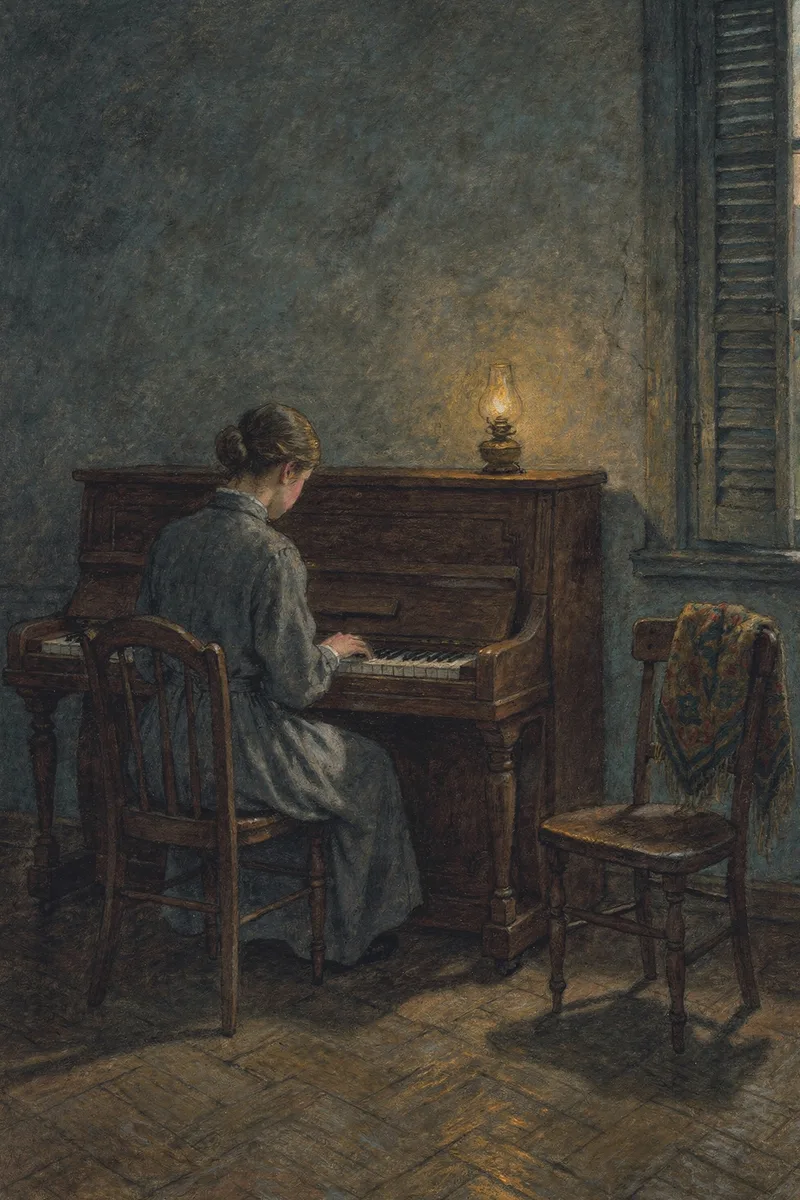
Three young women share a household in a town of 1890s western Ukraine: a painter who calls herself a «child of fortune», a quiet future schoolteacher, and a pianist who composes waltzes she refuses to write down.