The Treasure
About this story
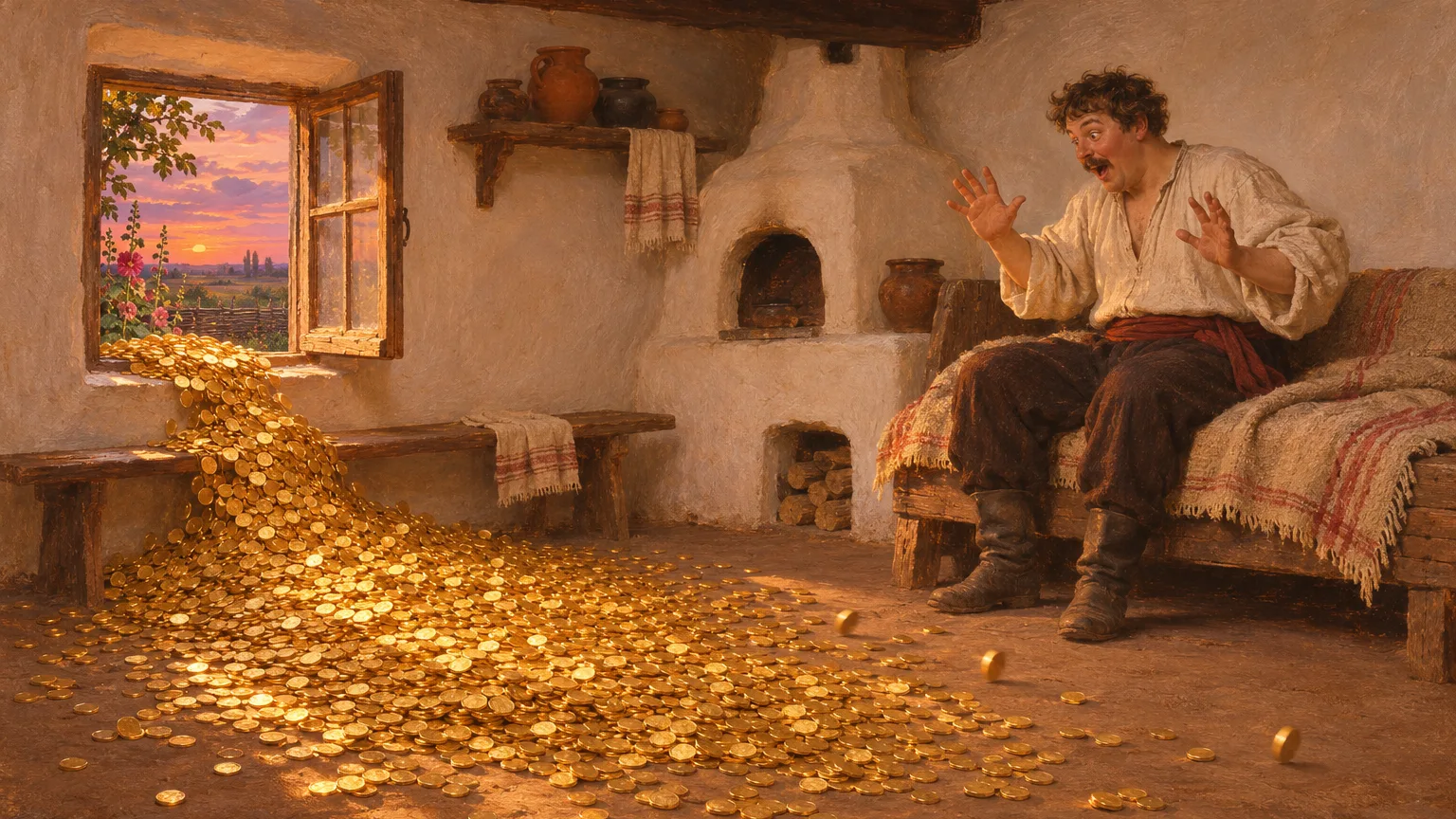
Pavlus is so idle that he grumbles at the ripe pears over his head for not dropping into his mouth. Even so, luck keeps piling up on him. When the village lads head into the steppe at Pentecost to dig for treasure and beg him to come along for luck, he stays on his feather bed: if God means to send him something, let Him throw it in through the window. That evening the lads, empty-handed, hurl a long-dead greyhound through his window as a joke, and the moment it hits the floor, the lazybones turns out to be right. Oleksa Storozhenko, a cavalry officer who gathered tales from old Zaporozhian Cossacks, printed this folk anecdote in the journal «Osnova» in 1861; it has long been part of the Ukrainian school curriculum.
By the numbers
About the author
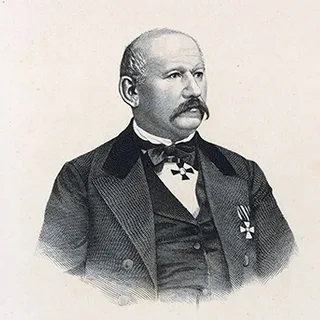
Oleksa Storozhenko (1806–1874) was a Ukrainian Romantic prose writer, ethnographer and amateur artist. For more than a quarter of a century he served as a cavalry officer in the Russian imperial army, gathering legends and tales from former Zaporozhian Cossacks and from villagers along the way. After early fiction in Russian, he turned to Ukrainian when the St Petersburg journal «Osnova» appeared in 1861, and the stories he published there were collected in the two-volume «Ukrainian Stories» (1863). His best-known works include the fantastic tale «A Devil in Love», «Mother's Blessing», the comic «Whiskers» and the unfinished epic legend «Marko the Cursed», published as a book only after his death (Odesa, 1879). «The Treasure» first appeared in «Osnova» in November–December 1861 under the rubric «From the People's Lips»: a reworking of folk anecdotes about an idler whom good fortune reaches without the slightest effort on his part, closed by the narrator's own reflection on what happiness is. It is among his most widely read stories and has long been part of the Ukrainian school curriculum.
Recognition
There is much natural artistry in these stories, much grace and a genuinely Ukrainian humour.
This is perhaps the strongest natural talent in Ukrainian literature of the last twenty years.
With their lively narratives, their successful use of the vernacular as the language of narration, and their undertone of mellow humor, Storoženko's writings were deemed to be an impressive achievement of Ukrainian literature.
His works are marked by earthy Ukrainian humor, a knowledge of folk myths, and picturesque language.
Practice typing
Type this retelling one piece at a time — your progress is saved as you go.
If you liked this
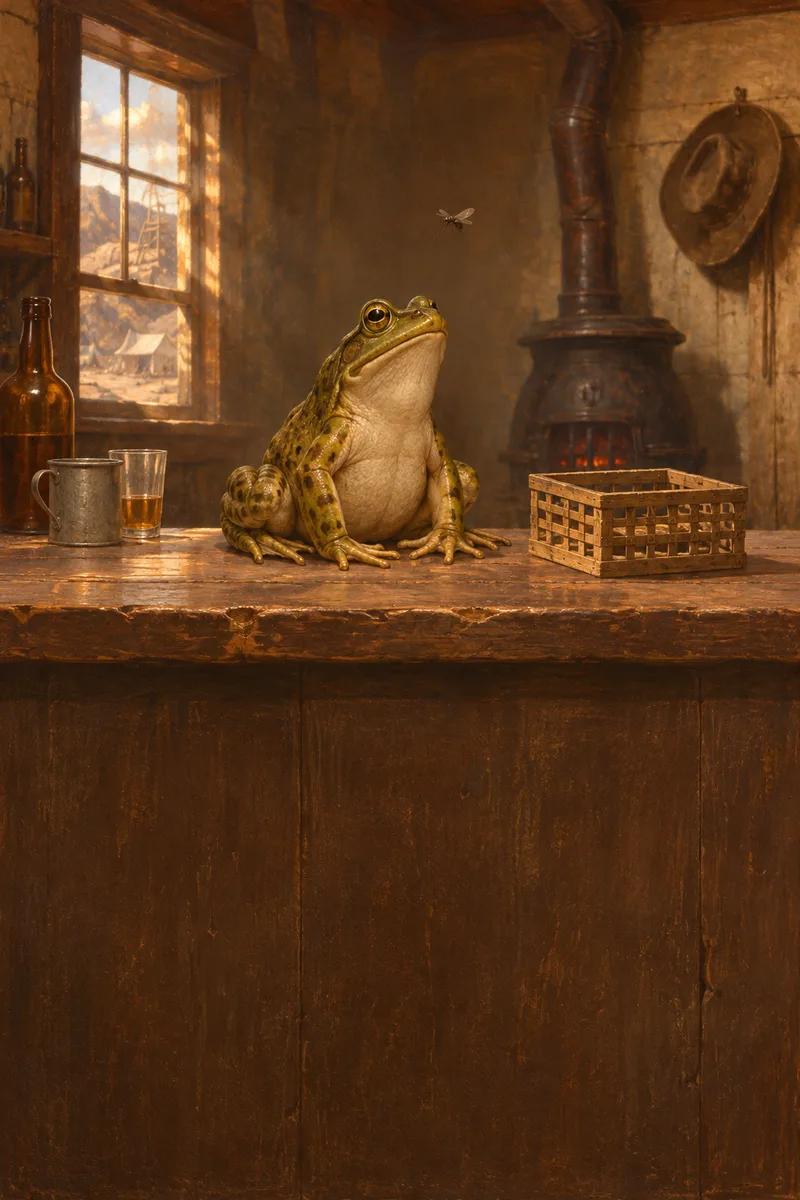
Jim Smiley will bet on anything: a horse race, a dog fight, which of two birds leaves the fence first, even whether the parson's sick wife pulls through.
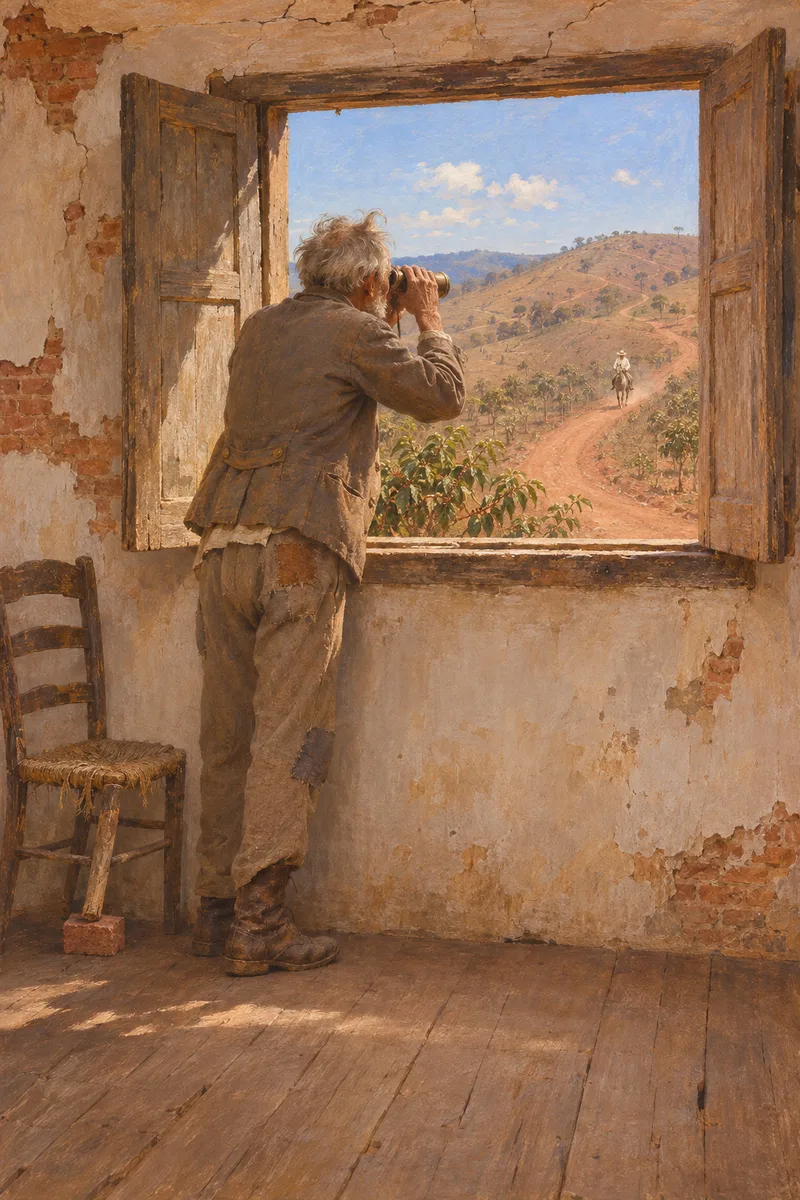
The Espigão coffee farm has already ruined three owners, and the fourth, David Moreira, is sinking under mortgages.
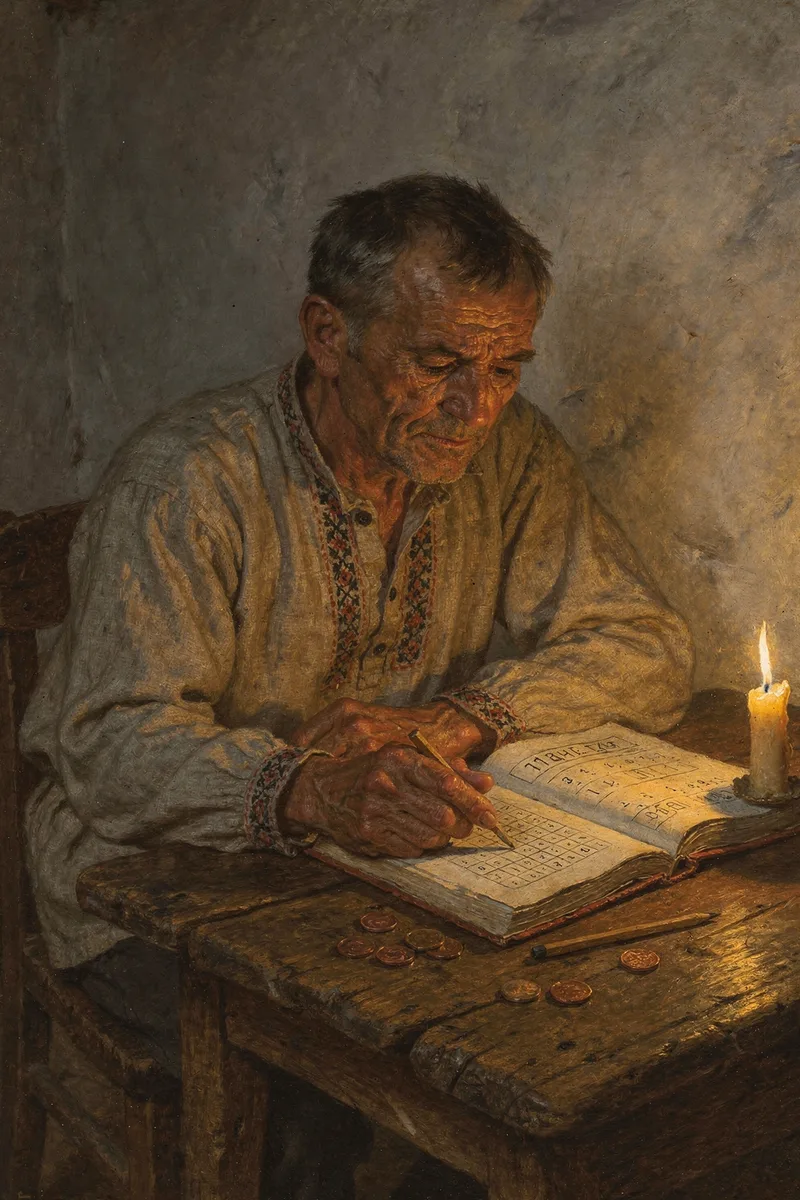
When a village shopkeeper lends the peasants a school arithmetic primer, its tidy word-problems — so many acres to a landowner, so many roubles to the estate — are read aloud by lamplight to a gathering of farmhands.
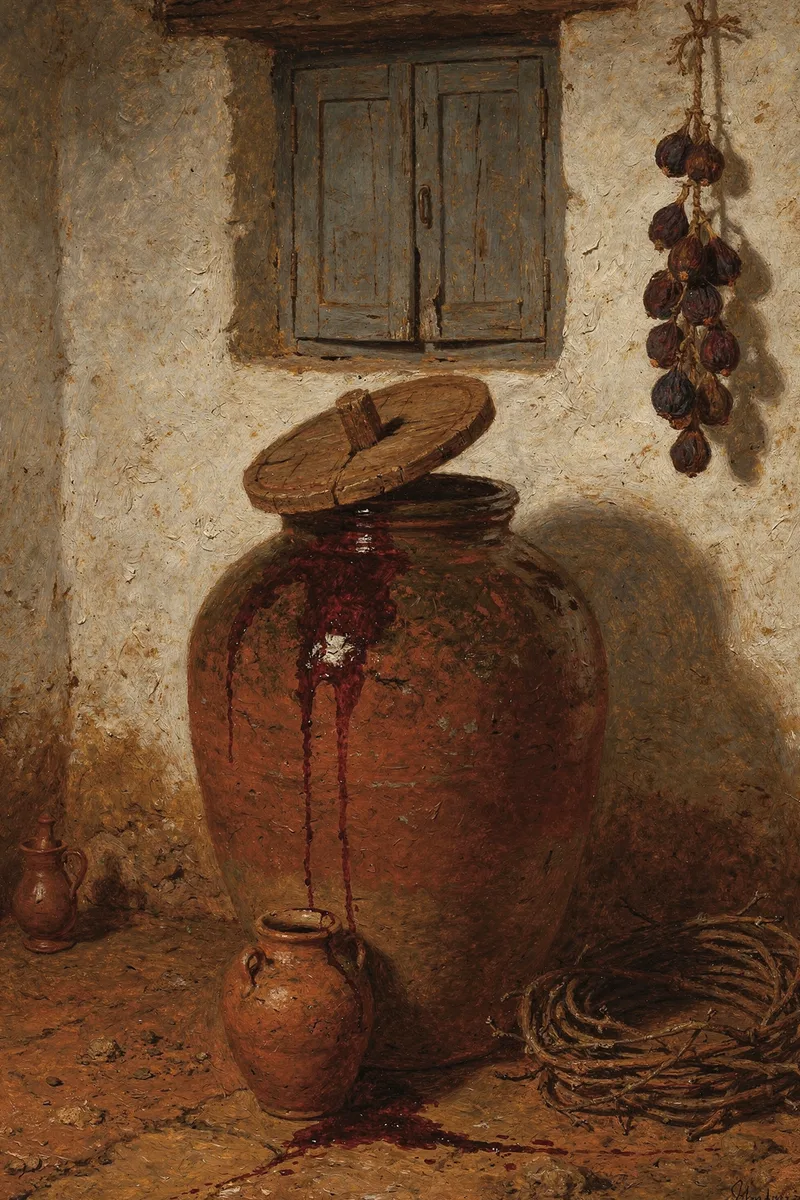
After a bountiful harvest, the poor laborer Canellas pays off every debt and hoards a last treasure: a great jar of ruby wine fermenting in his pantry.