Miss Brill
About this story
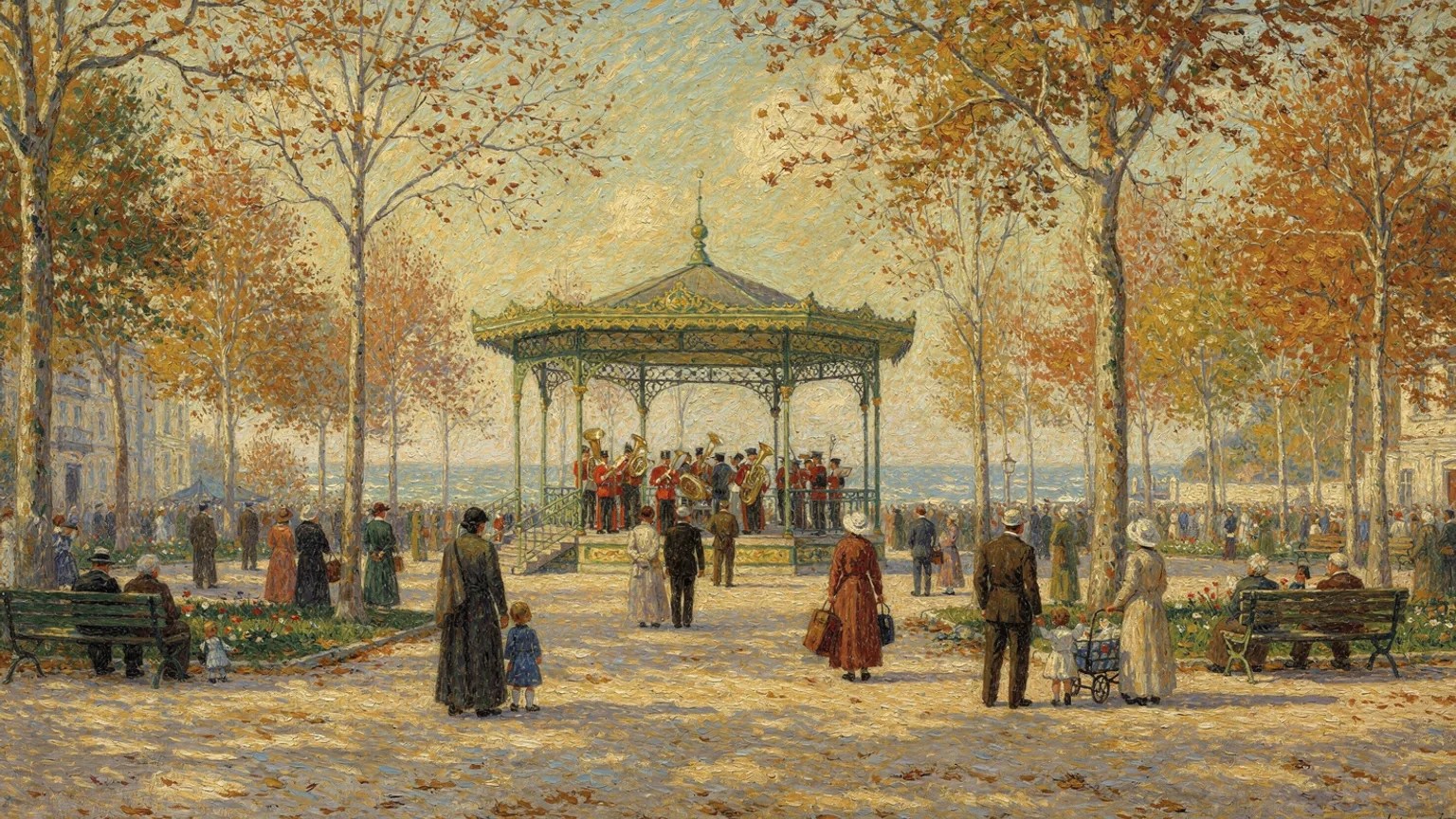
On a golden Sunday in a French seaside town, an aging Englishwoman settles onto her favourite park bench, wraps herself in a shabby fur, and eavesdrops on the strangers around her — convinced she plays a treasured part in the great theatre of the world. Then two young lovers sit down beside her, and a single careless remark shatters everything. In barely two thousand words, Katherine Mansfield — the only writer Virginia Woolf ever confessed to envying — delivers one of the most perfect short stories in the English language: a devastating study of loneliness, self-deception, and the tender lies we tell ourselves to keep the cold at bay.
By the numbers
About the author
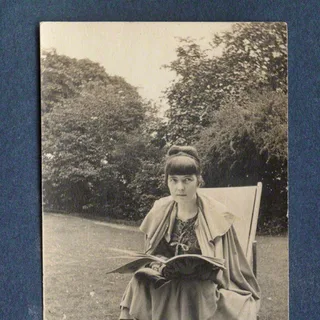
Katherine Mansfield (1888–1923) was a New Zealand-born modernist writer widely regarded as one of the finest short-story writers in the English language. Working almost exclusively in the short form, she reshaped the genre through psychological subtlety, epiphany, and free indirect discourse, and was the only contemporary whose writing Virginia Woolf confessed to envying. Her major collections — Bliss and Other Stories (1920) and The Garden Party and Other Stories (1922) — contain her most celebrated pieces, including 'Bliss,' 'The Garden Party,' 'The Doll's House,' and 'Miss Brill.' First published in the Athenaeum in 1920, 'Miss Brill' ranks among her best-known and most frequently anthologized stories, a compact study of loneliness and self-deception that showcases her mature technique. Mansfield died of tuberculosis at 34, her reputation still rising.
Recognition
I was jealous of her writing — the only writing I have ever been jealous of.
The stylistic flourishes in the story — such as frequent repetitions, omissions, and exclamations — capture Miss Brill's personality.
Mansfield uses rhythm — the rise and fall of sentence and paragraph — to render Miss Brill's bifurcated voice, her outward cheerfulness undercut by melancholy, demonstrating a modernist interest in representing consciousness through sonic and rhythmic mediation rather than conventional psychological exposition.
Much of the story's effect is achieved through suggestion rather than explicit description — a hallmark of modernist fiction — as it builds toward the epiphany, the sudden revelation experienced by its central character.
Practice typing
Type this retelling one piece at a time — your progress is saved as you go.
If you liked this
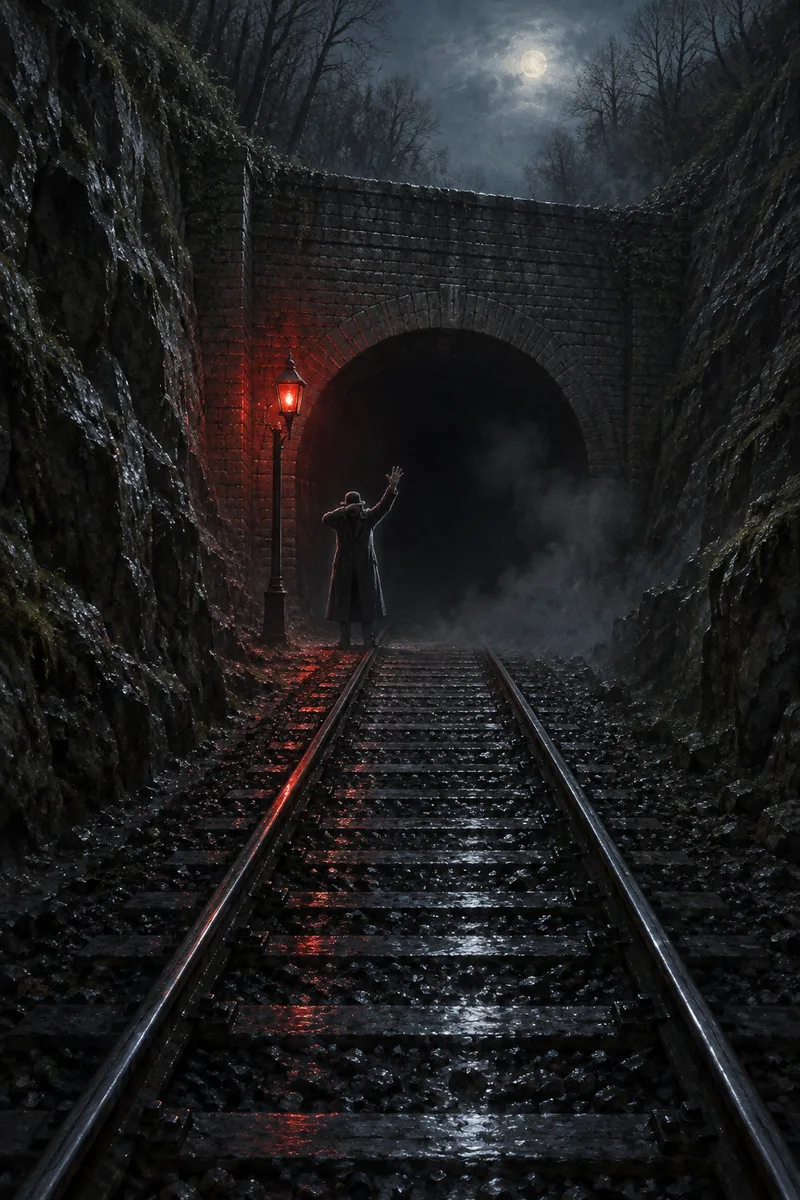
At the bottom of a damp railway cutting, beside the black mouth of a tunnel, a lonely signalman keeps watch over the line — and over a figure no one else can see.
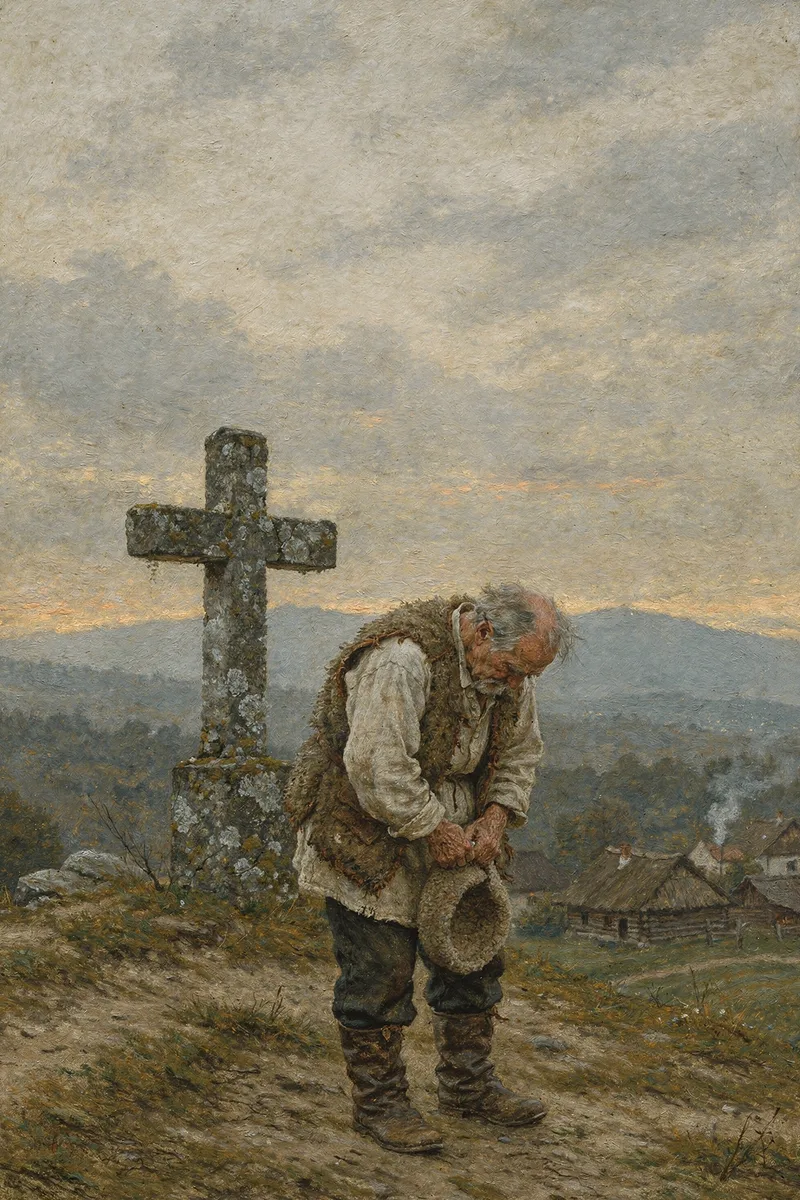
Ivan Didukh has spent his life breaking his back on a worthless sandy hill — the only land he inherited — until he is bent double and the village calls him «the Broken One».
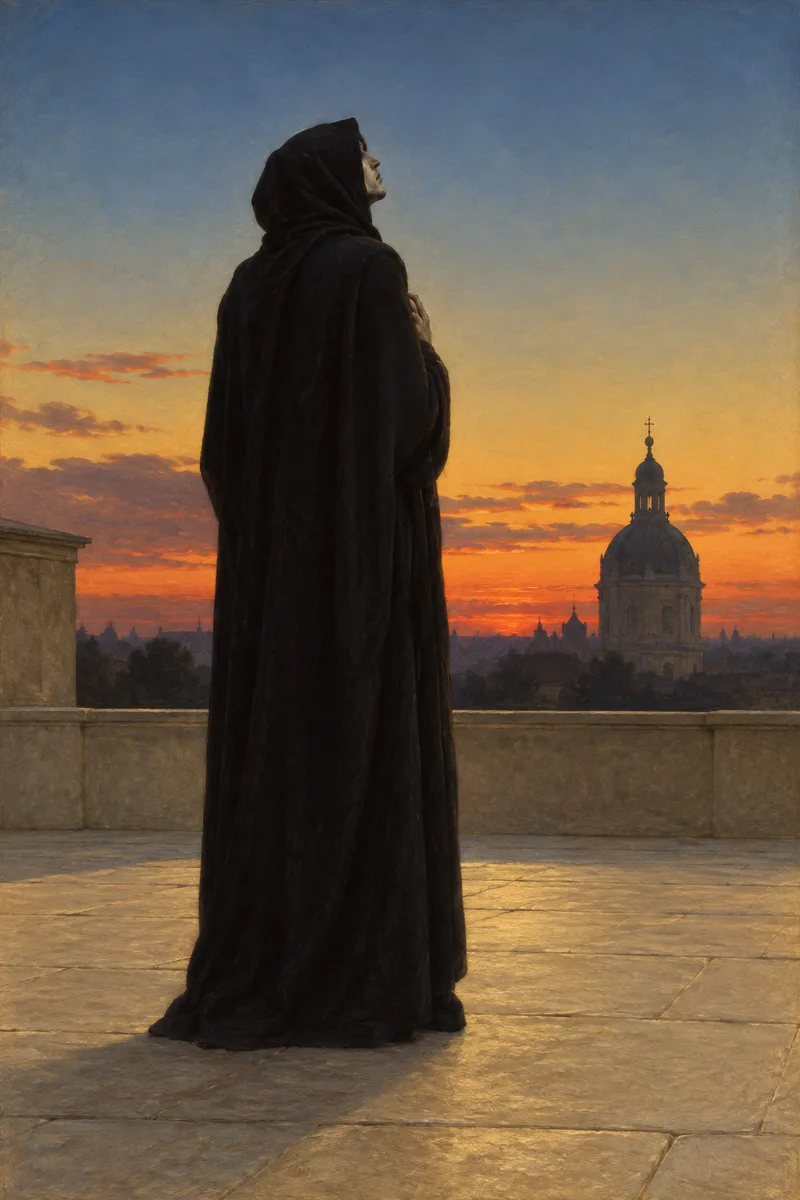
Munich is shining under a silk-blue June sky, and the crowd outside Blüthenzweig’s art shop keeps drifting back to a photograph in the window: a Madonna with bare shoulders and a heavy, sensual gaze, painted, the gossip goes, from the artist’s sweetheart, a little milliner.
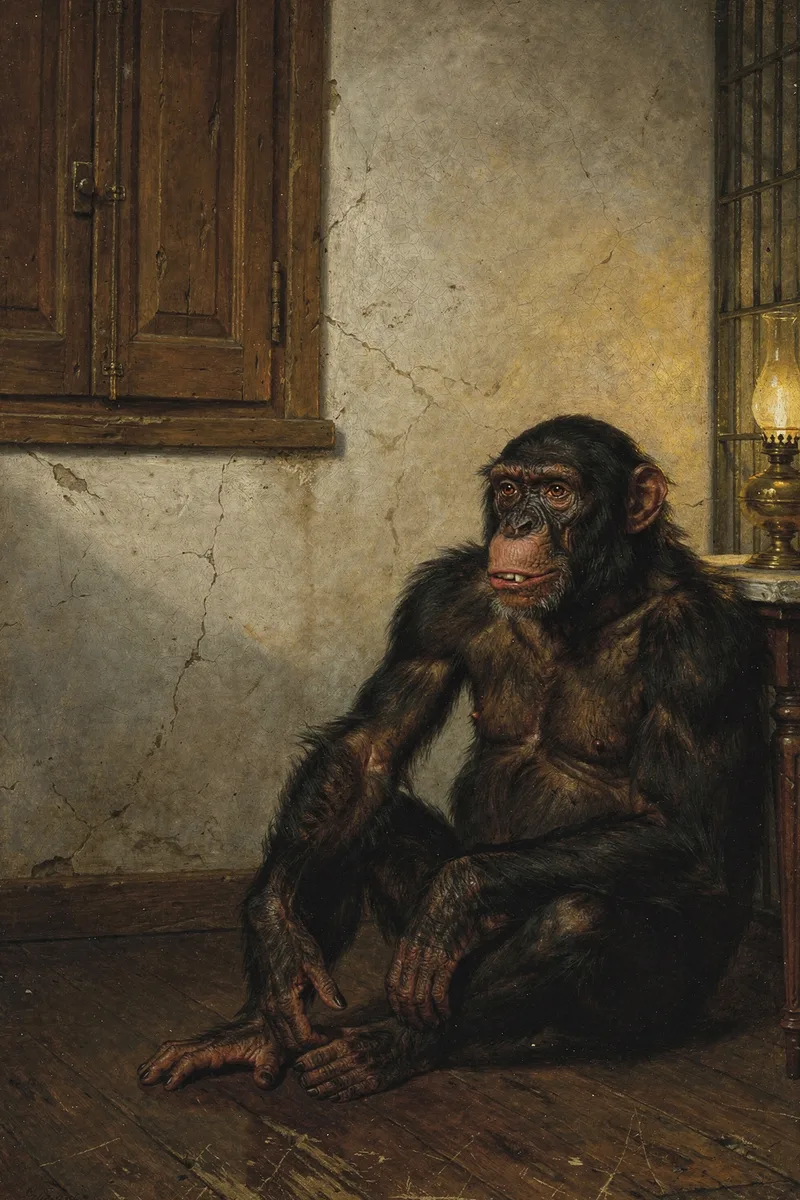
A ruined circus goes under the hammer, and a hard-headed merchant walks away with a chimpanzee named Yzur — and a strange conviction: that monkeys are not beasts but fallen men, creatures who long ago renounced speech to escape the yoke of labor, and so fell silent forever.