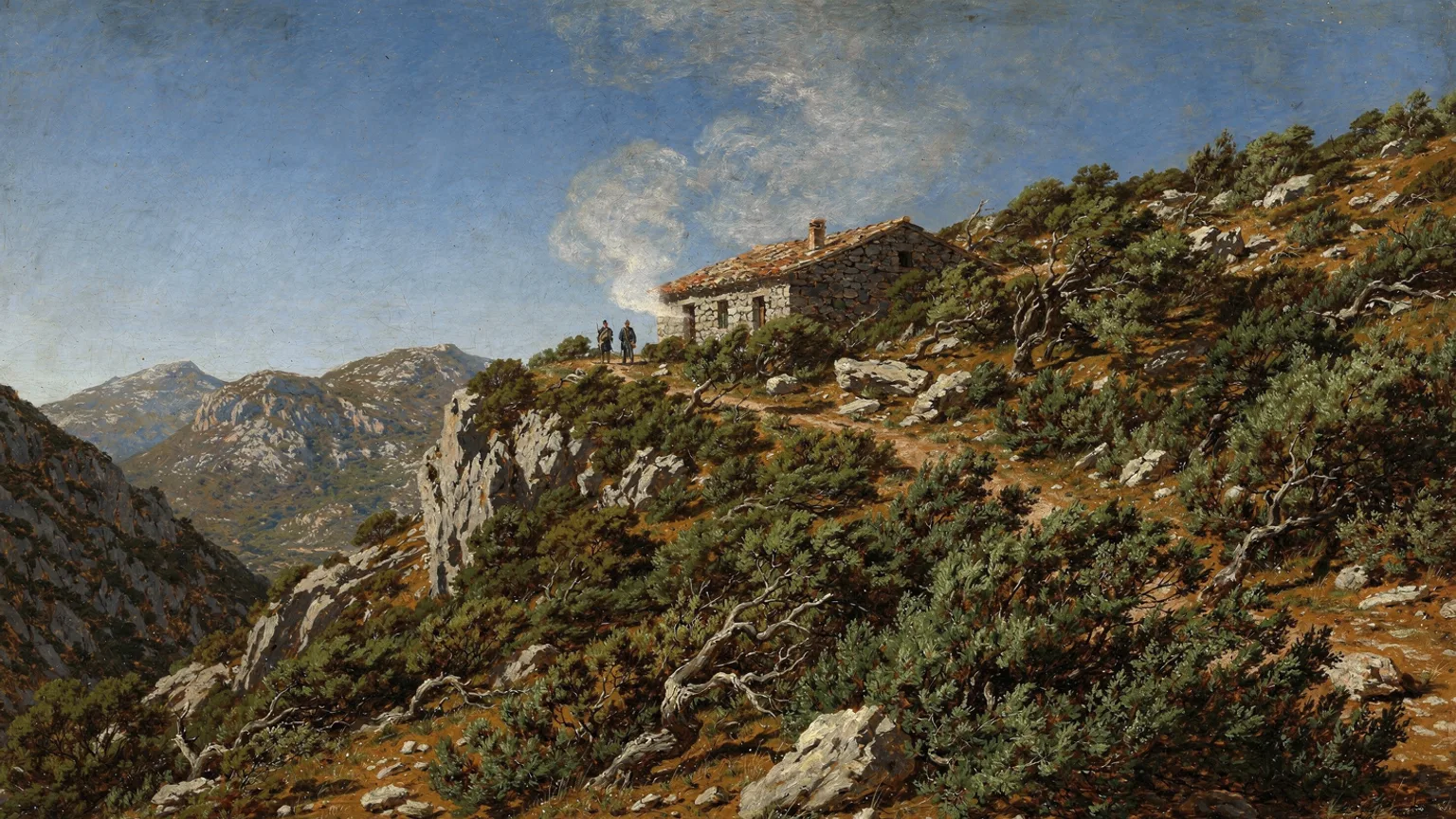
Mateo Falcone
About this story
On a wild stretch of the Corsican maquis, ten-year-old Fortunato shelters a wounded fugitive — then trades him to the gendarmes for a glittering silver watch. When Mateo Falcone comes home and learns that his only son has broken the unwritten law of hospitality and honour, he exacts a punishment as absolute as it is unbearable. Written in 1829 by Prosper Mérimée — a pioneer of the modern short story and a master of taut, ice-cold narrative — «Mateo Falcone» compresses an entire tragedy into a dozen unflinching pages. Walter Pater called it the cruellest story in the world; read it and feel how much force a few pages can hold.
By the numbers
About the author
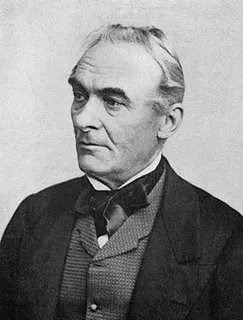
Prosper Mérimée (1803–1870) was a French writer, historian and archaeologist, one of the pioneers of the modern novella and short story. Trained in law and fluent in several languages, he moved in the leading literary circles of Romantic Paris and won early fame with tautly built tales such as «Mateo Falcone» (1829) and, later, «Carmen» (1845), which became the basis of Bizet's opera. From 1834 he served as inspector-general of France's historical monuments, helping to save and restore sites such as the walled city of Carcassonne and the cathedral of Notre-Dame de Paris. A friend of Stendhal and a devotee of Russian literature, he translated Pushkin and Gogol into French. He died in Cannes in 1870, five days before his sixty-seventh birthday.
Recognition
Matteo Falcone — twenty-five short pages — is perhaps the cruellest story in the world.
«Mateo Falcone» obeys the unities as strictly as any classical tragedy.
«Mateo Falcone» was Mérimée's first dazzling success — a brief tale condensed into a dozen pages, sufficient to confirm the literary reputation of its creator.
Its tightly focused narrative was well received, and it has been called the original French short story.
Practice typing
Type this retelling one piece at a time — your progress is saved as you go.
If you liked this
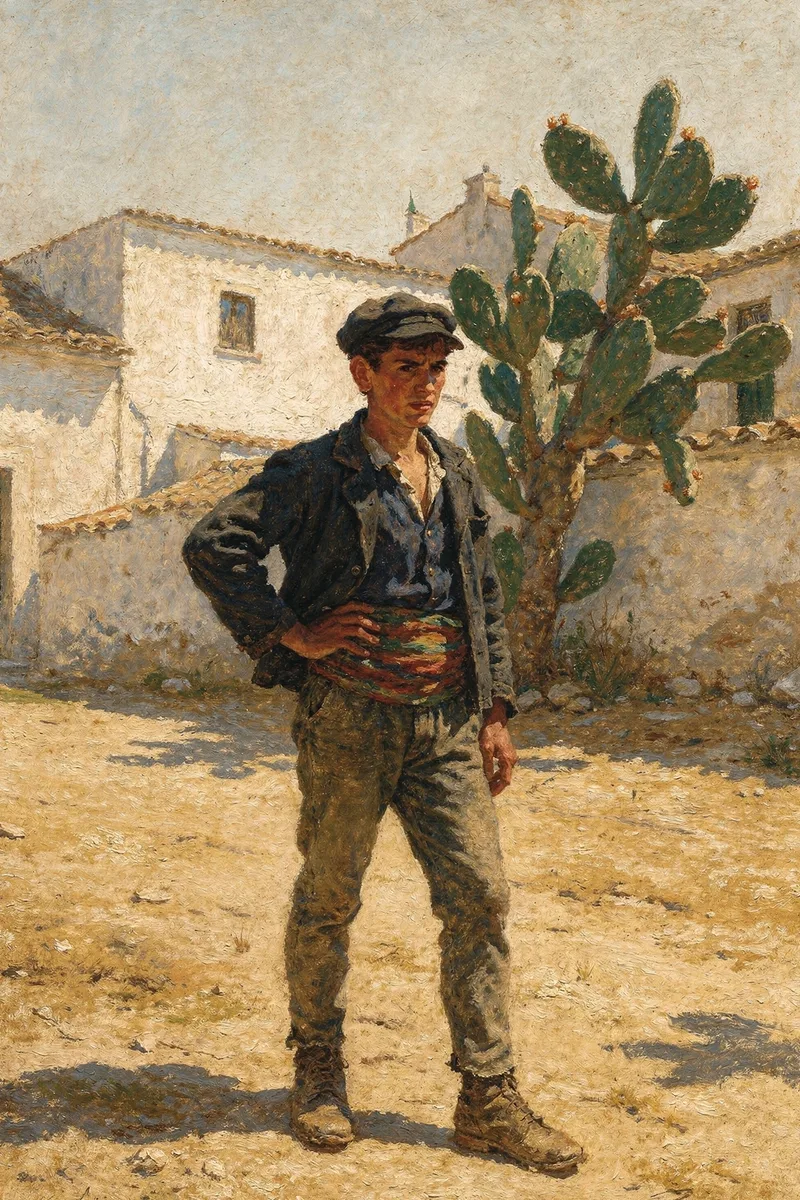
Home from his army service, the dashing Turiddu Macca struts the village square — only to find that Lola, the girl he had loved, has married the prosperous carter compare Alfio.
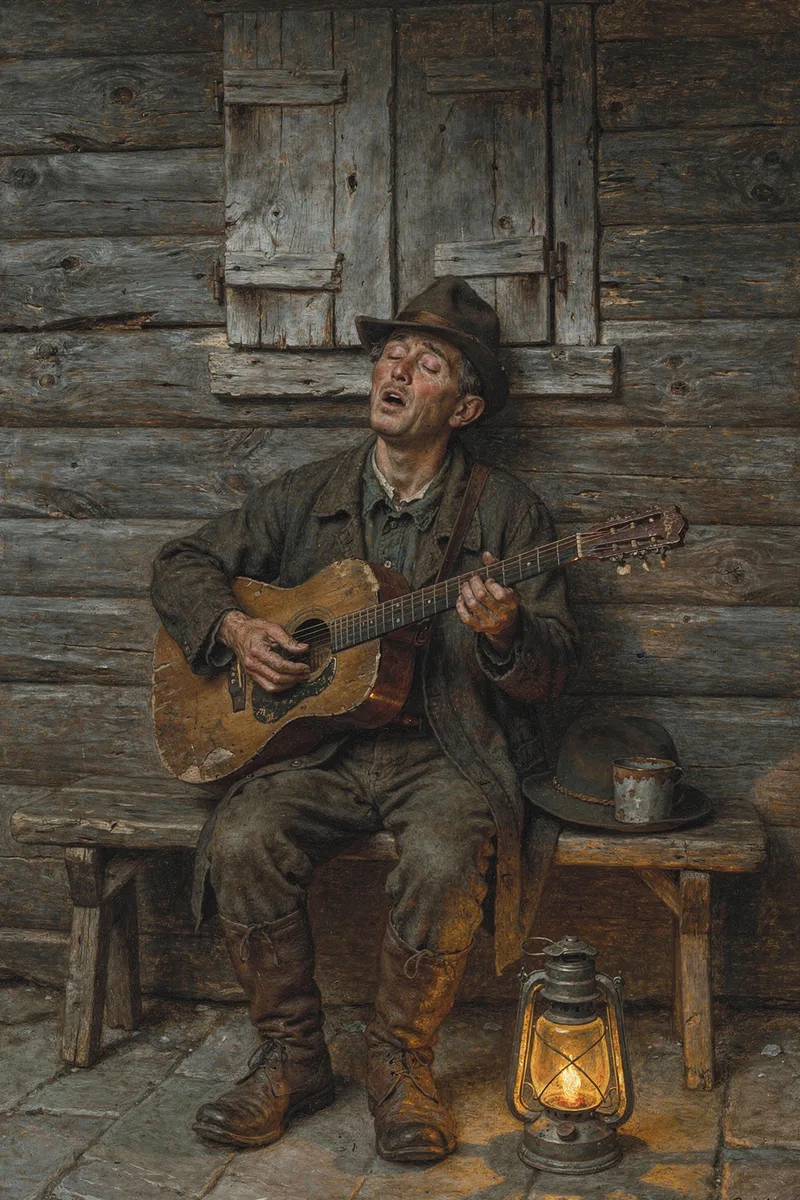
On a bleak Alpine pass, two brothers scrape a living as wandering beggars: blind Geronimo, who sings for coins, and Carlo, who leads him and holds out the hat.
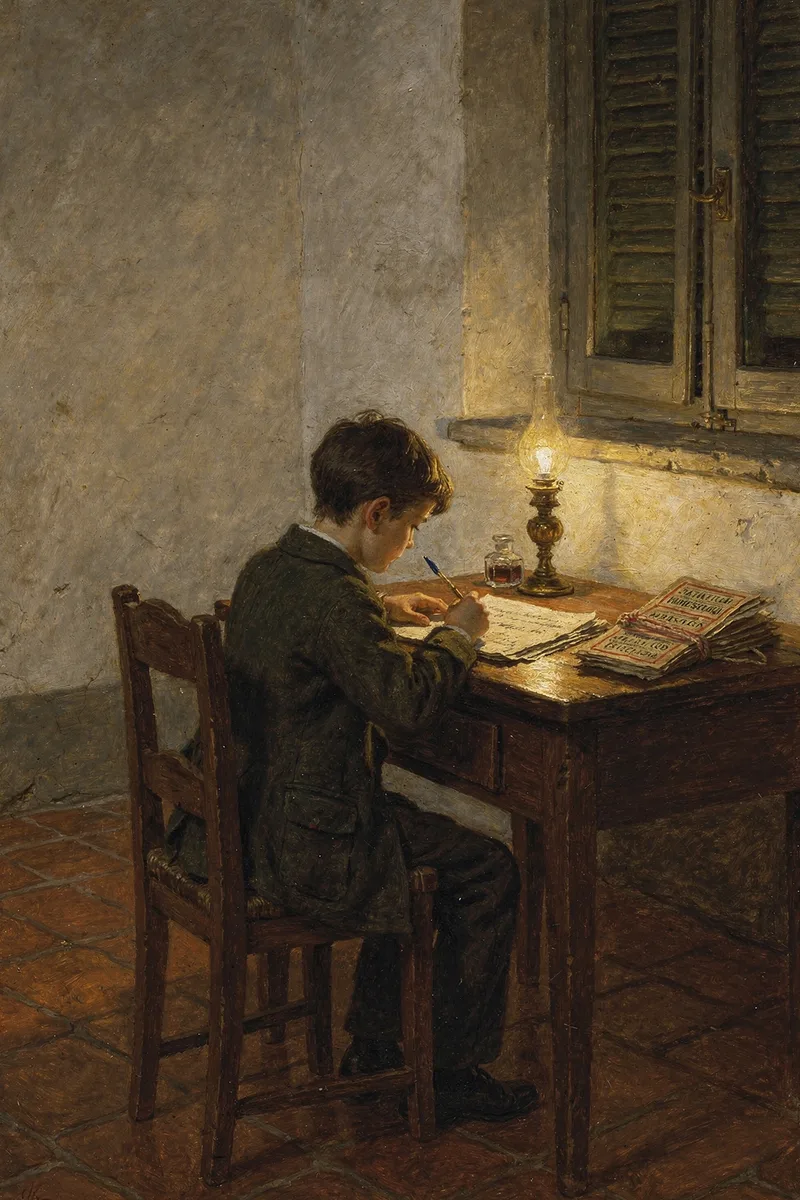
Twelve-year-old Giulio watches his ageing father copy addresses deep into the night for a few extra lire — and privately resolves to help.

Along the mountain roads of old Korea, a weathered peddler walks a night-market circuit he has trodden for half a lifetime — and under the full moon the buckwheat fields open white as spilled salt, as far as the eye can see.