The Juggler of Notre Dame
About this story
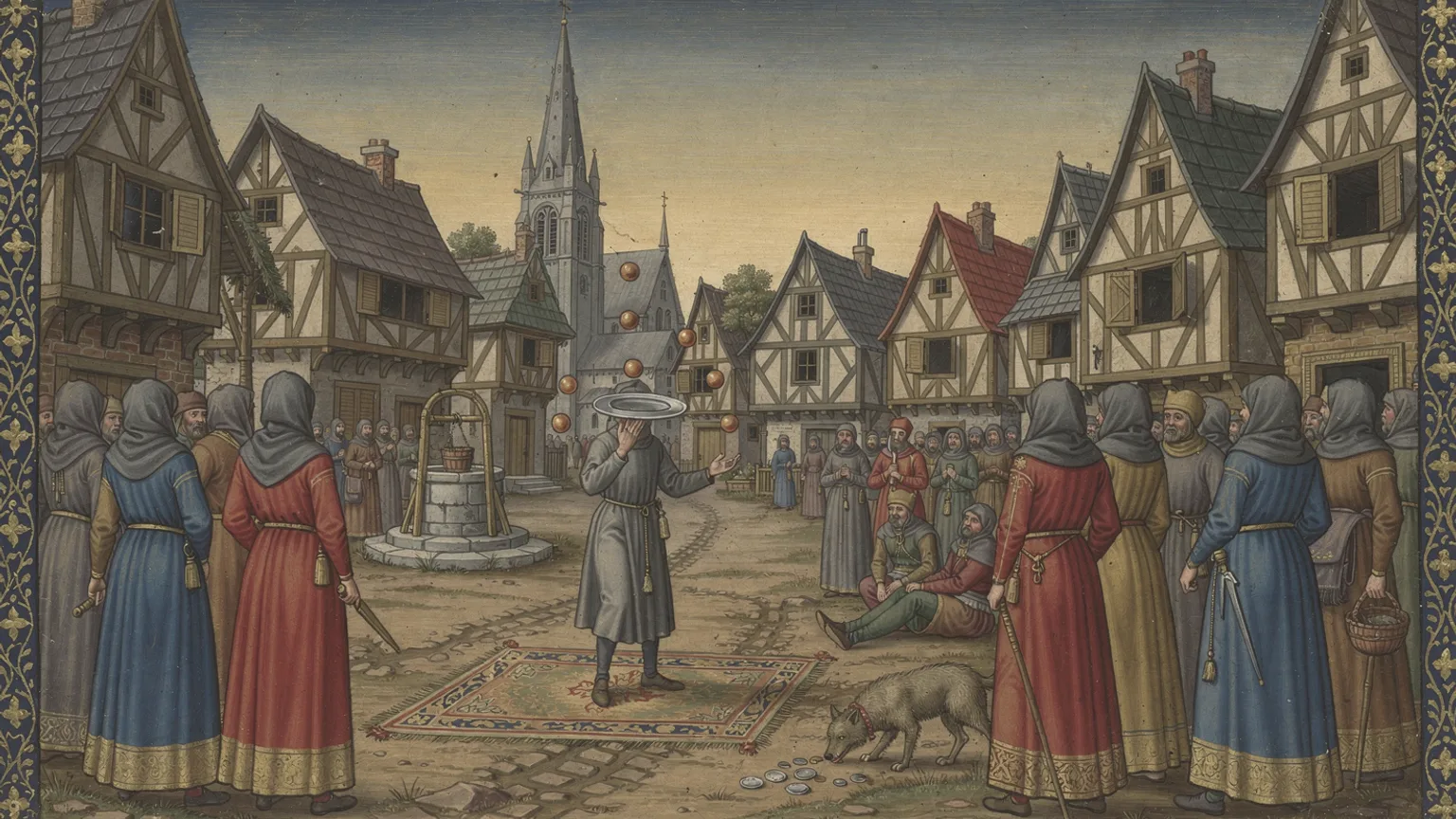
Barnabé is a poor traveling juggler who earns his coins on a threadbare carpet, spinning copper balls and balancing a tin plate on the tip of his nose. When he trades the open road for the cloister, despair overtakes him: his brother monks honor the Virgin with learned treatises, delicate illuminations, and Latin hymns, while he knows nothing but his tumbling. So, alone before her altar, he offers the only thing he has. Written in 1890 by Anatole France — the ironic, elegant master of the Third Republic, elected to the Académie française and crowned with the 1921 Nobel Prize in Literature — «Le Jongleur de Notre-Dame» is his best-loved tale, a tender medieval miracle that revived a forgotten legend and inspired Massenet's opera.
By the numbers
About the author
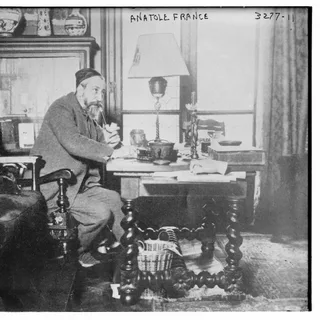
Anatole France (pen name of Jacques-Anatole-François Thibault, 1844–1924) was one of the most celebrated French writers of the Third Republic, a novelist, poet, and critic elected to the Académie française and awarded the 1921 Nobel Prize in Literature. Ironic, skeptical, and elegantly classical in style, he was hailed in his lifetime as the ideal French man of letters; a 1909 Vanity Fair caricature crowned him “the greatest living Frenchman.” His signature works include the novels Le Crime de Sylvestre Bonnard (1881), Thaïs (1890), Penguin Island (L'Île des Pingouins, 1908), and The Gods Are Athirst (Les Dieux ont soif, 1912). “Le Jongleur de Notre-Dame,” first published in 1890 and collected in L'Étui de nacre (1892), is his best-loved short story, atypically tender and reverent for so avowed an anticlerical, and it revived a forgotten medieval miracle tale and inspired Massenet's 1902 opera.
Recognition
It required another individual, with greater writerly craft and cultural clout, to create the short story that would propel the tale to break out from restricted confines and to become disseminated not merely throughout France but even throughout the world, especially across the Atlantic.
The literary quality of the story as well as its author's cultural and historical impact (France would receive the Nobel Prize in literature in 1921) helped the story become widely known, not only in the Francophone world, but in English translations worldwide, and especially in the United States.
It is hard to imagine a more unlikely teller for the tale than France, whose adaptation fully revived the still-sleepy juggler.
Anatole France took pleasure in depicting the life his hero led in the secular world.
Practice typing
Type this retelling one piece at a time — your progress is saved as you go.
If you liked this
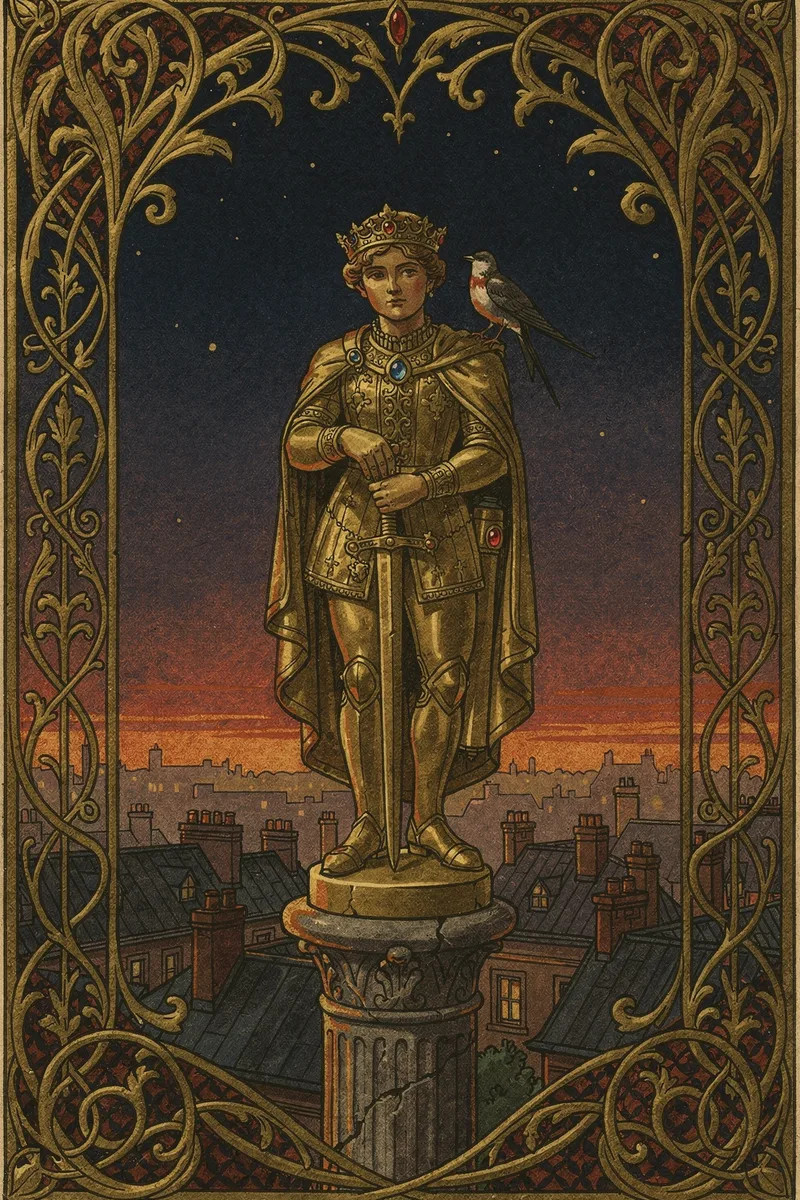
A jewelled statue of the Happy Prince gazes down on his city and weeps at the misery below, so he begs a little Swallow — left behind when his flock flew to Egypt — to strip away his gold and gems and carry them to the suffering poor.
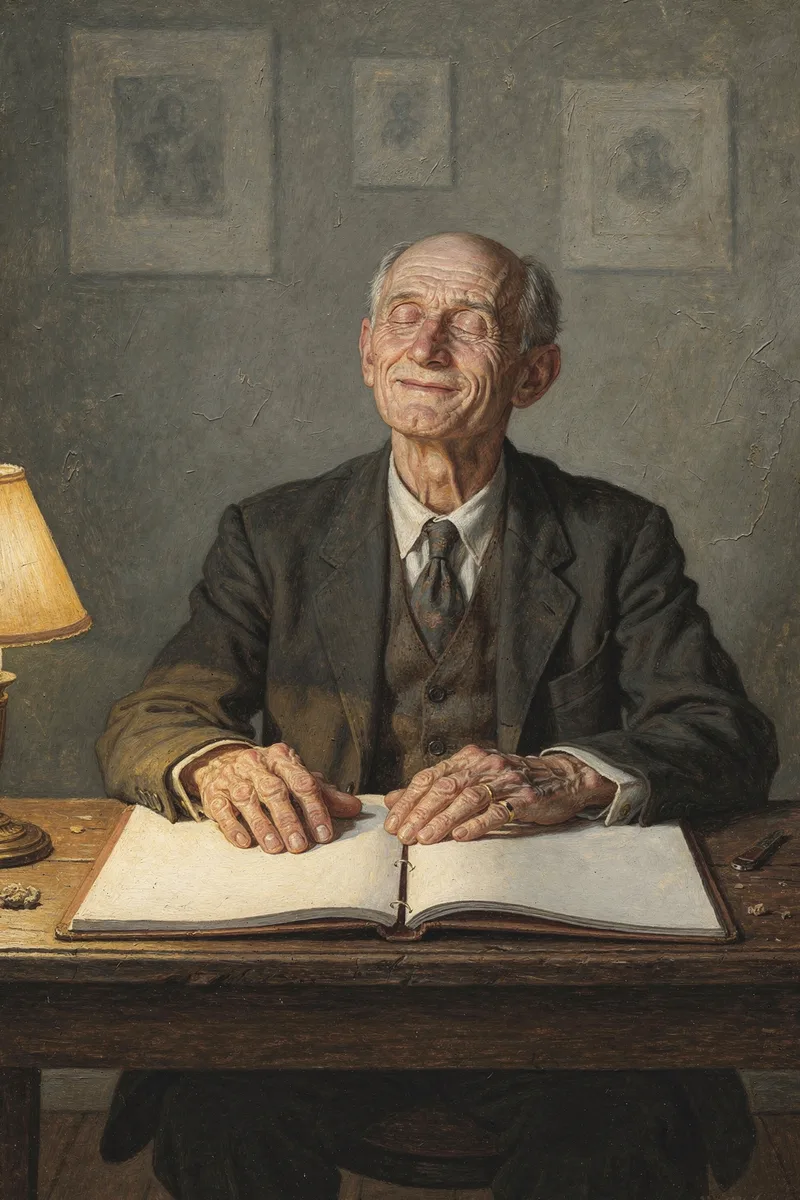
An old art dealer, his trade withered by the great German inflation, travels to a quiet provincial town to call on one of his oldest customers — a blind, retired collector who spent sixty years amassing a priceless hoard of prints and engravings.
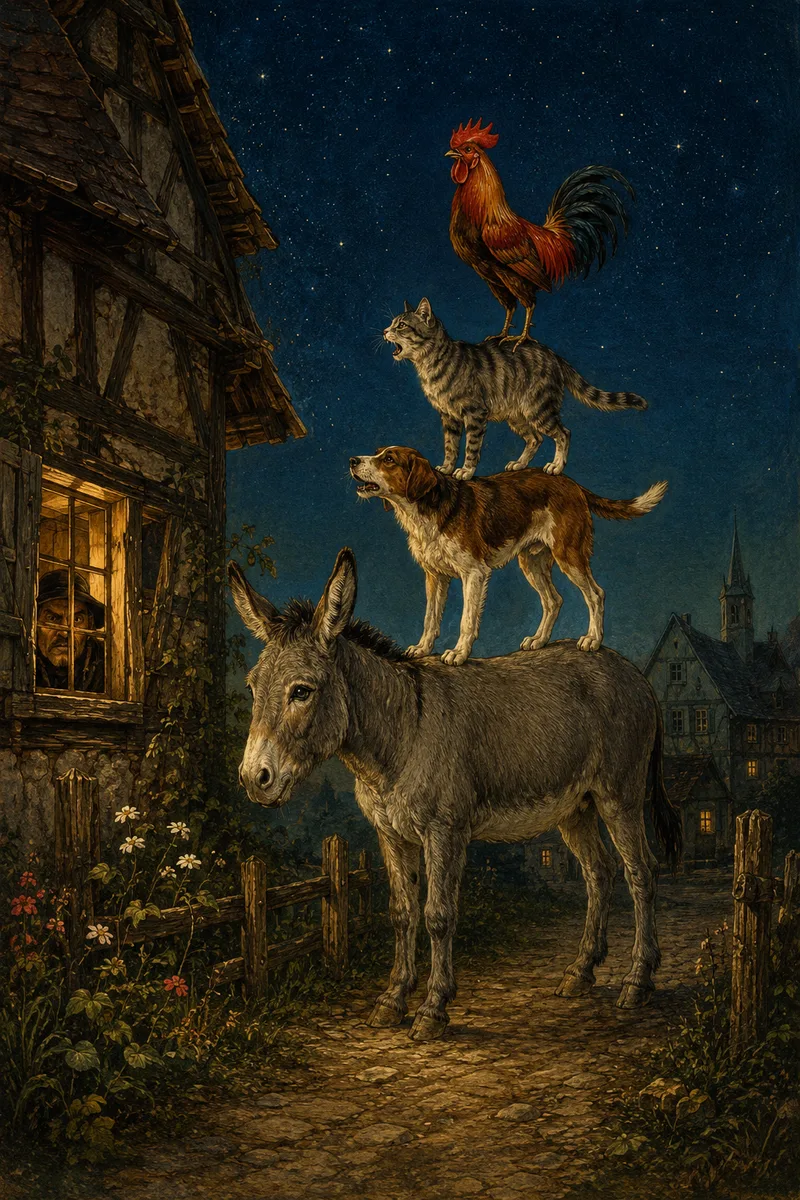
Four worn-out animals — a donkey, a dog, a cat, and a rooster — are each marked for death by the masters they served faithfully for years.
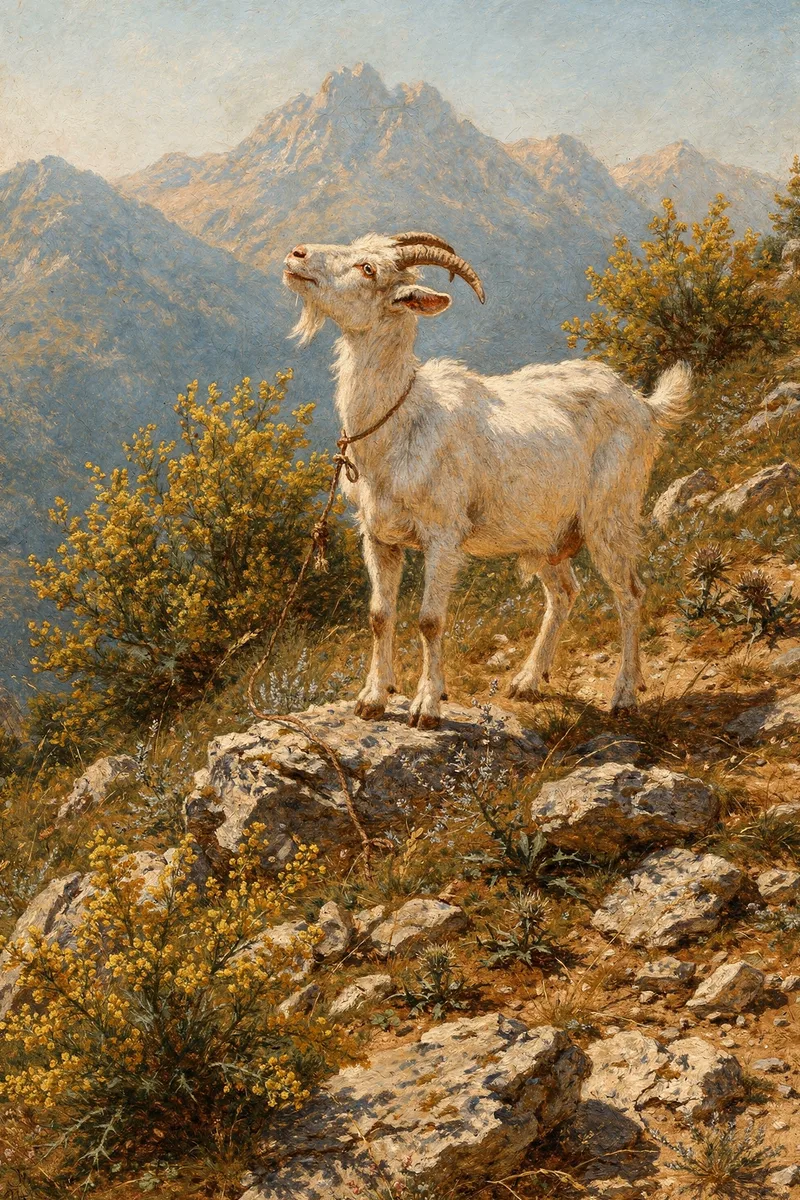
To warn a young poet against trading his freedom for a salaried desk, Alphonse Daudet spins the tale of Monsieur Seguin's little white goat.