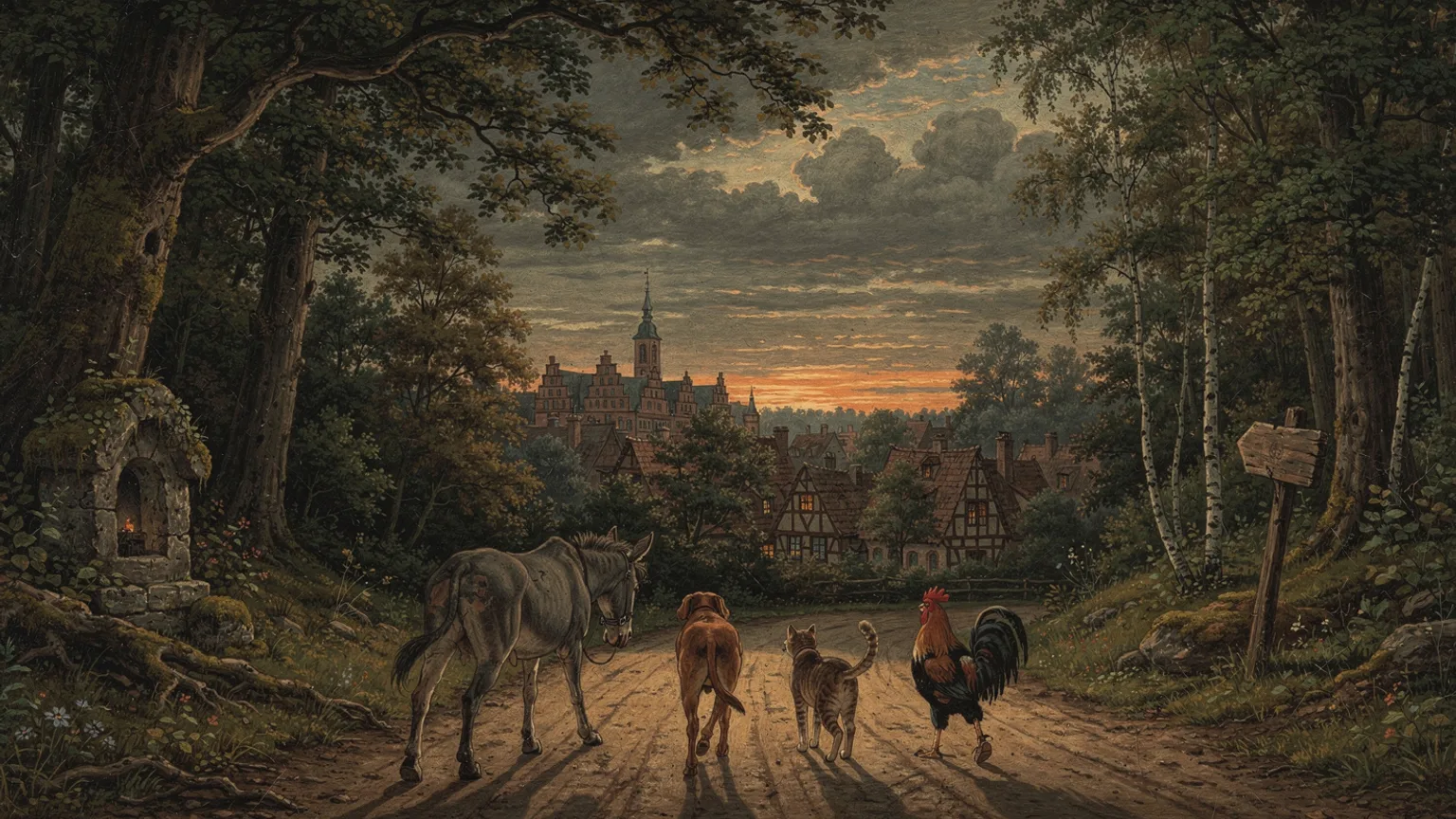
The Town Musicians of Bremen
About this story
Four worn-out animals — a donkey, a dog, a cat, and a rooster — are each marked for death by the masters they served faithfully for years. Rather than wait for the axe, they run away together to become street musicians in Bremen. On the road they stumble on a robbers' den, and a single burst of unholy 'music' turns the tables in the most gleeful way. Collected by the Brothers Grimm, the founders of the modern fairy tale and philology itself, this beloved animal tale has crowned the city of Bremen for two centuries. Short, sly, and perfectly told, it is a rousing anthem for the discarded — proof that solidarity outlasts strength.
By the numbers
About the author
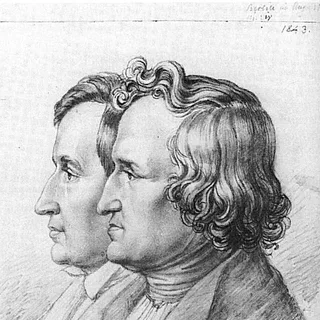
Jacob Grimm (1785–1863) and Wilhelm Grimm (1786–1859) were German philologists, folklorists and scholars who together laid the foundations of German studies and comparative linguistics. They are best known worldwide for the Kinder- und Hausmärchen (Children's and Household Tales, 1812–1857), the single most influential collection of European fairy tales, alongside foundational scholarly monuments such as the Deutsche Grammatik and the vast Deutsches Wörterbuch dictionary they began. Their tales — 'Cinderella', 'Hansel and Gretel', 'Snow White', 'Little Red Cap' — became a cornerstone of world children's literature and were inscribed on UNESCO's Memory of the World register. 'Die Bremer Stadtmusikanten' entered the collection only with the second edition of 1819 and grew into one of the Grimms' best-loved animal tales, its four discarded beasts becoming an enduring emblem of the city of Bremen.
Recognition
Anyone who wants to know how to tell a tale could do much worse than study 'The Musicians of Bremen', both a nonsensical little yarn and a masterpiece, in which the narrative carries not one unnecessary ounce.
The name Bremen was meant in the tale as mockery: the town's municipal music was said to sound as if animals were playing. According to Rölleke, the story does not originally come from Bremen at all, but 'from the Paderborn region', and the Brothers Grimm fell for this joke of the Westphalian contributors.
Lienkamp reads 'The Town Musicians of Bremen' as an 'uprising for life': as a story of the solidary resistance of discarded creatures threatened with death, who rise up against a lethal order and, instead of letting themselves be slaughtered, together fight for a better life.
Dieter Brand-Kruth ascribes to the tale parallels with the Universal Declaration of Human Rights: the revolt of the aged animals, cast out as useless, against their disposal anticipates the core idea of dignity and the right to life.
Practice typing
Type this retelling one piece at a time — your progress is saved as you go.
If you liked this
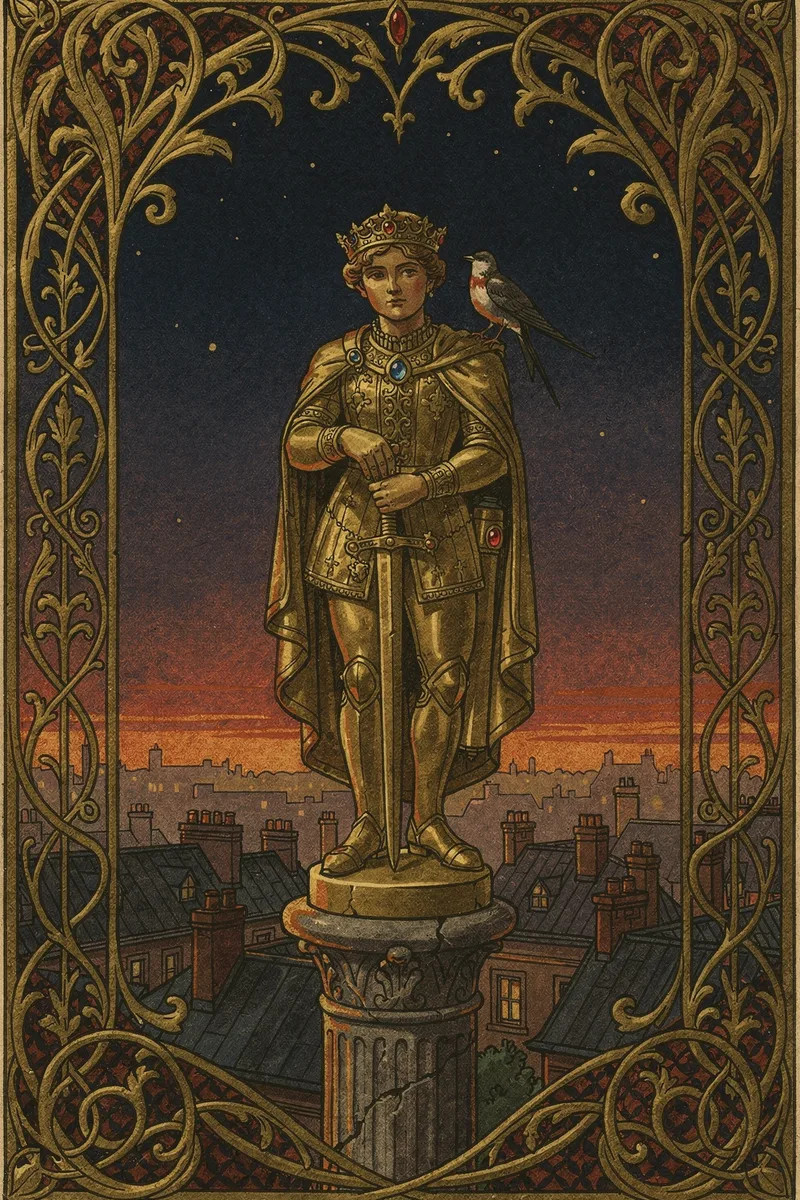
A jewelled statue of the Happy Prince gazes down on his city and weeps at the misery below, so he begs a little Swallow — left behind when his flock flew to Egypt — to strip away his gold and gems and carry them to the suffering poor.
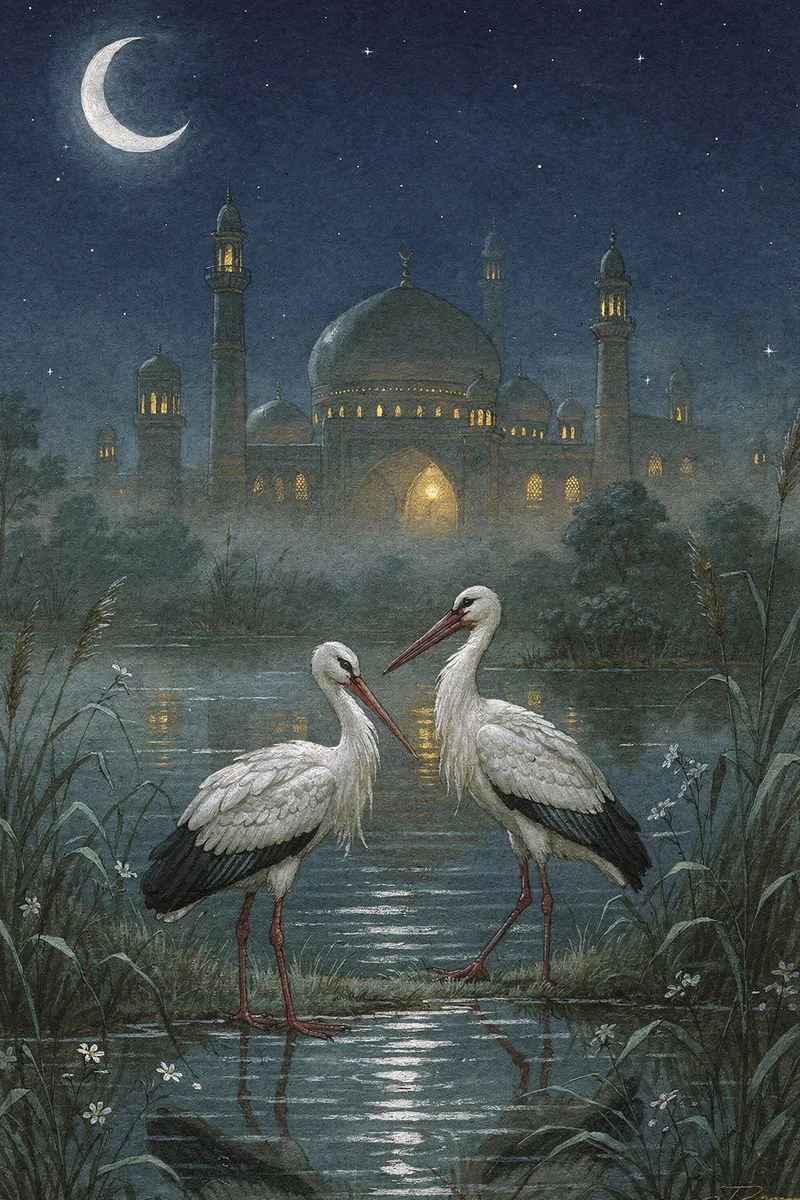
Baghdad, in the golden age of the caliphs: bored on a lazy afternoon, Caliph Chasid and his grand vizier Mansor buy a mysterious box of powder from a peddler, along with the magic word «Mutabor» that lets them turn into any animal they please — provided they never laugh while transformed.
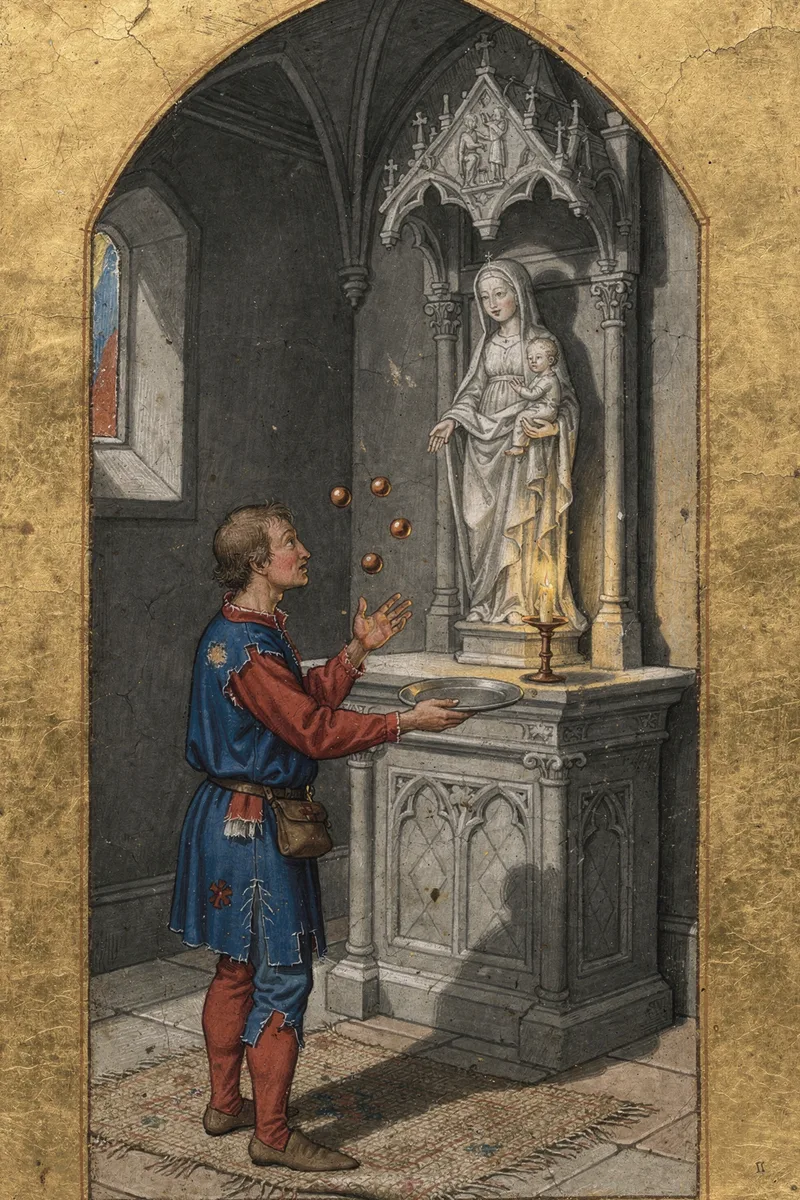
Barnabé is a poor traveling juggler who earns his coins on a threadbare carpet, spinning copper balls and balancing a tin plate on the tip of his nose.
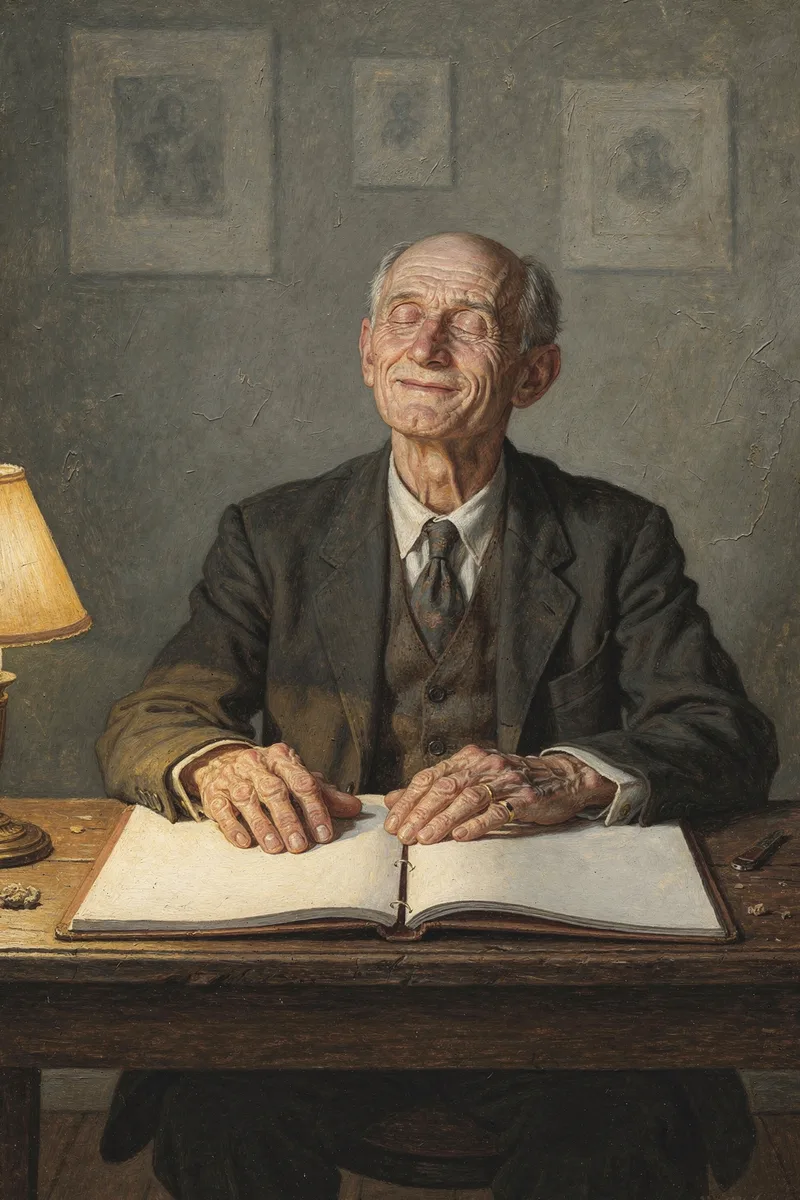
An old art dealer, his trade withered by the great German inflation, travels to a quiet provincial town to call on one of his oldest customers — a blind, retired collector who spent sixty years amassing a priceless hoard of prints and engravings.