The Death of the Empress of China
About this story
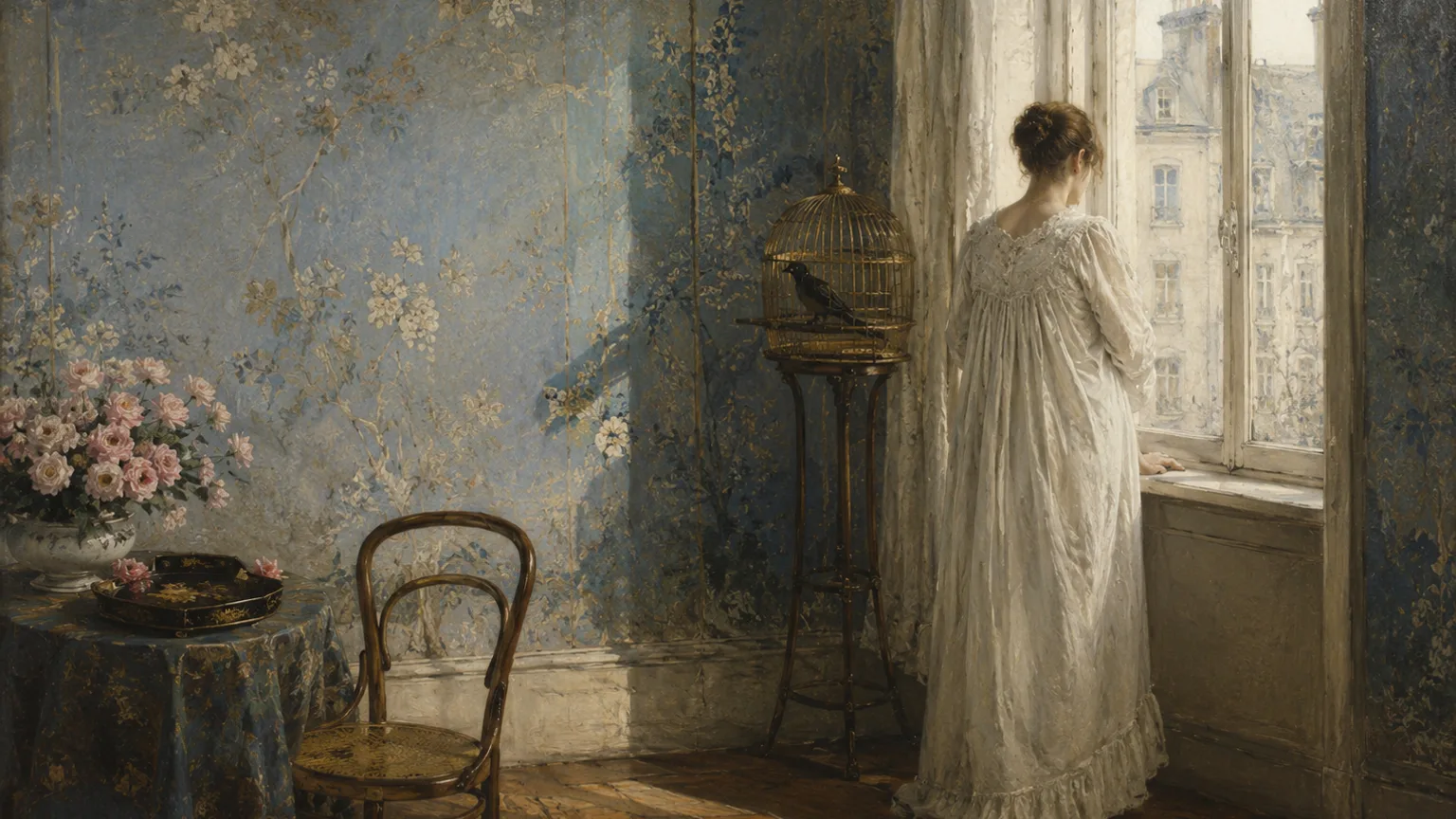
In a small blue drawing room at the end of an ordinary street, a sculptor keeps his living jewel: Suzette, his wife of eighteen months, who sings while his chisel rings next door. Then a travelling friend ships him a crate from Hong Kong. Inside is a porcelain bust — the Empress of China — and Recaredo builds her a private shrine, lays fresh flowers before her every morning, bows to her twenty times a day. Suzette stops eating. The blackbird stops singing. Rubén Darío, who launched Spanish-American modernismo with «Azul...» in 1888, added this tale to the enlarged 1890 edition and turned the movement's craving for imported chinoiserie into comedy — a jealousy plot settled by one sound: porcelain on the floor.
By the numbers
About the author
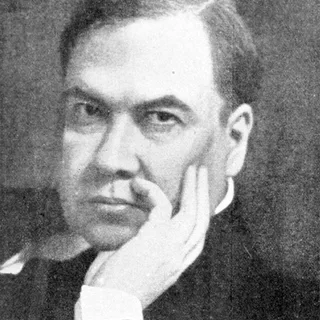
Rubén Darío (born Félix Rubén García Sarmiento in Metapa, Nicaragua, 1867; died in León, 1916) was the poet who launched Spanish-American modernismo and reshaped verse in Spanish more thoroughly than any writer since the Golden Age — Roberto González Echevarría calls him the first major poet in the language since the seventeenth century. His breakthrough was «Azul...» (Valparaíso, 1888), a hybrid of short stories and poems in which, as Enrique Anderson Imbert observed, the real innovation lay in the prose rather than the verse; «Prosas profanas y otros poemas» (1896) and «Cantos de vida y esperanza» (1905) then consolidated and deepened the movement. He spent his life as a journalist and diplomat between Chile, Argentina, Spain and France, and his technical range was extraordinary: he wrote in thirty-seven different metrical lines and 136 stanza forms, many of his own invention.
Recognition
From beginning to end, countless touches of humour reveal that «La muerte de la emperatriz de China» is not only a parody of the modernista taste for the refined and the exotic, but a censure of contemporary society that is no less severe for being funny.
In «La muerte de la emperatriz de la China» a first consciousness of the artist's estrangement takes shape, manifested in the opposition — never wholly resolved — between an inclination toward vital values and a preference for aesthetic reality as an alternative to them.
Through this character Darío shows that the modernistas' interest in the Orient was gradually moving beyond European models and daring to explore how Eastern culture, with all its peculiarity, beauty and mysticism, could exert a cultural and psychological influence.
Tinajero draws on Rama's ideas to analyse «La muerte de la emperatriz de China», and suggests that the tale invites readers to move beyond the limits of the Orient and to experience Oriental art from a singular perspective, appreciating its aesthetics «from their own sensibility» and context.
Practice typing
Type this retelling one piece at a time — your progress is saved as you go.
If you liked this

At first light, the shepherd boy Gonçalo drives his flock down through a sleeping Trás-os-Montes village to the river — hoping, against hope, to find on the far bank Rosária, the shepherd girl he has not seen for so long.
Two weeks into her marriage, a young bride lies awake beside her sleeping husband, proudly bearing the weight of his fair head on her shoulder.
Three young women share a household in a town of 1890s western Ukraine: a painter who calls herself a «child of fortune», a quiet future schoolteacher, and a pianist who composes waltzes she refuses to write down.
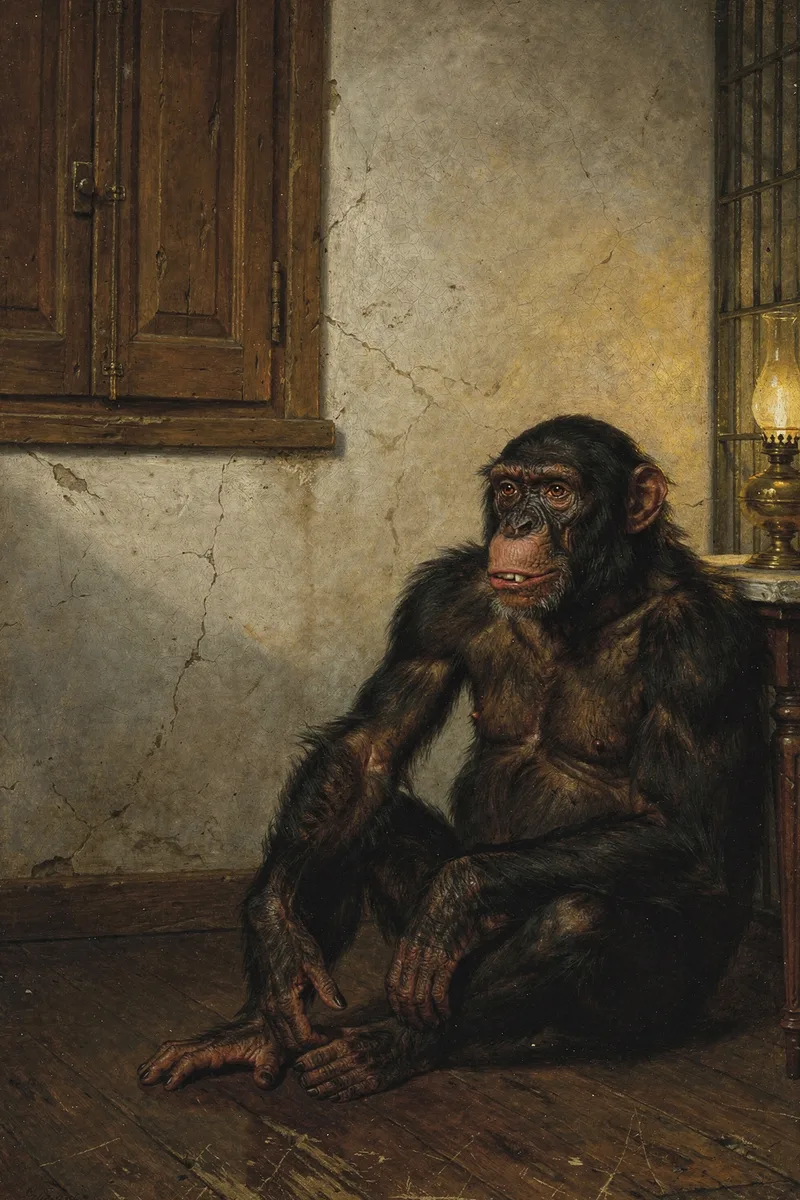
A ruined circus goes under the hammer, and a hard-headed merchant walks away with a chimpanzee named Yzur — and a strange conviction: that monkeys are not beasts but fallen men, creatures who long ago renounced speech to escape the yoke of labor, and so fell silent forever.