Rustic Idyll
About this story
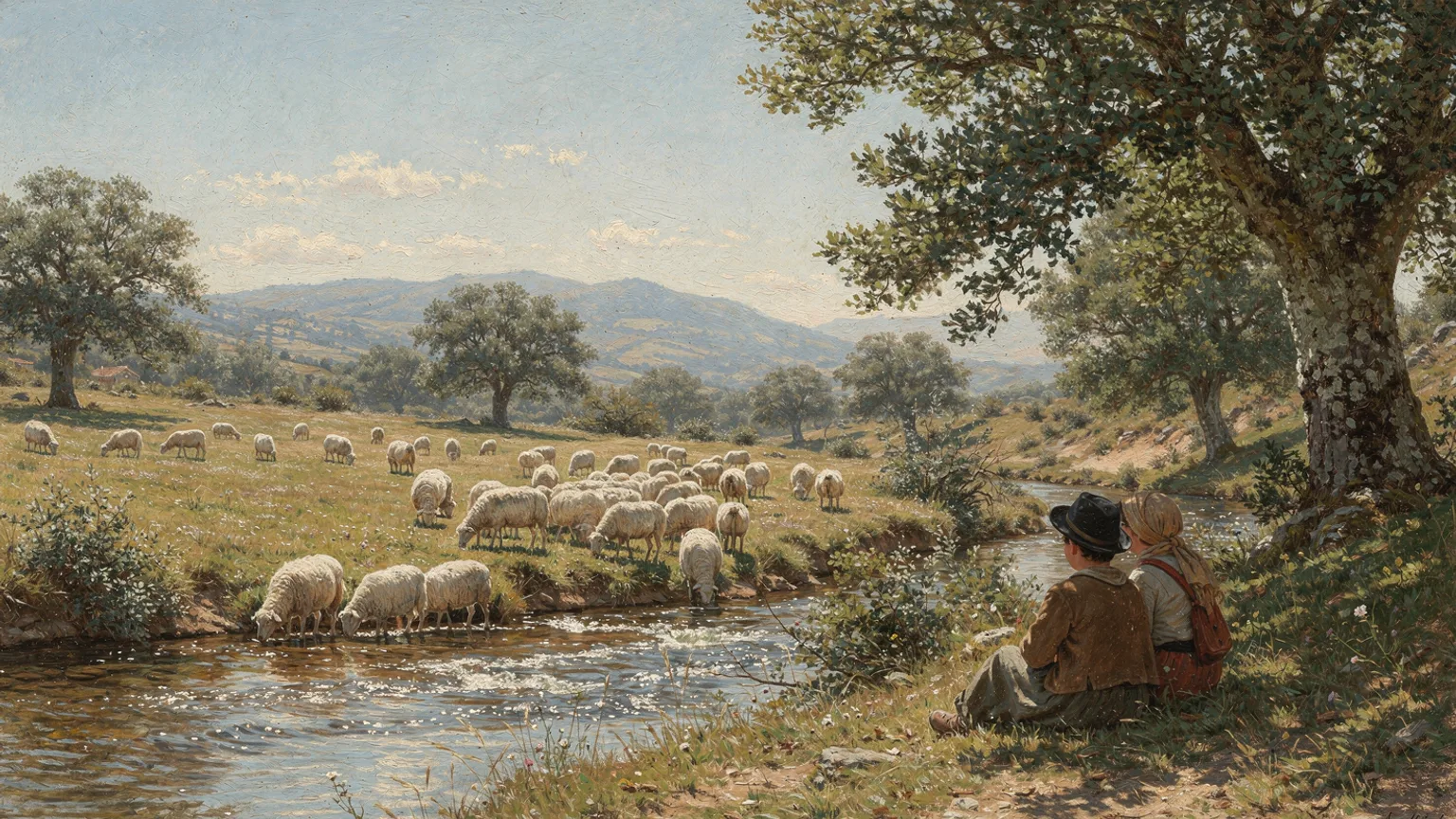
At first light, the shepherd boy Gonçalo drives his flock down through a sleeping Trás-os-Montes village to the river — hoping, against hope, to find on the far bank Rosária, the shepherd girl he has not seen for so long. And she is there. In this sunlit tale that opens «Os Meus Amores» (1891), Trindade Coelho — one of the acknowledged masters of the Portuguese rustic short story — lets a whole summer day unfold: two children, their mingled flocks, an elder-wood flute, games in the shade, and shy talk of vows made to the saints. Nothing happens, and everything does. A pastoral of rare freshness — tender, unspoiled, and utterly unforgettable.
By the numbers
About the author
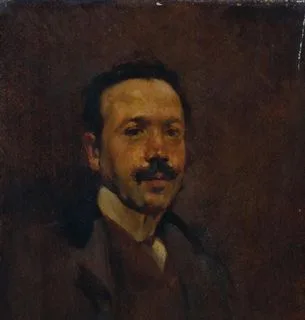
José Francisco Trindade Coelho (1861–1908) was a Portuguese writer, magistrate and republican publicist, generally regarded as one of the masters of the Portuguese conto rústico (rustic short story). Born in Mogadouro, in the Trás-os-Montes region, he studied law at Coimbra and worked as a public prosecutor and judge while pursuing an intense literary and civic-pedagogical career. His reputation rests above all on «Os Meus Amores» (1891), a celebrated collection of rural tales steeped in nostalgia for his Trás-os-Montes childhood, and on the memoir «In Illo Tempore» (1902), which recalls his student years at Coimbra. «Idílio rústico» is the opening story of «Os Meus Amores», a tender pastoral of two shepherd children; dedicated to Fialho de Almeida, it exemplifies the delicacy of style, folk speech and idealized realism for which the whole collection is prized. He died in Lisbon in 1908.
Recognition
His best-known book, and also his most accomplished, «Os Meus Amores», is one of those works that win and keep the favour of the public. [...] It is in truth a collection of tales of a freshness and an absence of artifice without parallel in Portuguese literature. [...] It is thus a sui generis work, marked by an originality that sets it apart from kindred works.
The image of the shepherd boy leading his flock in the «whitish» light along the «brook» flanked by holm oaks, gathering «fresh blackberries from the bramble», is a lovely bucolic scene — yet not stripped of the dangers hinted at in Gonçalo's fear of snakes.
Over the realism of the tales — tempered by a wistful evocation of rural life — there hovers an idealizing vision of the provinces, imbued with a subtle moralism, that sets Trindade Coelho apart from the Realism-Naturalism of Teixeira de Queirós and of the other cultivators of the rustic tale.
Practice typing
Type this retelling one piece at a time — your progress is saved as you go.
If you liked this
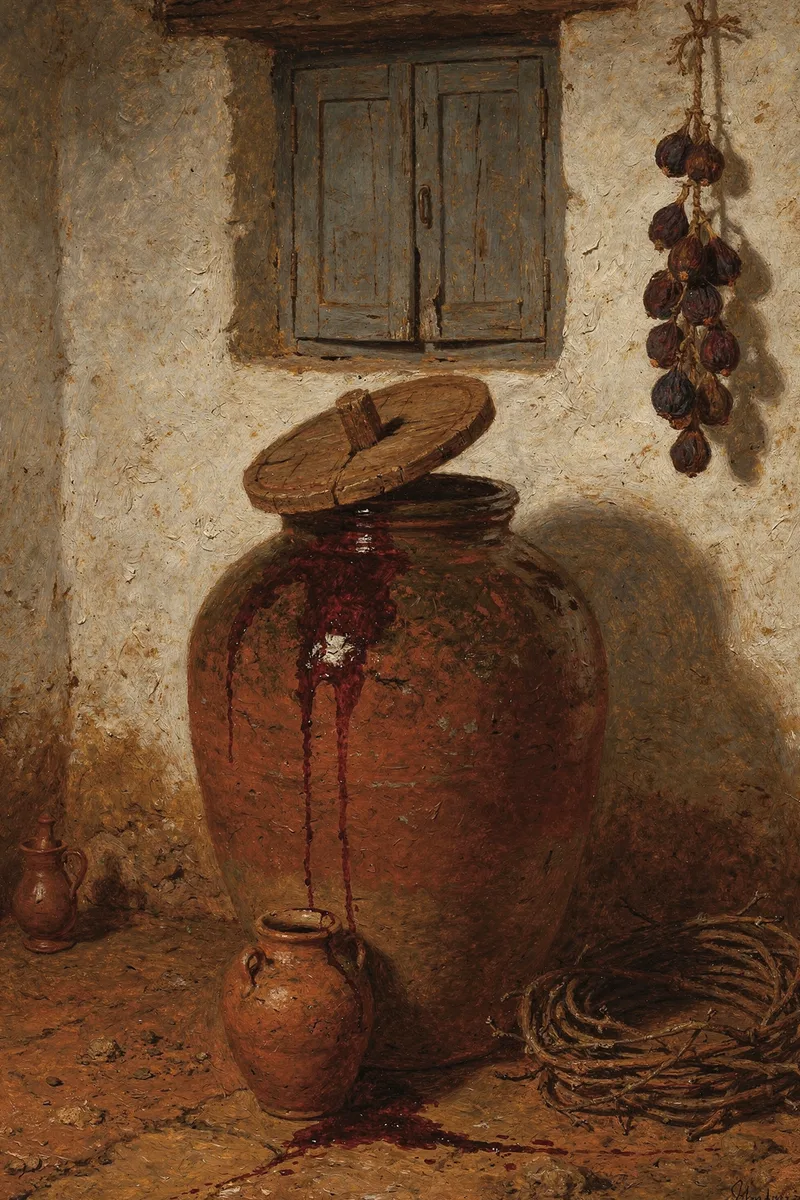
After a bountiful harvest, the poor laborer Canellas pays off every debt and hoards a last treasure: a great jar of ruby wine fermenting in his pantry.
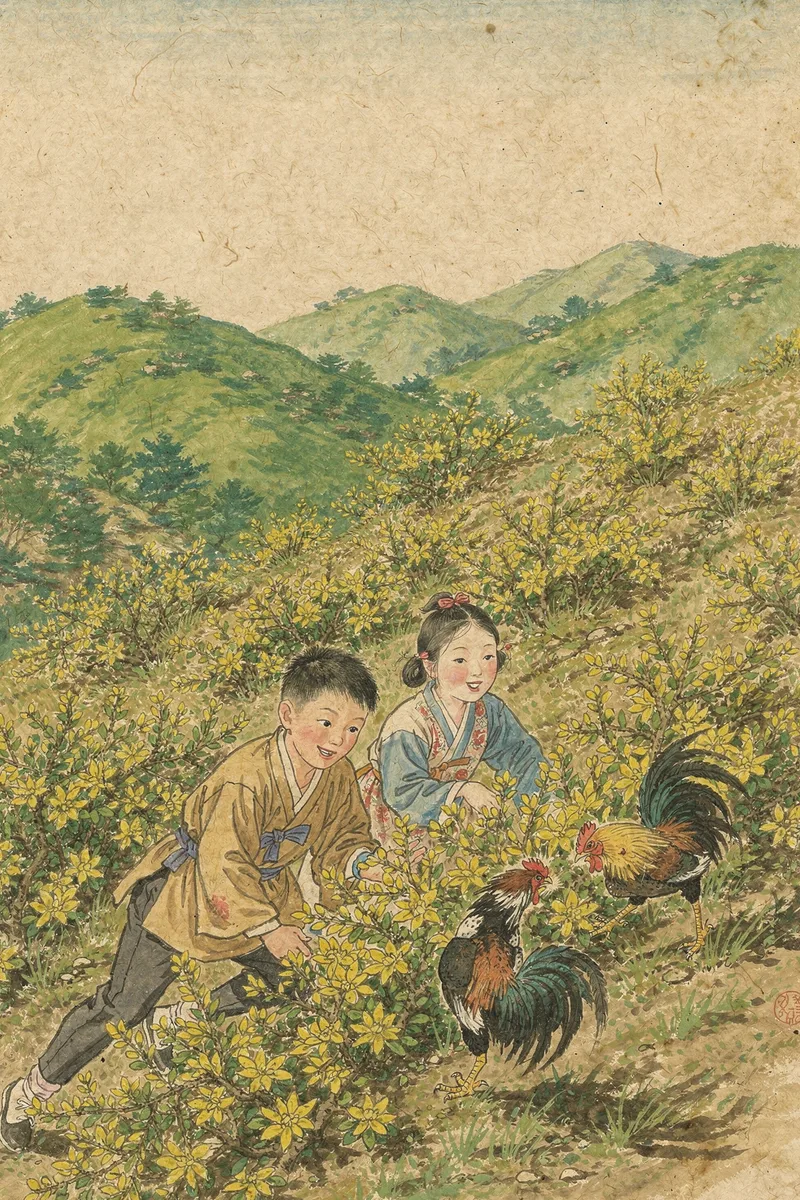
In a mountain village in 1930s rural Korea, a good-natured but hopelessly dense farm boy cannot fathom why the landlord's spirited daughter, Jeomsun, keeps tormenting him — thrusting potatoes at him, taunting him, and setting her rooster on his.
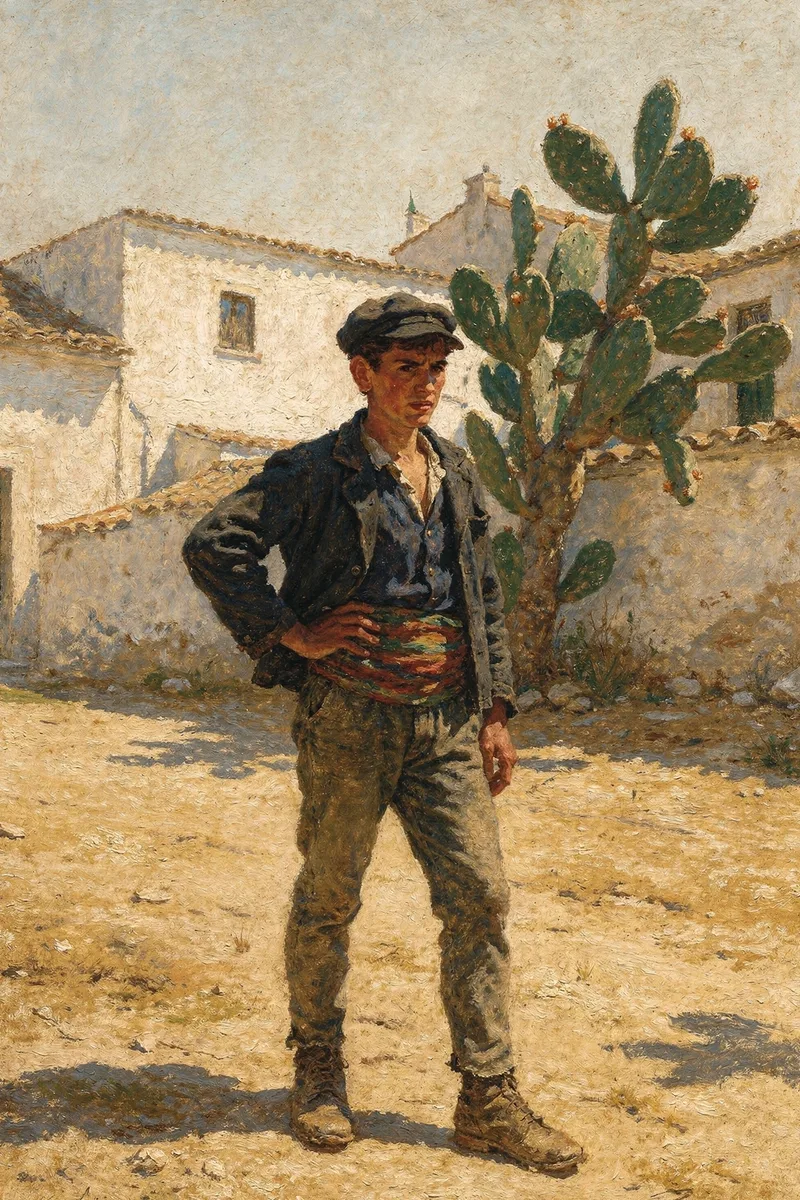
Home from his army service, the dashing Turiddu Macca struts the village square — only to find that Lola, the girl he had loved, has married the prosperous carter compare Alfio.
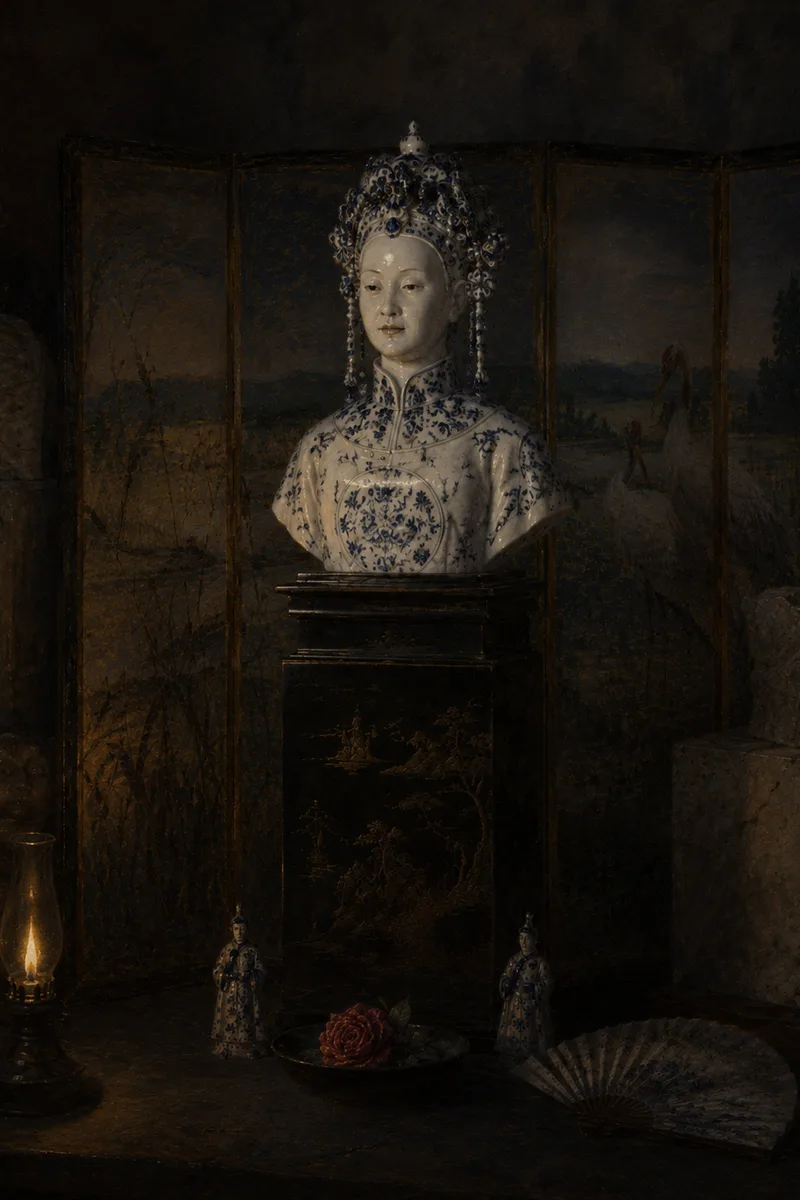
In a small blue drawing room at the end of an ordinary street, a sculptor keeps his living jewel: Suzette, his wife of eighteen months, who sings while his chisel rings next door.