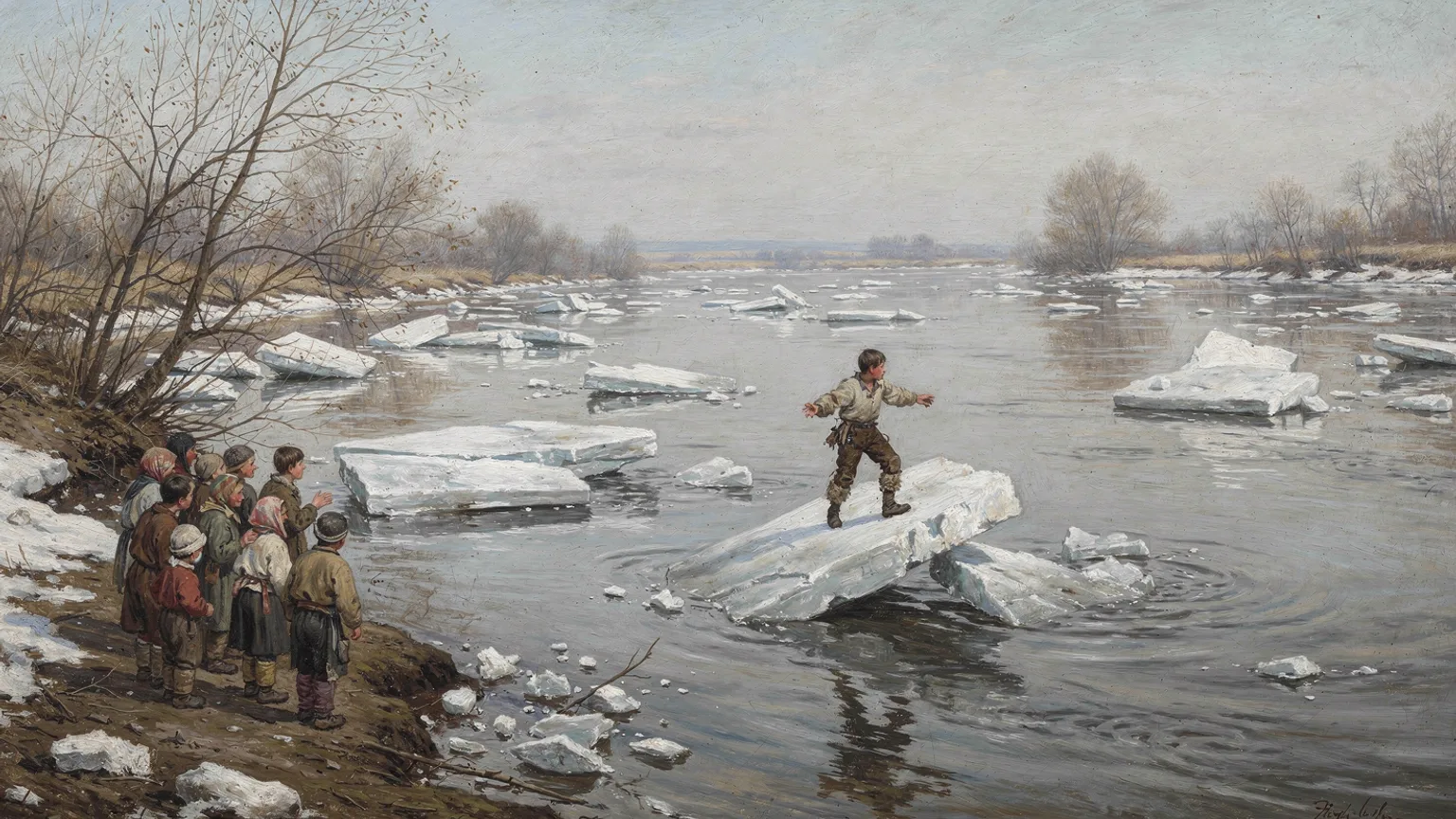
Fedko the Troublemaker
About this story
Fedko is the wildest boy on the street — the ringleader of every prank, the first into every fight, the one the neighbours blame for everything that goes wrong. Yet beneath the ragamuffin's bravado beats a heart of fierce honesty and reckless courage, a boy who would sooner take a beating than betray a friend. Written around 1912 by Volodymyr Vynnychenko (1880–1951) — one of Ukraine's most widely read prose writers and the first head of its revolutionary government — «Fedko the Troublemaker» is a beloved classic of childhood: tender, unsentimental, unforgettable.
By the numbers
About the author
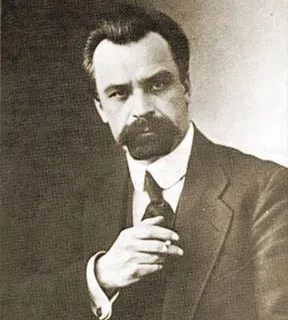
Volodymyr Vynnychenko (1880–1951) was one of the most widely read Ukrainian prose writers and playwrights of the early twentieth century and, at the same time, a leading revolutionary politician who became the first head of government of the Ukrainian People's Republic. Ivan Franko hailed the sudden arrival of his «muscular» and temperamental talent, while Mykhailo Kotsiubynsky testified that everyone in Ukraine was reading Vynnychenko. Proscribed in Soviet Ukraine until the late 1980s, he died in exile in Mougins, France, and is today restored to his place among the nation's classic authors.
Recognition
And where did such a one spring up among us? Amid the languid, over-refined and feeble, or else the trite and talentless generation of our contemporary Ukrainian writers, there suddenly emerged something so strong, so decisive, so muscular and full of temperament — something that does not reach into its pocket for a word but pours words out in torrents, like life itself.
Whom do we read? Vynnychenko. Whom is everyone talking about, the moment the conversation turns to literature? Vynnychenko. Whom do we buy? Vynnychenko again.
In his choice of protagonists and his themes Vynnychenko abandoned the former populist didactic piety for the more risqué world of contemporary revolutionary life, presented in a dynamic, impressionistic narrative style; his short stories were extremely popular as a result.
«Fedko the Troublemaker» is a biographical story, a self-portrait of the writer himself.
Practice typing
Type this retelling one piece at a time — your progress is saved as you go.
If you liked this
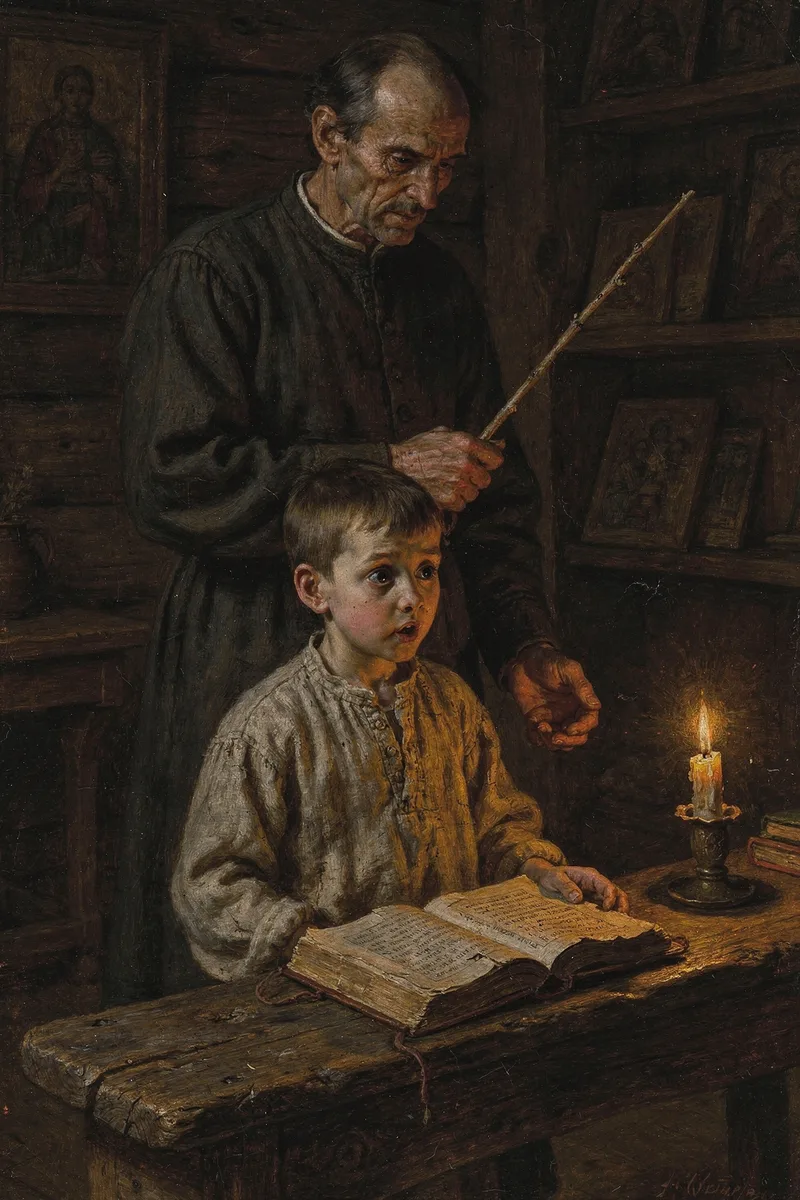
A quick, high-spirited village boy, raised on hard work and open fields, is handed over to the old village school — and to a year of rote drilling, fear and the rod.
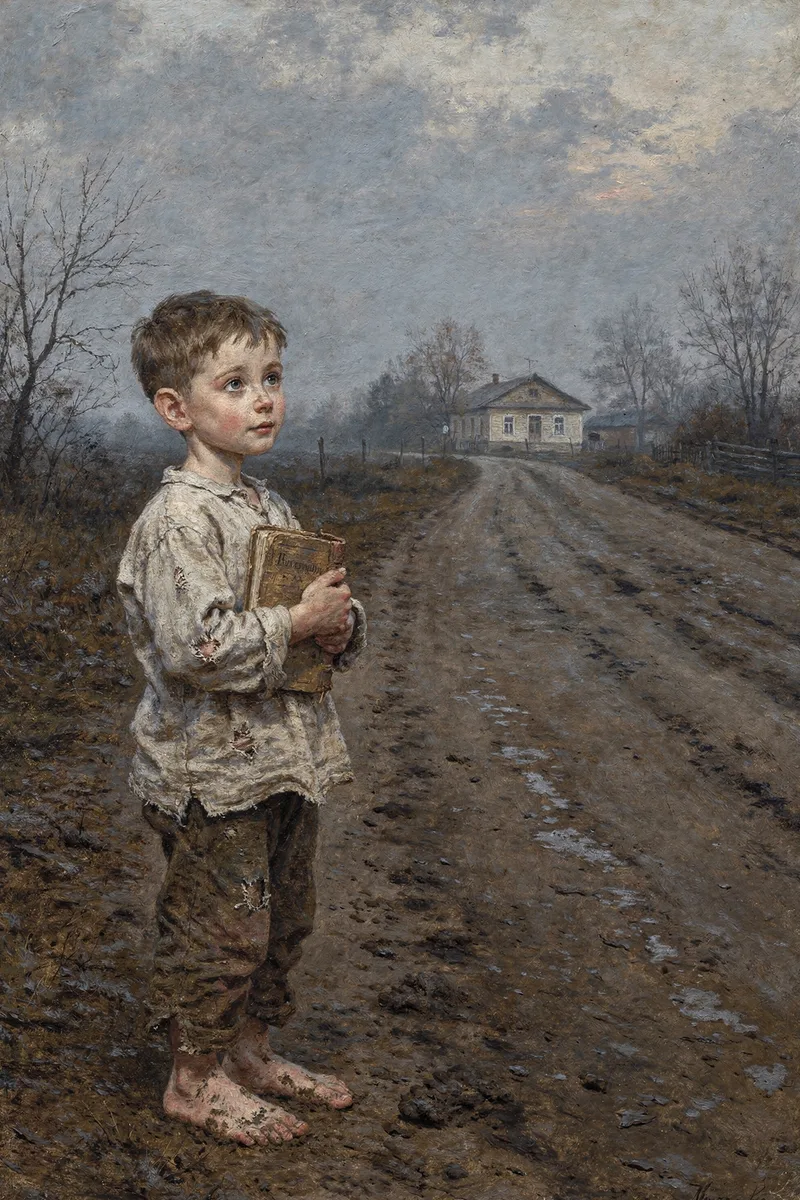
A gifted village boy, gentle and shy, wants nothing so much as to learn — but in a world of crushing peasant poverty, even a pair of boots and a teacher's kindness may not be enough to keep him in school.
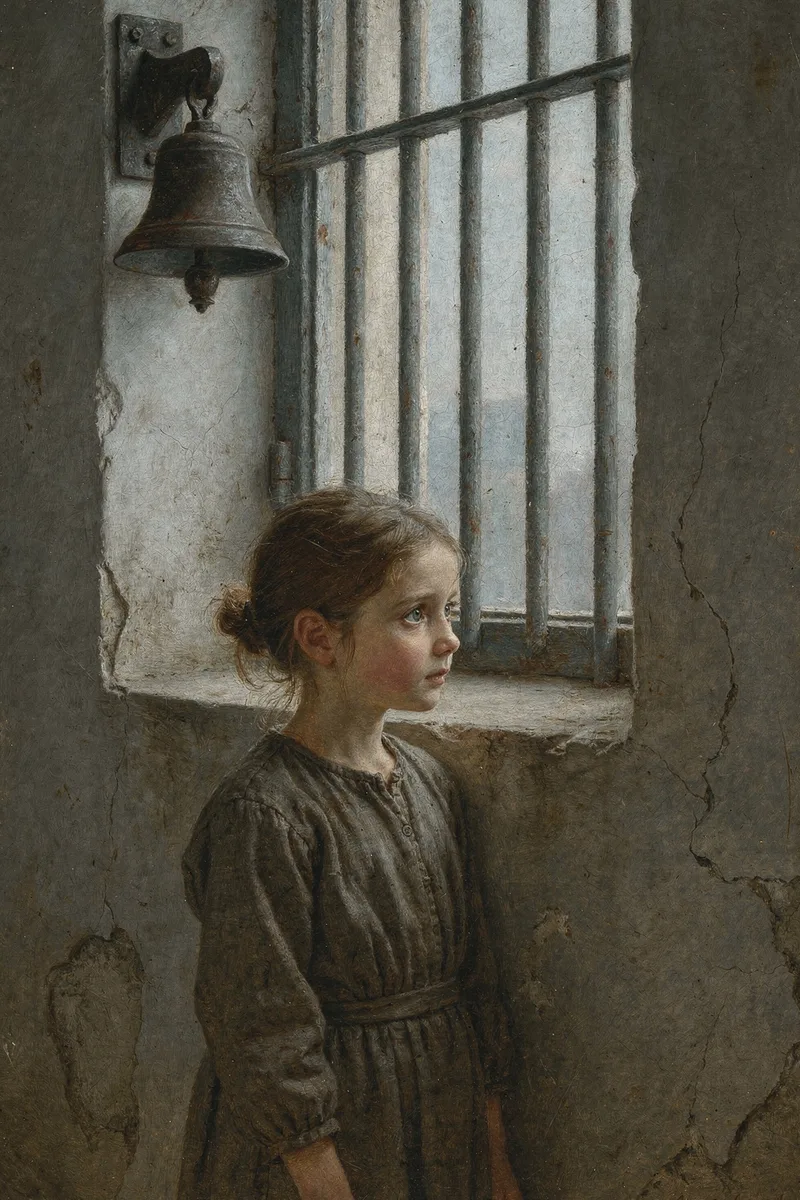
A gifted, songful little village girl is taken into a big-city orphanage-school, where an alien tongue and the merciless clang of the institution's bell close over her like cold water.
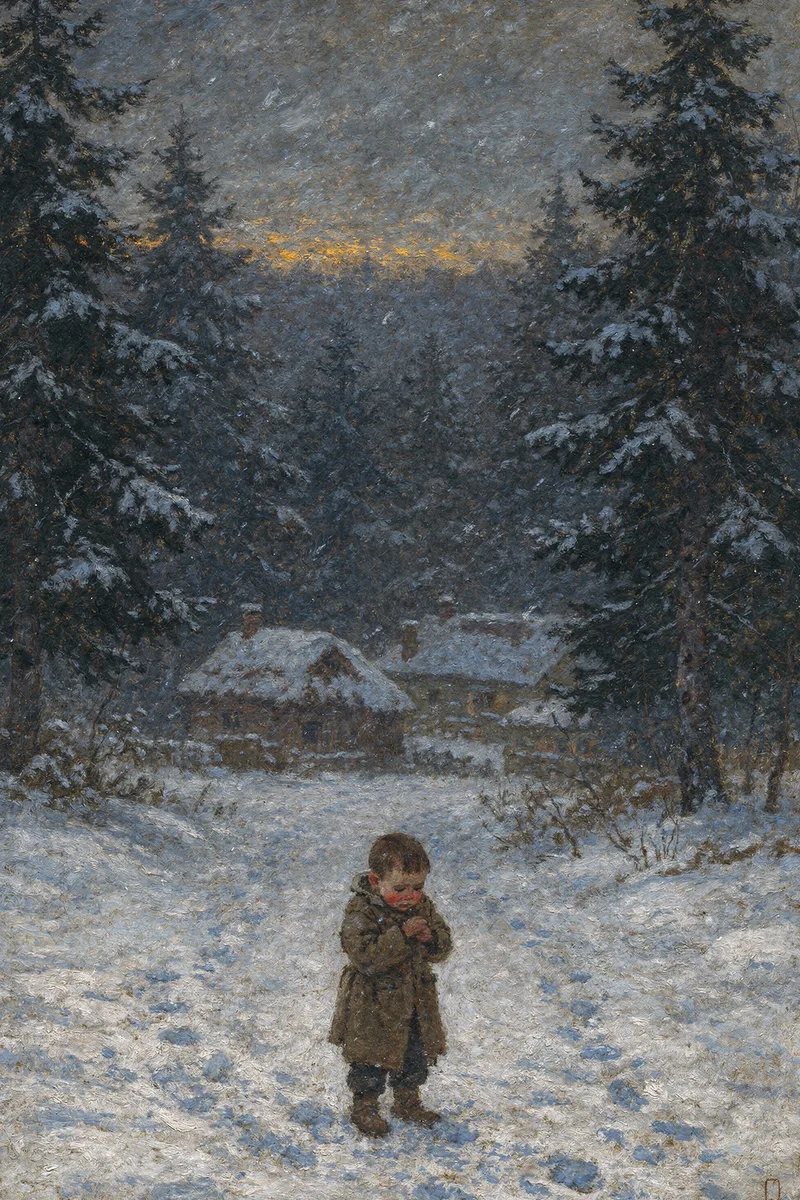
On a bitter winter's eve the destitute widow Katria tries to frighten her little son Pylypko out of going caroling by telling him of «Morozenko», the cruel old spirit of the frost.