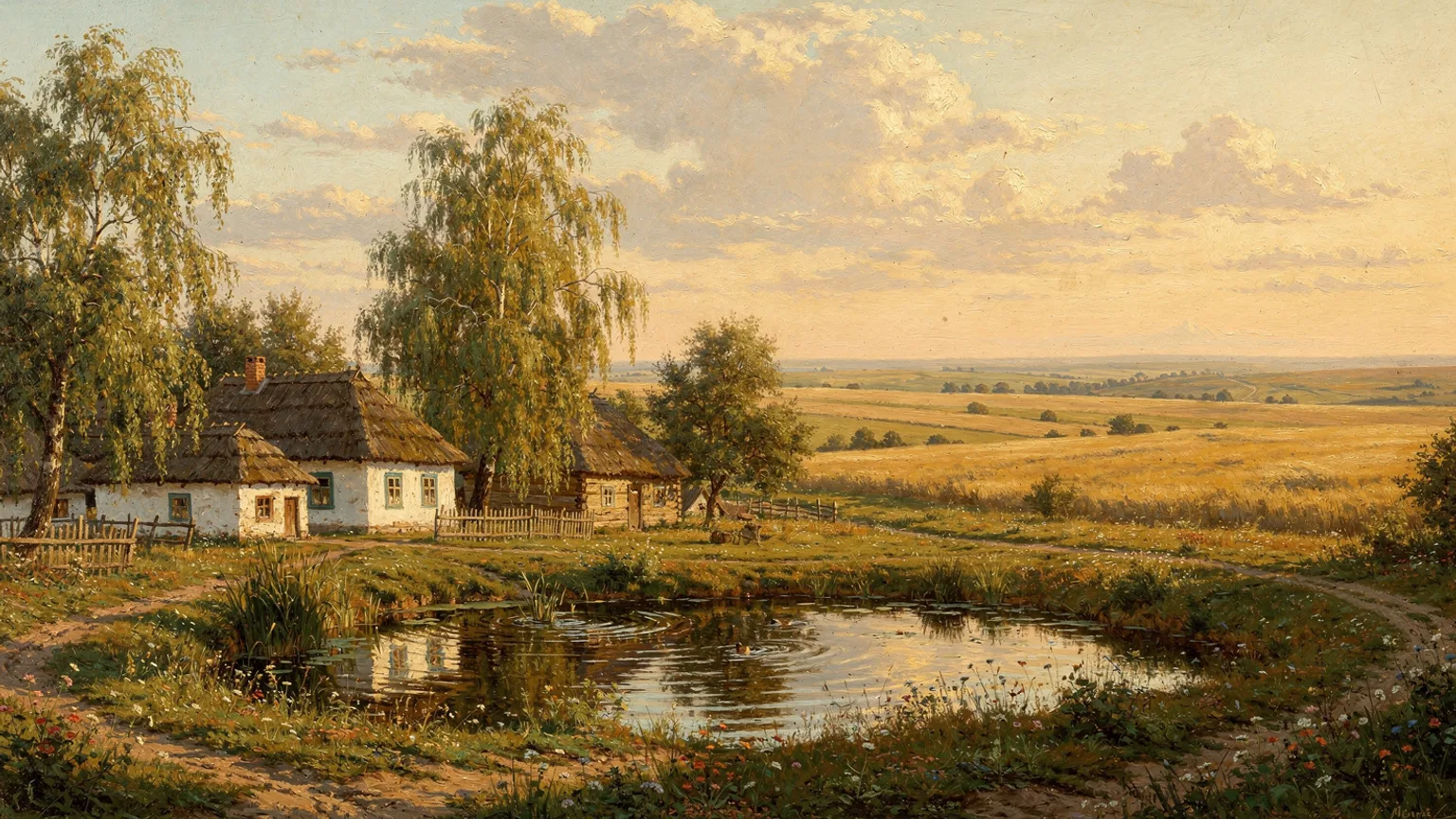
The Little Bell
About this story
A gifted, songful little village girl is taken into a big-city orphanage-school, where an alien tongue and the merciless clang of the institution's bell close over her like cold water. Written in 1897, «The Little Bell» is one of the tenderest and most harrowing studies of a child's soul in Ukrainian literature, its recurring bell tolling the loss of home, mother tongue and self. Borys Hrinchenko (1863–1910) — writer, teacher and lexicographer who «worked more than he lived» — poured into it his lifelong care for the Ukrainian child and the Ukrainian word.
By the numbers
About the author
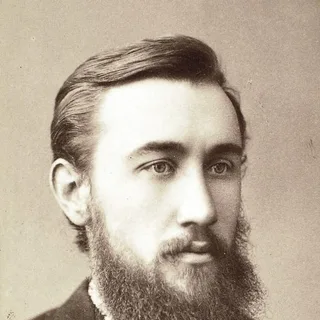
Borys Hrinchenko (1863–1910) was a Ukrainian writer, teacher, lexicographer and tireless public figure, author of some fifty realist short stories and four novelettes of peasant and childhood life. With his wife he compiled the four-volume «Dictionary of the Ukrainian Language» (1907–1909), one of the finest works of Slavic lexicography, and wrote among the first Ukrainian-language school textbooks. A contemporary said he «worked more than he lived»; tuberculosis cut short that labour in the Italian town of Ospedaletti.
Recognition
He belonged to those restless, turbulent natures that «throw themselves in every direction, fill the gaps, patch things up, raise what has fallen, tear down what is badly set, build anew, and seek ways to bring more hands to the work».
In his fifty realistic short stories and tales, and particularly in his four novelettes, he depicted Ukrainian peasant life while raising urgent social questions.
«He worked more than he lived» — these words capture the life of Borys Hrinchenko, a writer who gave himself without reserve to the Ukrainian word, to schooling and to scholarship.
The story «The Little Bell» (1897), in its theme and in the intensity with which its conflict unfolds, has no equal in our literature; with it Hrinchenko attained the highest level of world realist short-story writing.
Practice typing
Type this retelling one piece at a time — your progress is saved as you go.
If you liked this
Nobody in the neighbourhood remembers her real name.
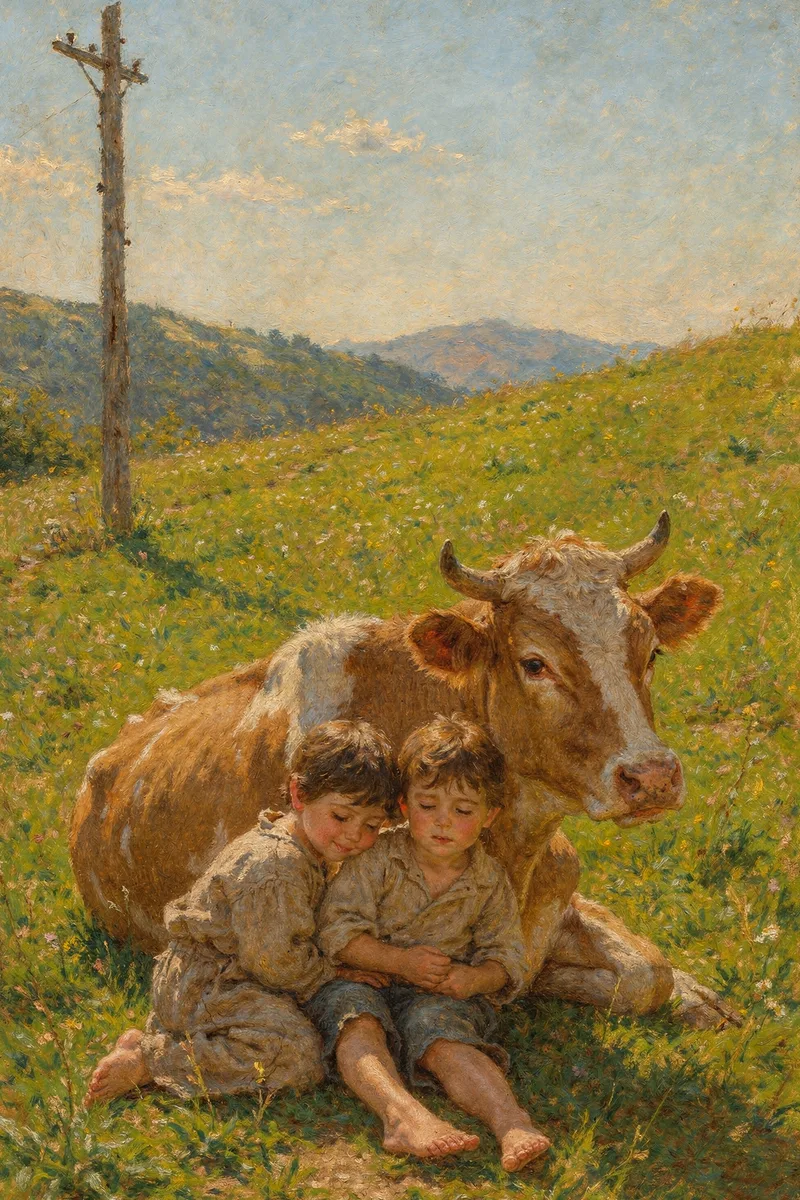
On a green triangular meadow called Somonte, cut at one corner by the Oviedo–Gijón railway, two motherless twins — Rosa and Pinín — and their gentle cow, la Cordera, are inseparable: «always the three of them».
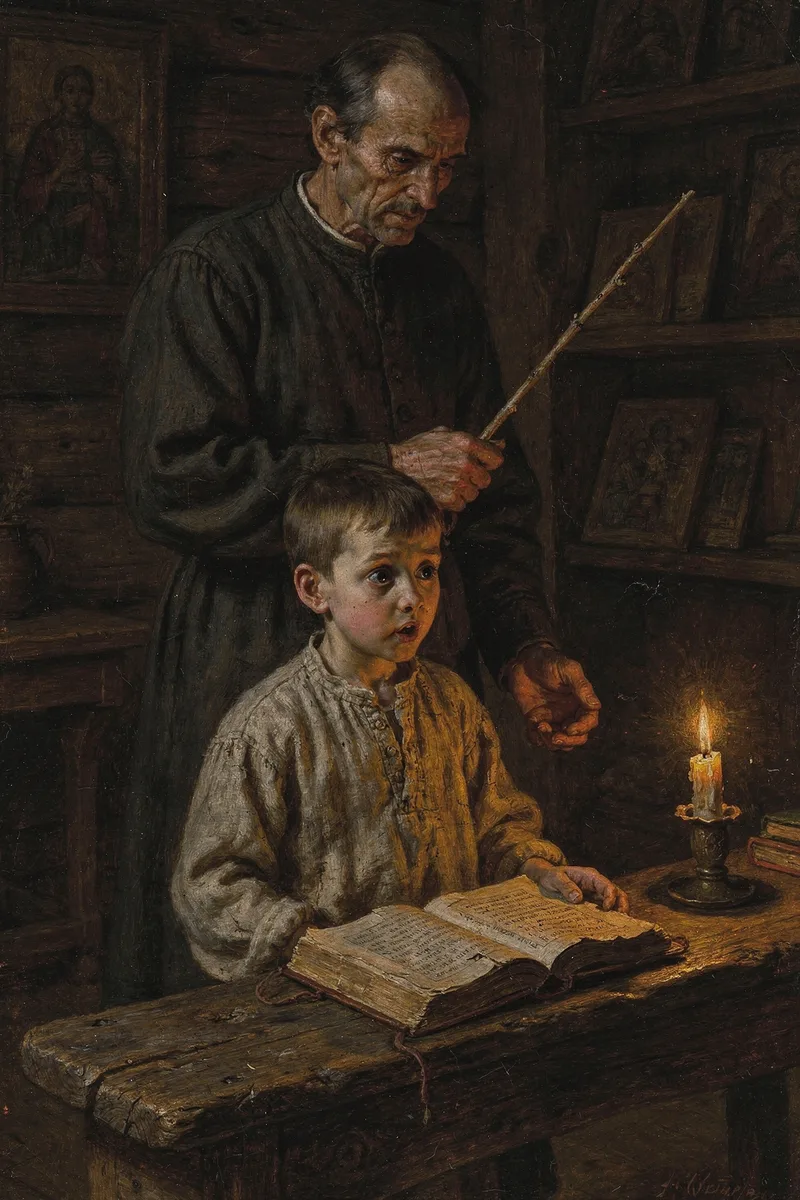
A quick, high-spirited village boy, raised on hard work and open fields, is handed over to the old village school — and to a year of rote drilling, fear and the rod.
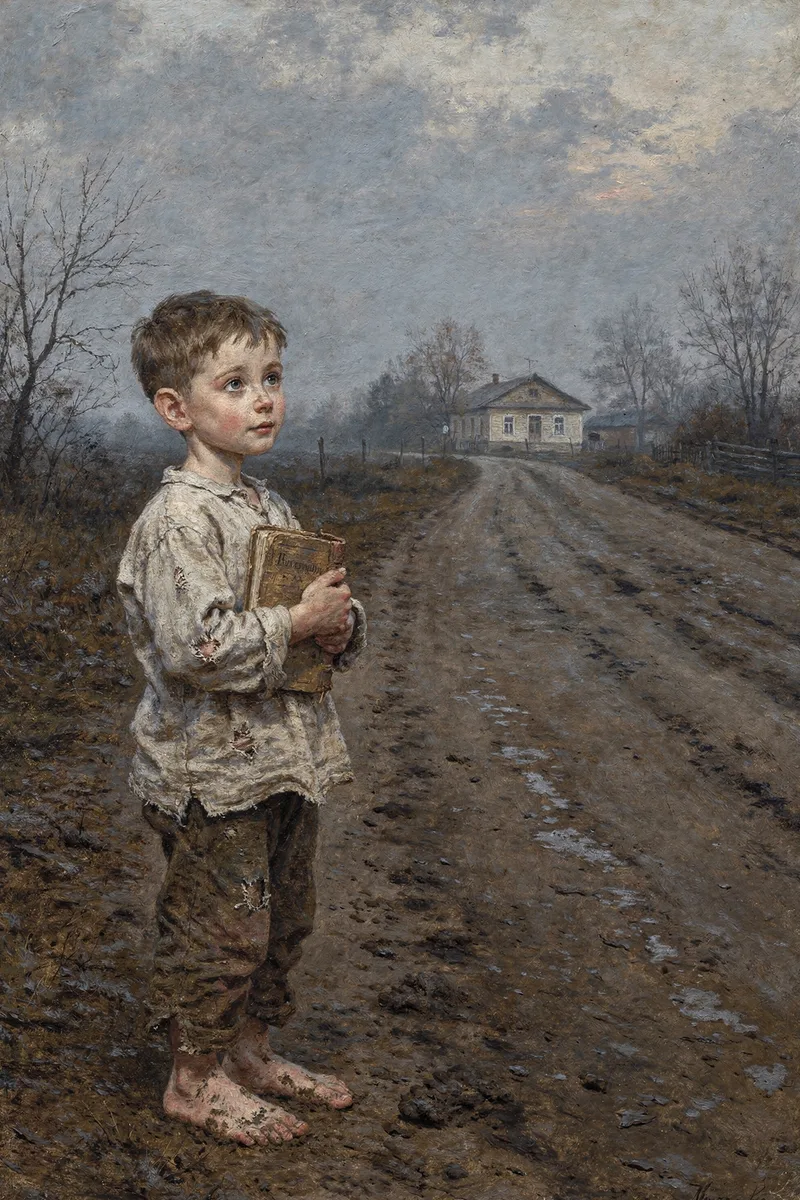
A gifted village boy, gentle and shy, wants nothing so much as to learn — but in a world of crushing peasant poverty, even a pair of boots and a teacher's kindness may not be enough to keep him in school.