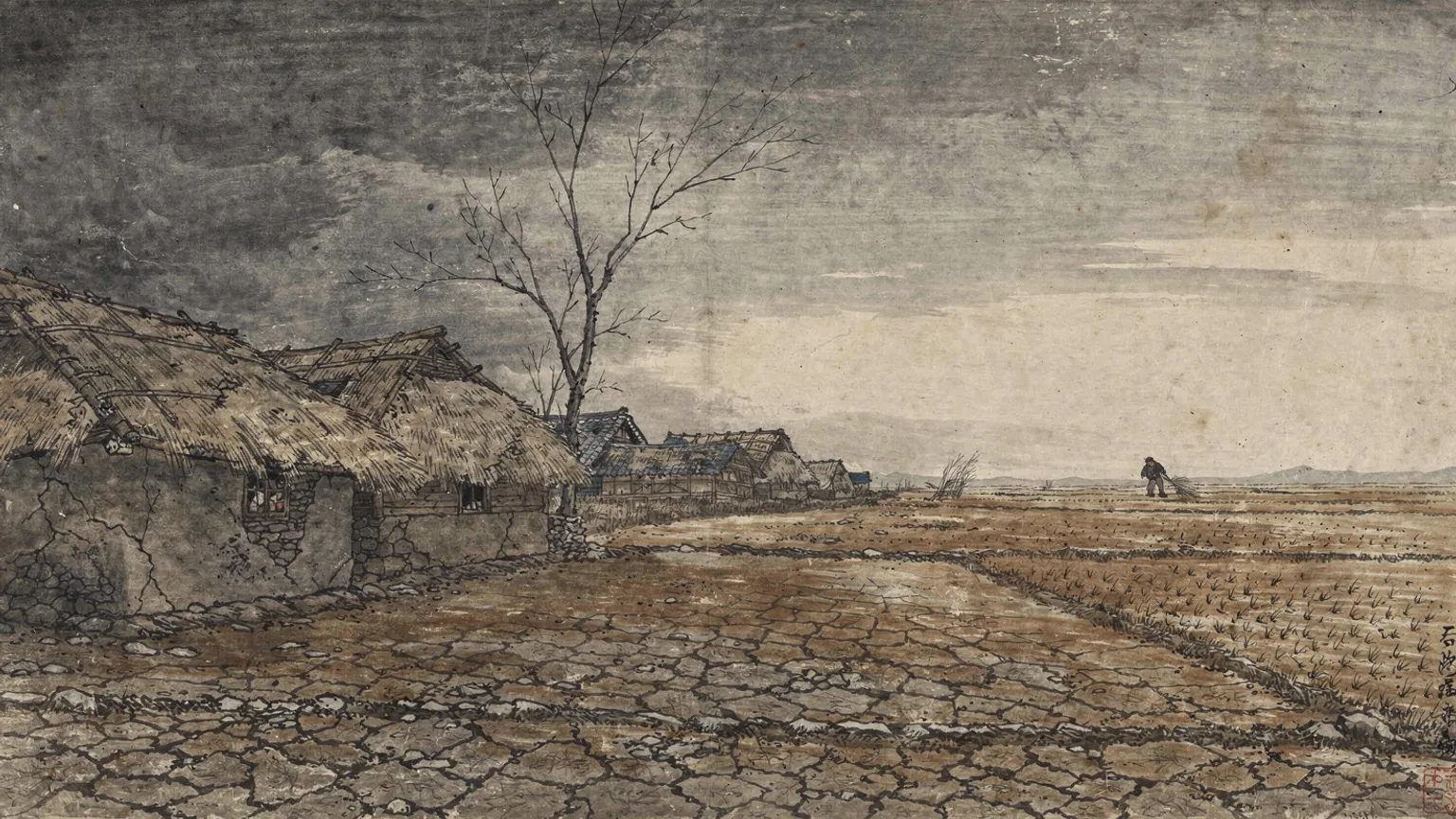
Extreme Poverty
About this story
In a starving village under Japanese colonial rule, an old woman known only as the grandmother of Maechon wears herself ragged to carry her two daughters-in-law through hunger, cold, and childbirth. Baek Sin-ae’s «Extreme Poverty» (1934) is a landmark of Korean women’s realism: spare, clear-eyed, and fierce with life, it looks destitution full in the face and finds there a mother’s stubborn, unkillable will to keep her own alive. A short, scorching standout from one of the boldest women writers of colonial Korea.
By the numbers
About the author
Baek Sin-ae (1908–1939) was one of the pioneering women writers of colonial-era Korea. Kept from school by a conservative father, she secretly changed her name and birth year to train among Korea’s first women teachers, then threw herself into the socialist women’s movement and stowed away across the border into Siberia — for which, on her return, she was arrested and tortured. Debuting in 1929 as the first woman to win the Chosun Ilbo new-writer’s contest, she forged from that hard experience an unsentimental «women’s realism» that ranks her, alongside Kang Kyung-ae and Park Hwa-seong, among the foremost women writers of the 1930s, before illness took her at thirty-one.
Recognition
In «Extreme Poverty», the old woman of Maechon stands as an emblem of a fierce, unbending motherhood — one that refuses to bow to destitution and carries her children through it.
«Extreme Poverty» — with its portrait of a destitute grandmother running herself ragged for her daughter-in-law’s childbirth — is counted among the works in which Baek Sin-ae secured a women’s realism entirely her own.
The scene in which she holds herself back from relieving her body in order to endure her hunger lays bare the reality of a lower class where human dignity has vanished and survival has become the only goal in life.
Baek Sin-ae planted the tragedy of women at the very heart of the theme of poverty — a light of history who, through her literature of resistance, kept alive the spirit of the women of Gyeongbuk.
Practice typing
Type this retelling one piece at a time — your progress is saved as you go.
If you liked this
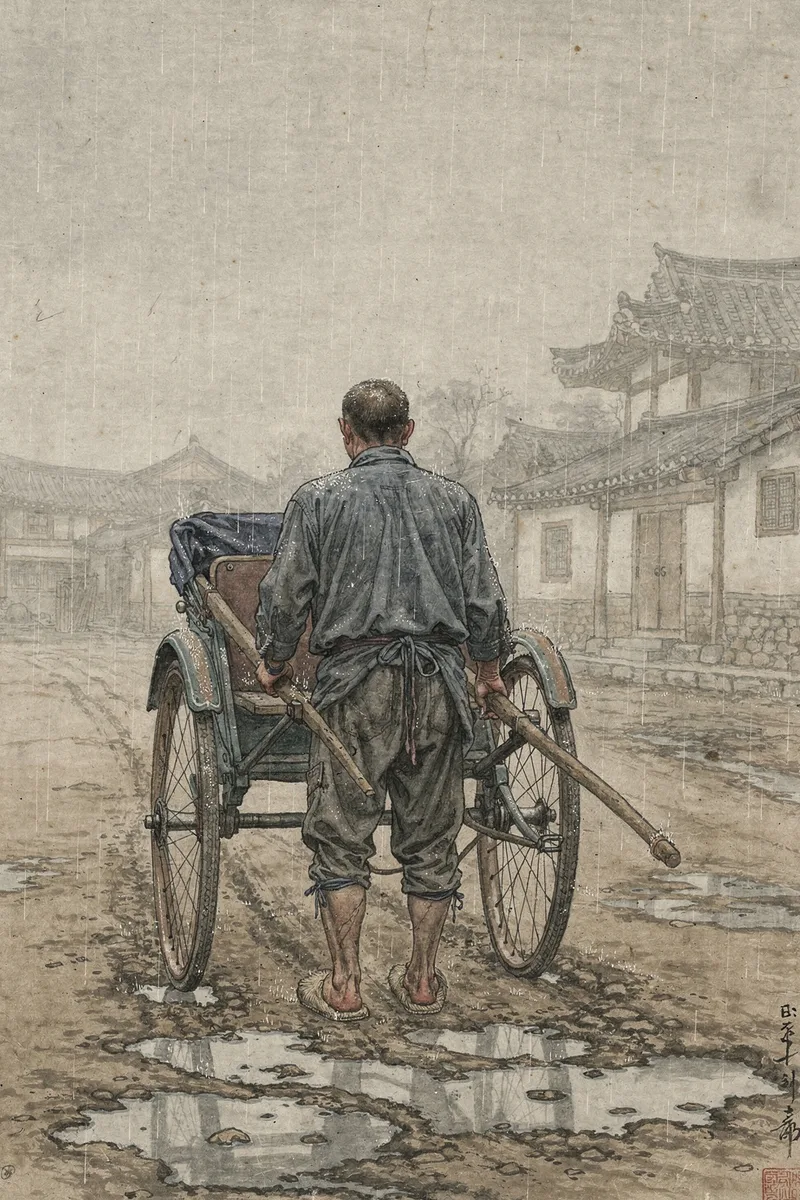
On a raw, drizzling winter day, Kim Cheom-ji — a rickshaw man scraping by outside Dongso Gate — is having the luckiest run of his life.
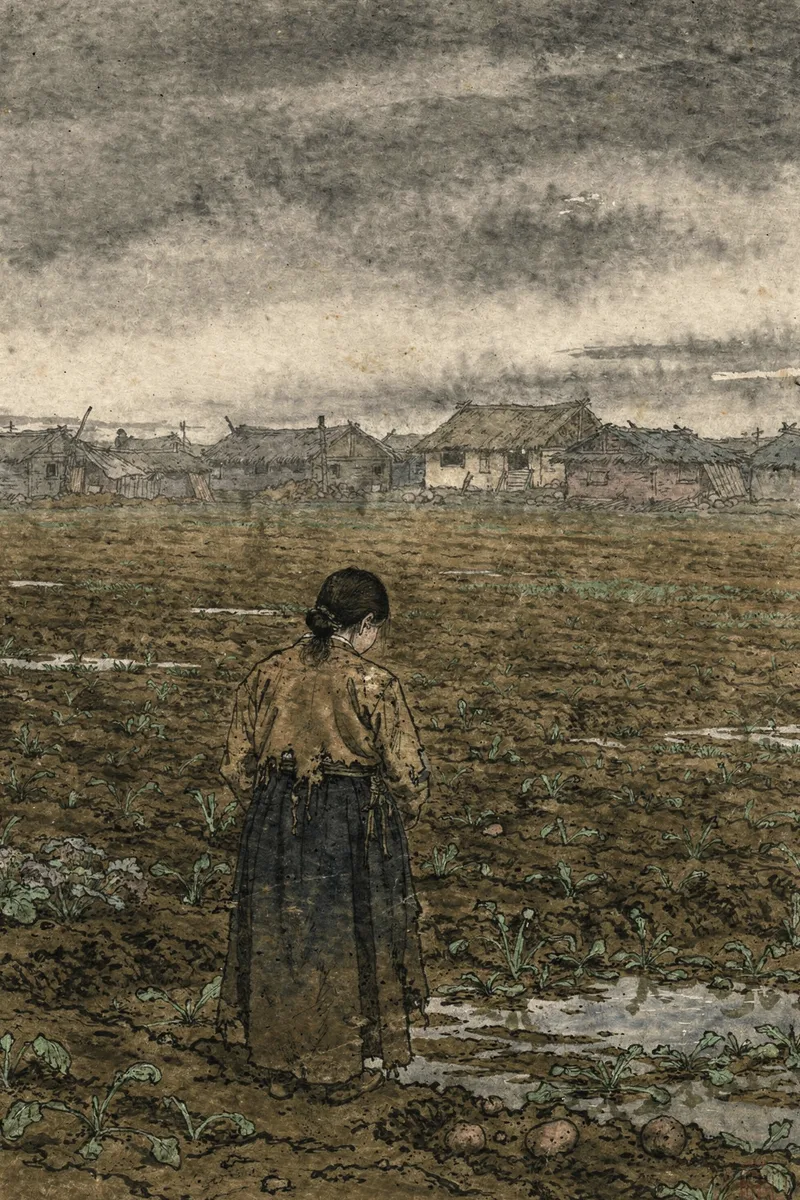
Born to a poor but honest farming family, Boknyeo is sold in marriage at fifteen and drifts, step by step, into the slums of colonial-era Pyongyang, where hunger rewrites every rule she was raised to obey.
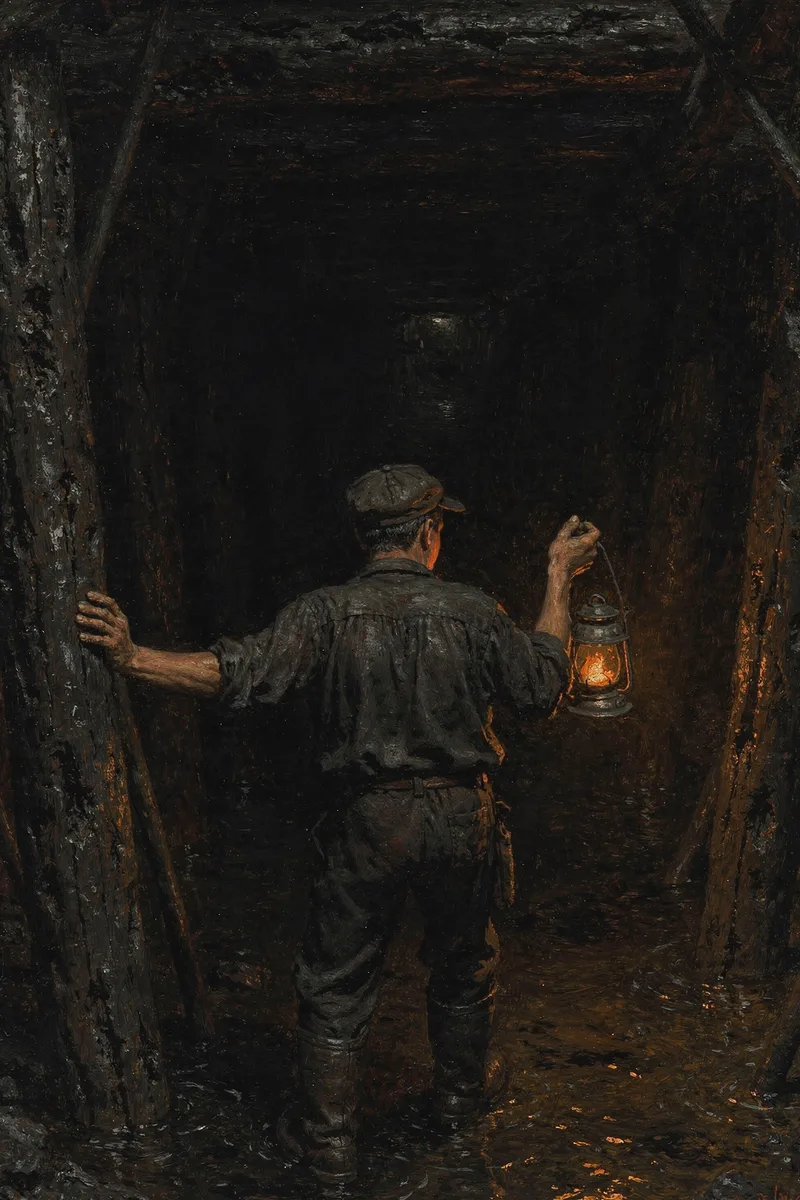
In 1904, Baldomero Lillo—the father of Chilean social realism—descended into the coal pits of Lota and came back with “The Devil's Shaft,” the most anthologized story in Chilean literature.
On a green triangular meadow called Somonte, cut at one corner by the Oviedo–Gijón railway, two motherless twins — Rosa and Pinín — and their gentle cow, la Cordera, are inseparable: «always the three of them».