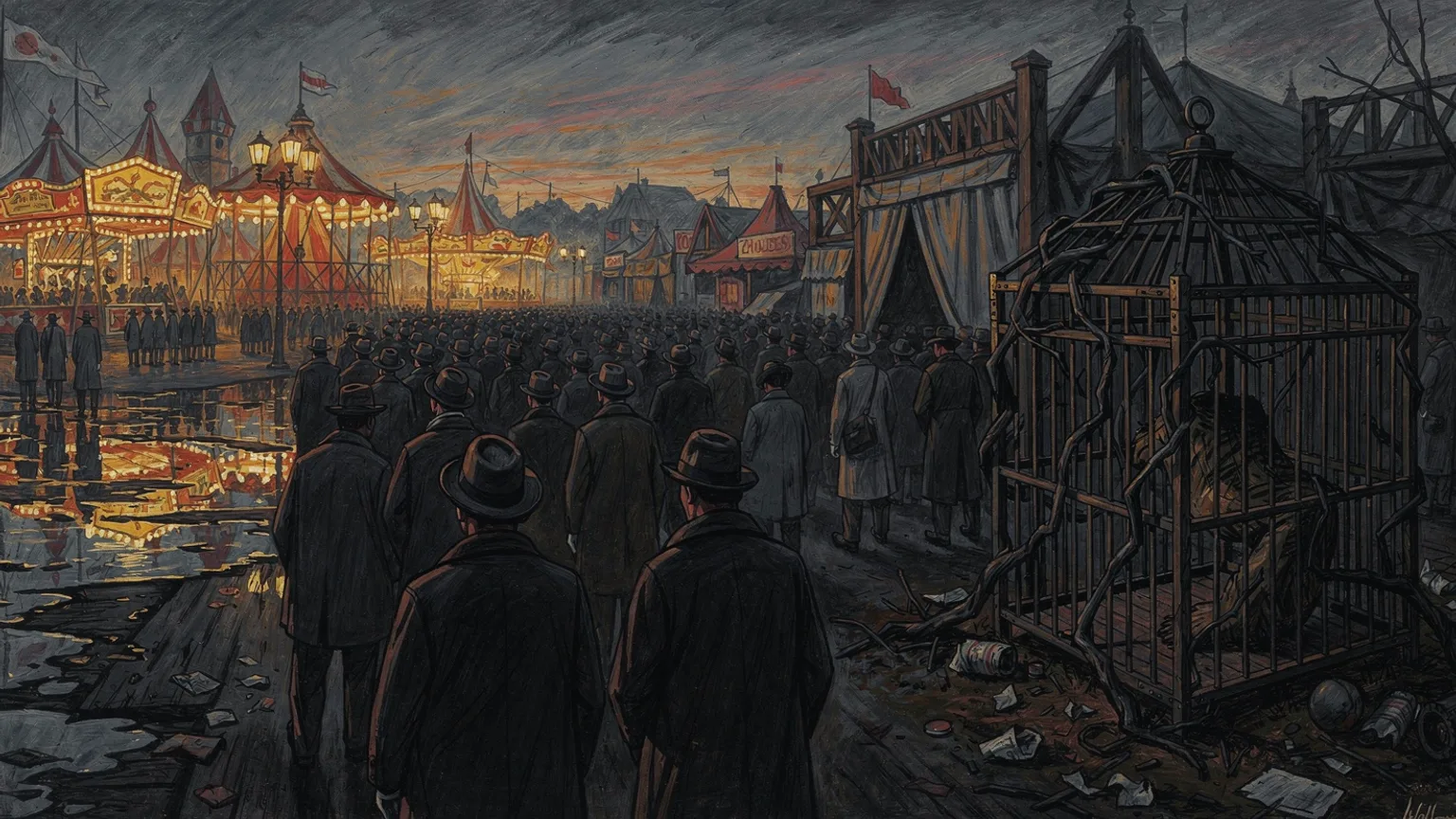
A Hunger Artist
About this story
A hunger artist — once the marvel of his age, watched by whole cities as he fasted for forty days in a straw-strewn cage — finds the world's appetite for his art slowly dying away. Audiences drift off to livelier amusements, his impresario abandons him, and he is shunted into a forgotten corner of a great circus, fasting on long past any date anyone still bothers to count. Franz Kafka's 1922 story is a spare, unnerving parable about an artist's impossible craving for a purity no one wants — and the terrible honesty of its closing confession. Few stories cut so deep with so few words.
By the numbers
About the author
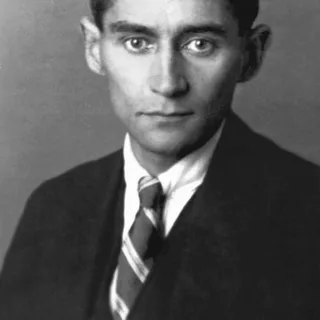
Franz Kafka (1883–1924) was a German-language writer, born into a Jewish family in Prague, today regarded as one of the central figures of twentieth-century literature and the source of the very adjective «Kafkaesque». He published only a handful of works in his lifetime and asked that the rest be burned; his friend Max Brod instead brought out the posthumous novels that secured his fame. His signature works include the novella «The Metamorphosis» (1915) and the unfinished novels «The Trial» and «The Castle». «A Country Doctor» is the title story of the 1920 collection «Ein Landarzt. Kleine Erzählungen» — one of the few books Kafka saw into print himself, and a work whose dreamlike, fragmentary form marks a turn toward the compressed parable that defines his mature short fiction.
Recognition
It was included in the collection «A Hunger Artist», the last book Kafka prepared for publication, which was printed shortly after his death.
Kafka was editing «A Hunger Artist» on his deathbed, a story whose composition he had begun before his throat closed to the point that he could not take any nourishment.
The story was first published in the literary periodical Die neue Rundschau in 1922.
Practice typing
Type this retelling one piece at a time — your progress is saved as you go.
If you liked this
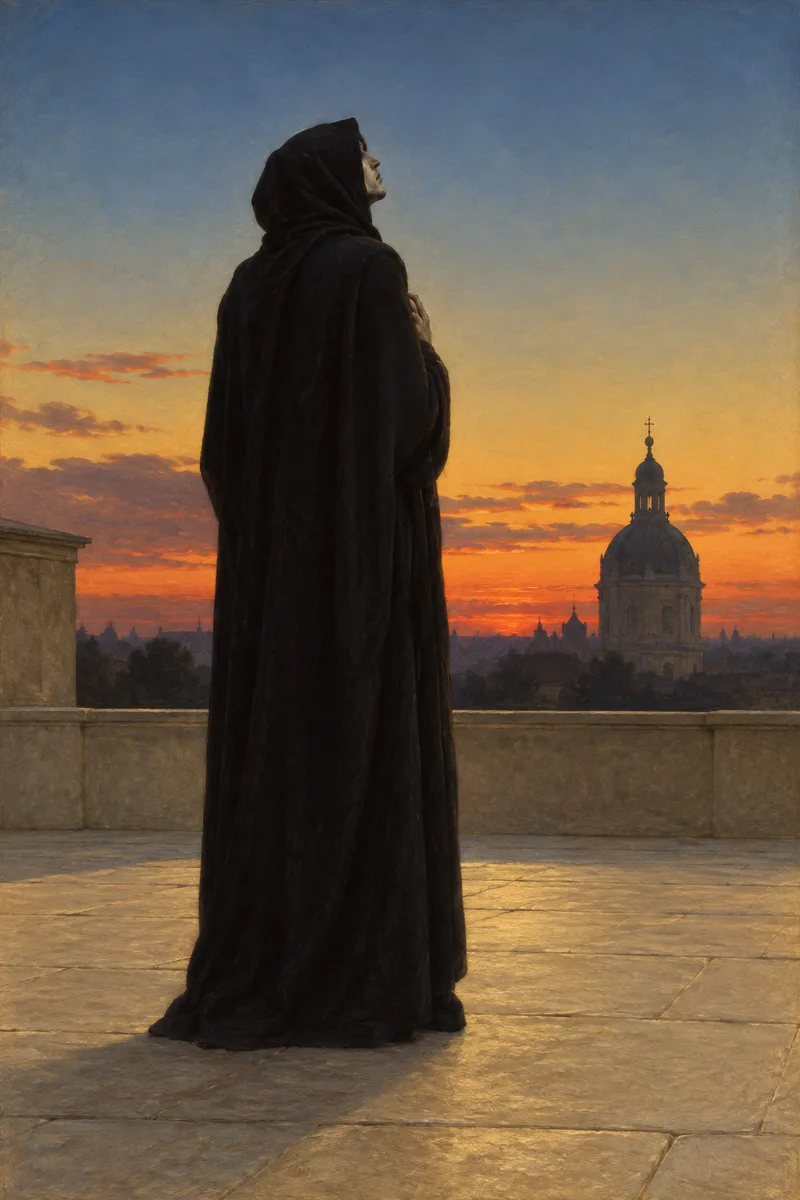
Munich is shining under a silk-blue June sky, and the crowd outside Blüthenzweig’s art shop keeps drifting back to a photograph in the window: a Madonna with bare shoulders and a heavy, sensual gaze, painted, the gossip goes, from the artist’s sweetheart, a little milliner.
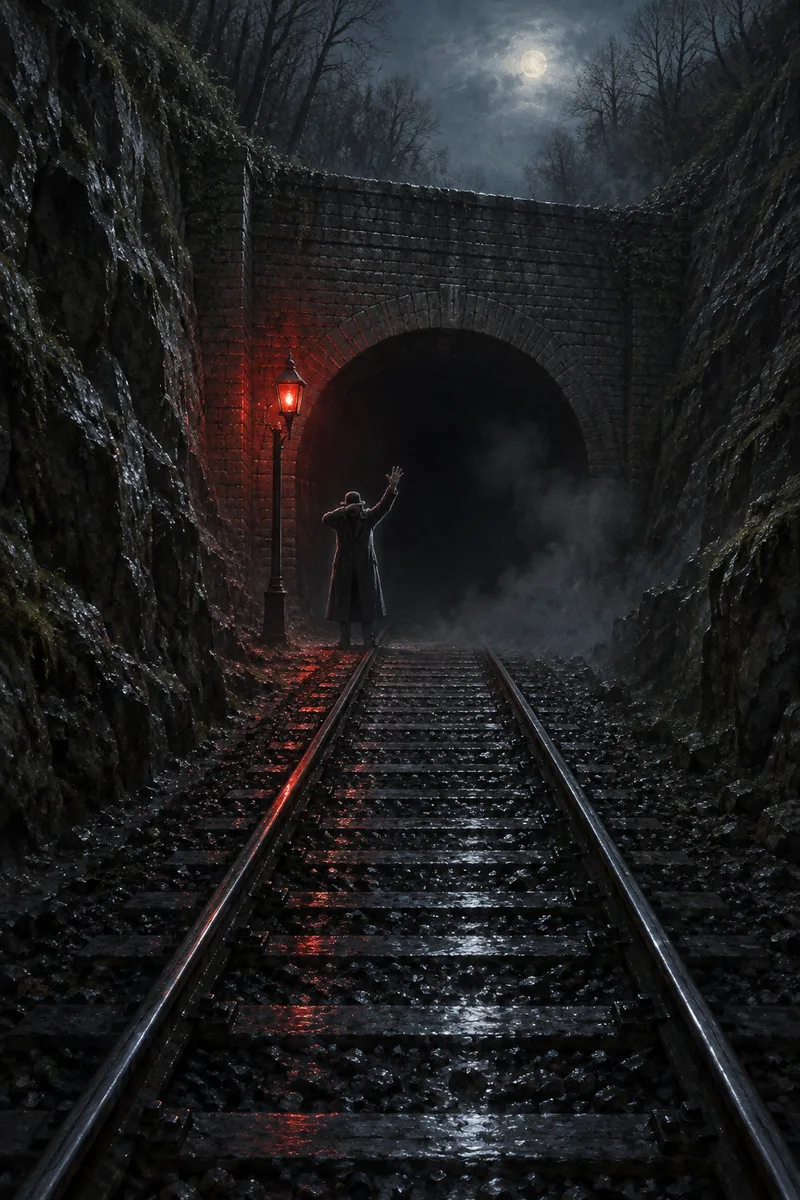
At the bottom of a damp railway cutting, beside the black mouth of a tunnel, a lonely signalman keeps watch over the line — and over a figure no one else can see.
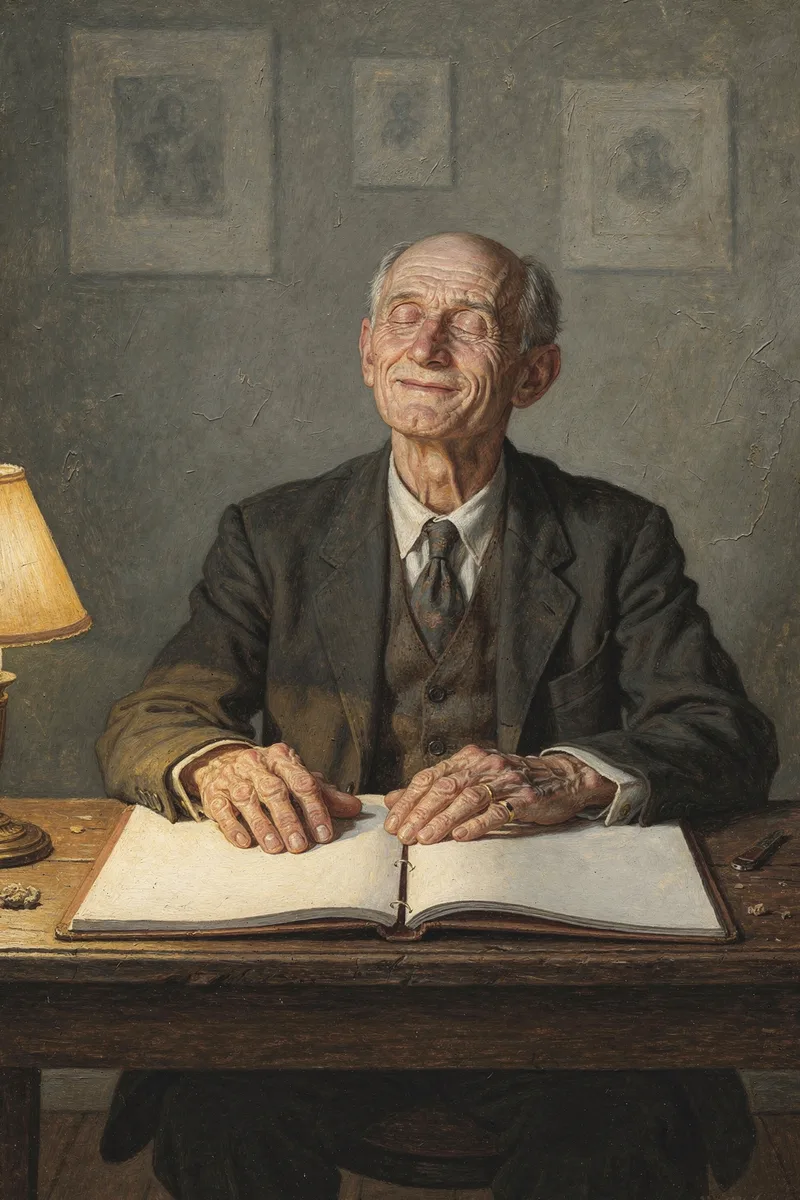
An old art dealer, his trade withered by the great German inflation, travels to a quiet provincial town to call on one of his oldest customers — a blind, retired collector who spent sixty years amassing a priceless hoard of prints and engravings.
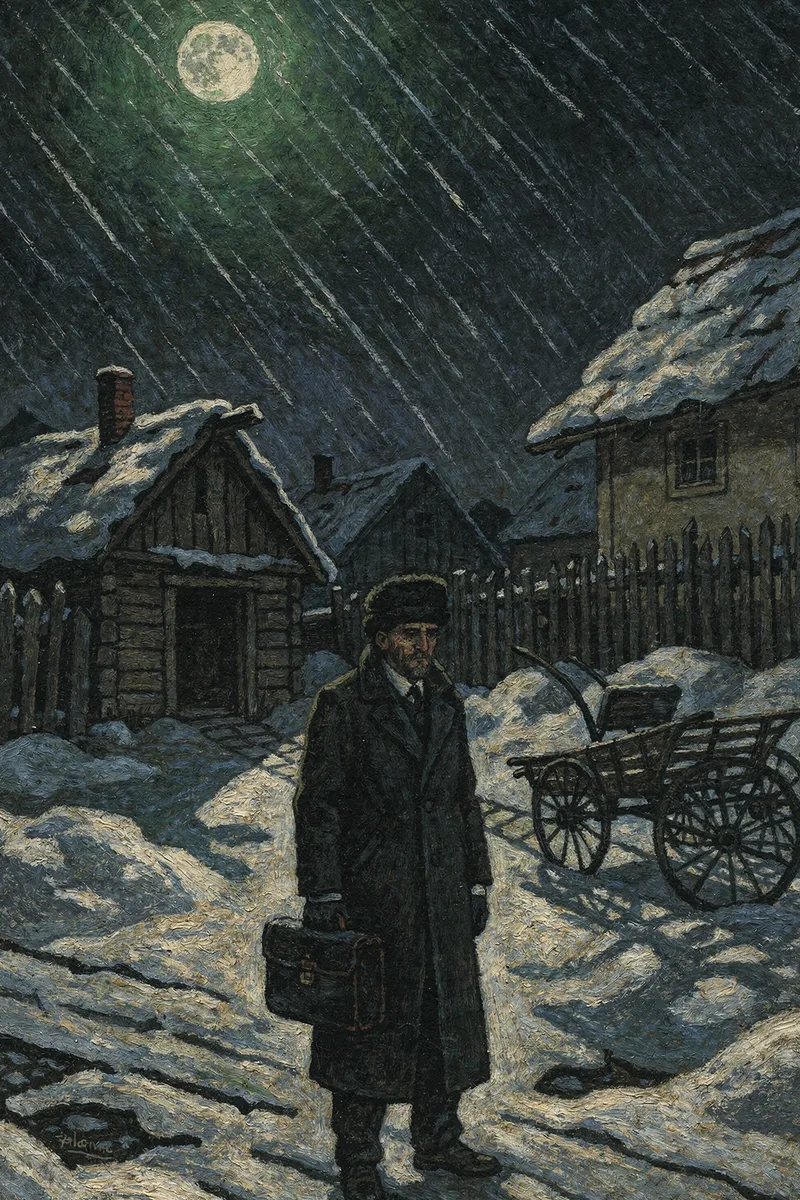
On a blizzard night a country doctor is torn from his bed to reach a patient ten miles off.