The Beggarwoman of Locarno
About this story
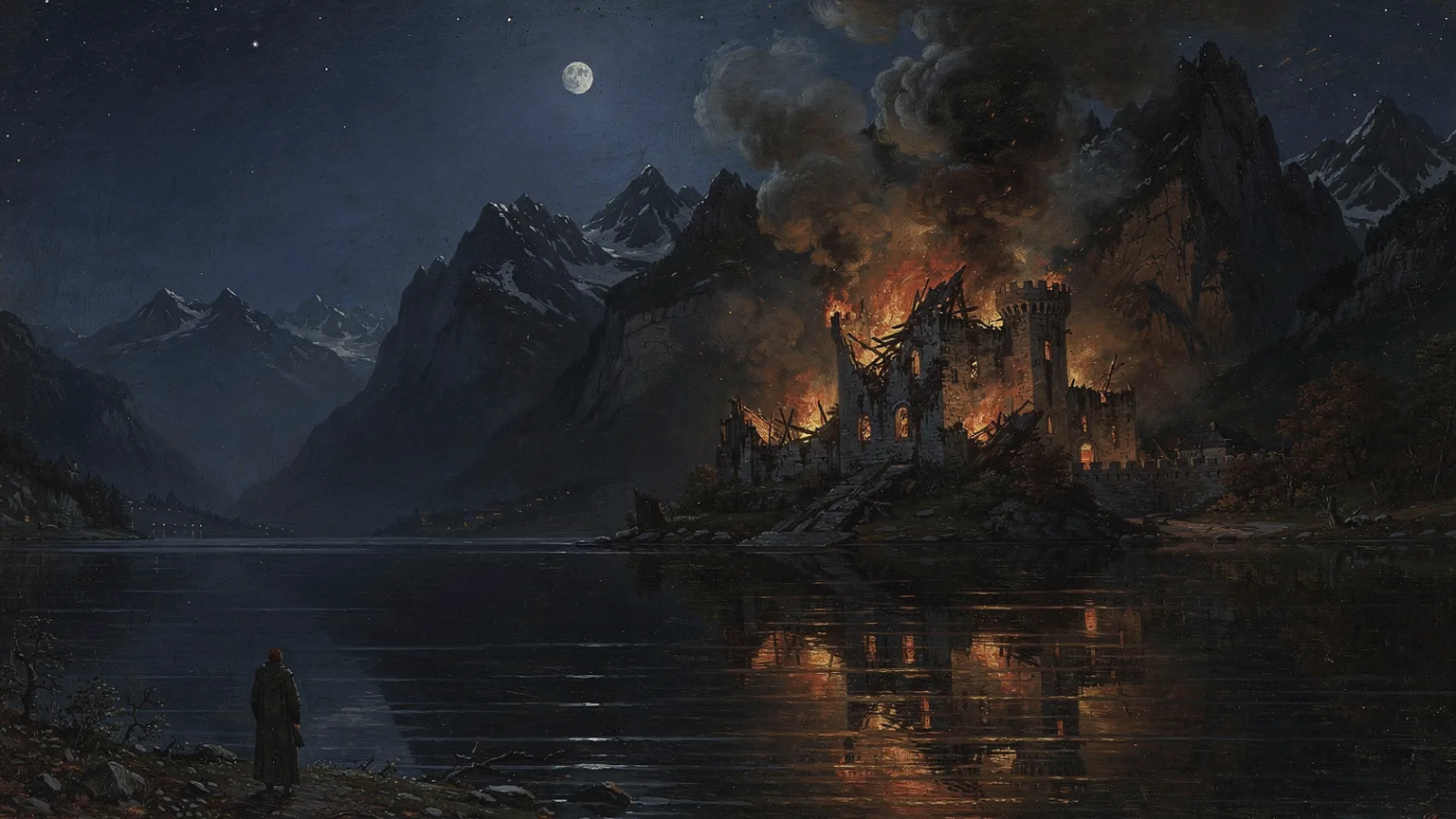
Near Locarno, in a crumbling castle at the foot of the Alps, a nobleman orders a sick old beggarwoman to drag herself across the room — and she collapses and dies. Years later, as debt closes in and a buyer comes to save him, the empty room begins to stir at midnight: the rustle of straw, faltering footsteps, a groan behind the stove. What begins as a servants' rumor tightens into a terror the marchese cannot outrun. In barely three pages, Heinrich von Kleist — the incandescent genius of German literature admired by Kafka and Thomas Mann — forges one of the most perfect ghost stories ever written, where a single act of cruelty burns a whole house to the ground.
By the numbers
About the author

Heinrich von Kleist (1777–1811) was a German dramatist, poet and short-story writer, today regarded as one of the greatest and most singular figures of German literature. Though largely misunderstood in his lifetime, he was later championed by Ludwig Tieck and admired by writers from E. T. A. Hoffmann to Franz Kafka and Thomas Mann. His signature works include the plays «The Broken Jug», «Penthesilea» and «Prince Friedrich of Homburg», and the novellas «Michael Kohlhaas», «The Marquise of O...» and «The Earthquake in Chile». «The Beggarwoman of Locarno», a densely compressed ghost story first printed in his own «Berliner Abendblätter» in 1810, is among the shortest of his tales and is widely counted as a masterpiece of the German novella. Kleist took his own life at the Kleiner Wannsee near Berlin in 1811, aged 34.
Recognition
Where in all our poetic literature is there anything more filled with despair than the little, almost epigrammatically horrifying tale of «The Beggarwoman of Locarno»?
In The Beggarwoman of Locarno Kleist has taken the trite features of a ghost story, and instilled into them an entirely new dimension. The physical phenomenon of the haunting has been invested with a moral, indeed metaphysical undercurrent.
What shakes us in «The Beggarwoman of Locarno» is the inexorably sustained dramatic form itself.
The execution is superb, but to my feeling it is neither a ghost story, nor a fairy tale, nor a novella.
Practice typing
Type this retelling one piece at a time — your progress is saved as you go.
If you liked this
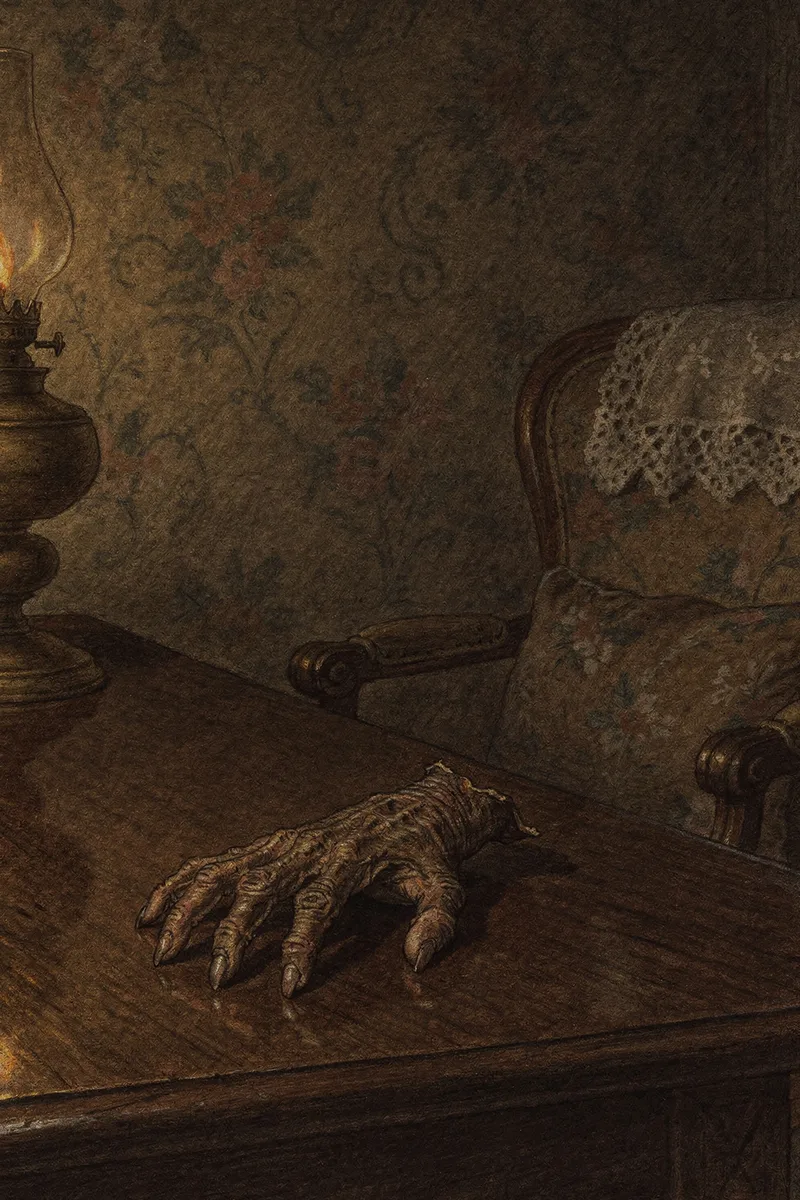
A dried, mummified talisman carried home from India promises three wishes to whoever holds it — but the old fakir who cursed it meant to prove that fate rules our lives, and that those who meddle with it do so to their sorrow.

In a Moravian tavern the gamekeeper Hopp trades twelve bottles of cherry brandy for a starved hunting dog of faultless build, marked on the brow with a white line that branches like a fir twig.
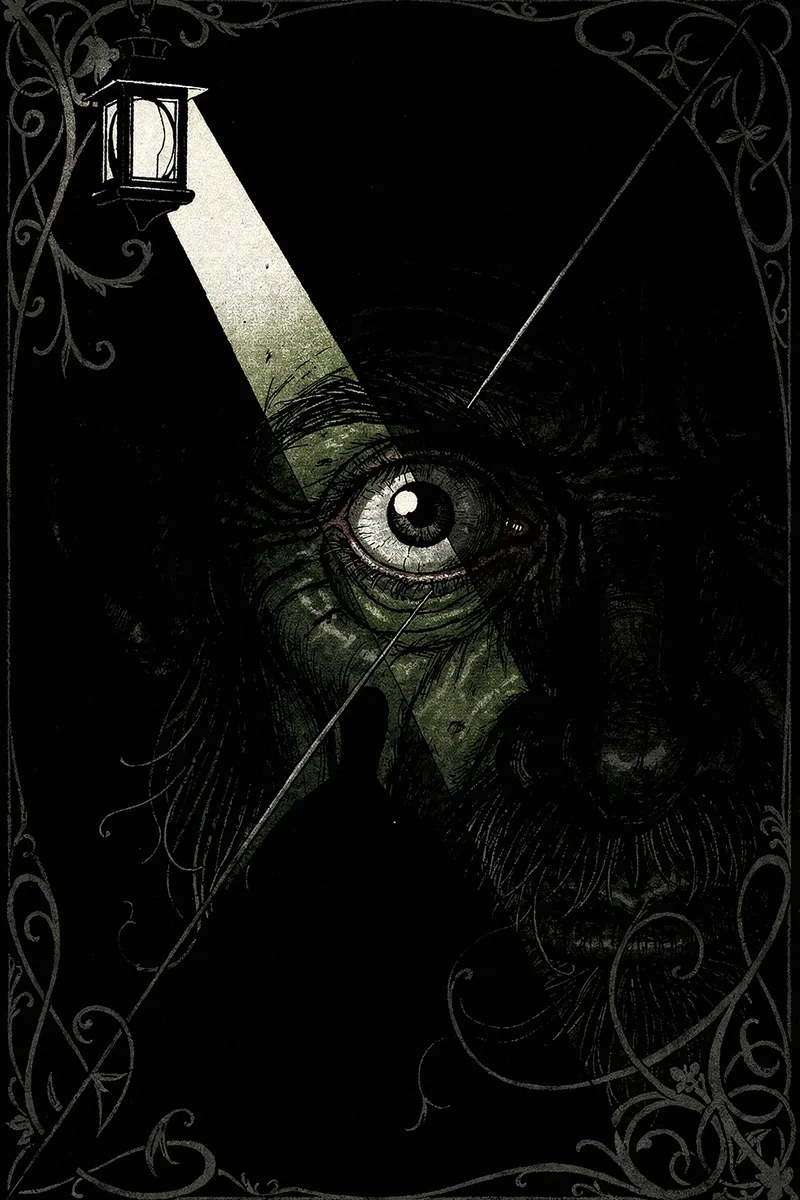
A nervous narrator swears he is not mad — even as he confesses how, over seven nights, he crept into an old man’s room to murder him for the sake of a single pale, filmy “vulture eye.”
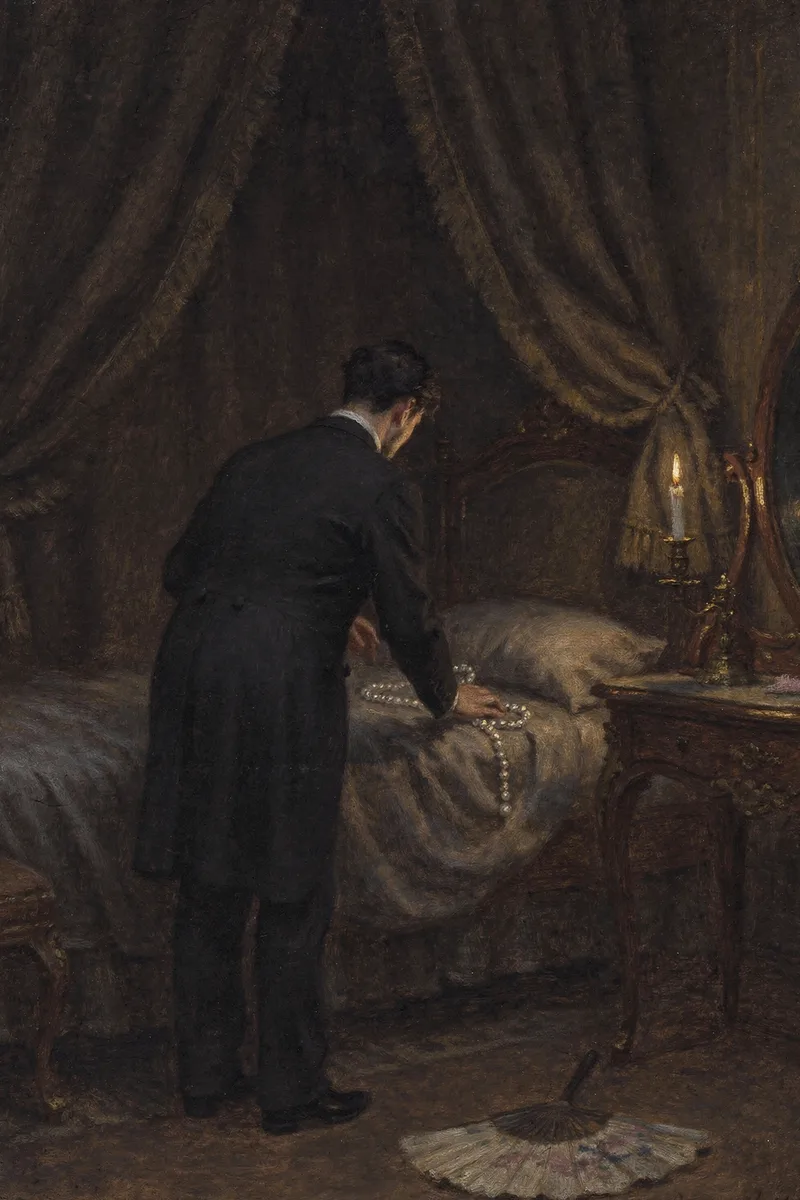
Six months a widower, the Count d'Athol refuses to believe his wife is dead.