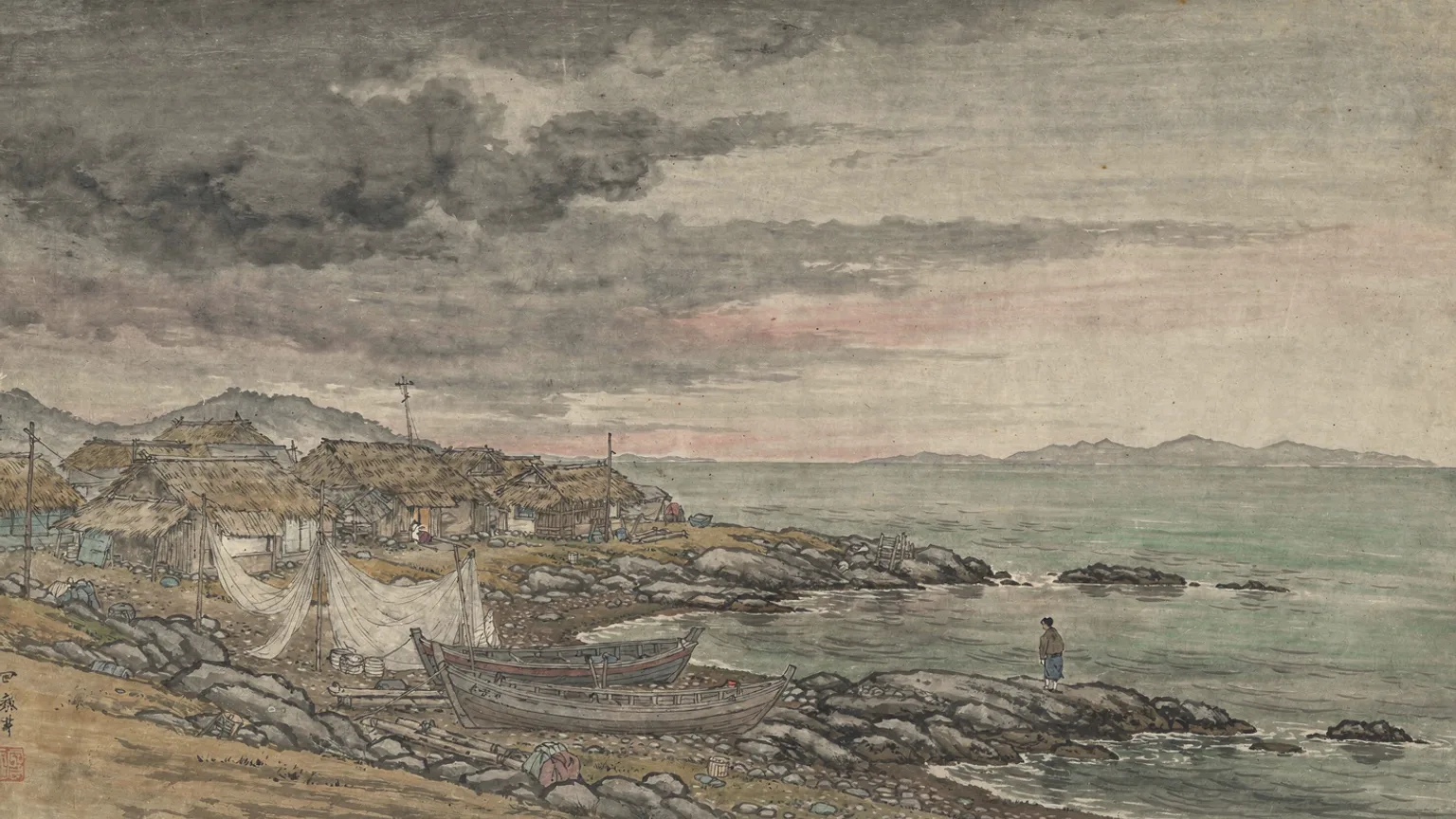
The Idiot Adada
About this story
On a windswept island off Korea’s northern coast, a mute woman the villagers call Adada moves through a world that measures every person by the money they can grasp. Gye Yong-muk’s 1935 story sets a soul of pure, wordless tenderness against an age intoxicated by gold, in prose long admired for its chiselled, pared-down precision. Type it sentence by sentence to feel how much a Korean line can hold when almost nothing is spoken aloud.
By the numbers
About the author
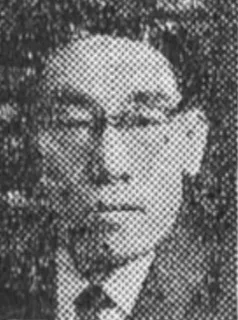
Gye Yong-muk (1904–1961) was a Korean short-story writer born into a wealthy landowning family in Seoncheon, North Pyongan Province, and educated at Toyo University in Japan. After a modest debut in 1925 he fell largely silent for several years, returning in 1935 with «The Idiot Adada», the story that established his literary name. A devotee of «pure literature» who kept clear of the ideological camps of his day, he is remembered for refining the language, technique and form of the modern Korean short story.
Recognition
A story of a mentally handicapped woman, the text offers a critique of contemporary social mores and the all-encompassing pursuit of material gain, but the economic question is reduced to the level of basic human greed rather than analyzed in terms of class conflict.
It is the story of a good-hearted person who has no choice but to live amid misfortune and suffering; and the fact that the cause of that suffering springs from an innate condition deepens the tragedy of the tale all the more.
The victim Adada is read as a figure embodying purity, beauty and humanity, whereas the perpetrators — her husband and Surong — are analysed as greedy characters governed by mammonism and the worship of money above all else.
The pure idiot woman Adada is the emblem of the one soul that stays unblemished in a corrupt world that turns money into a fetish.
Practice typing
Type this retelling one piece at a time — your progress is saved as you go.
If you liked this
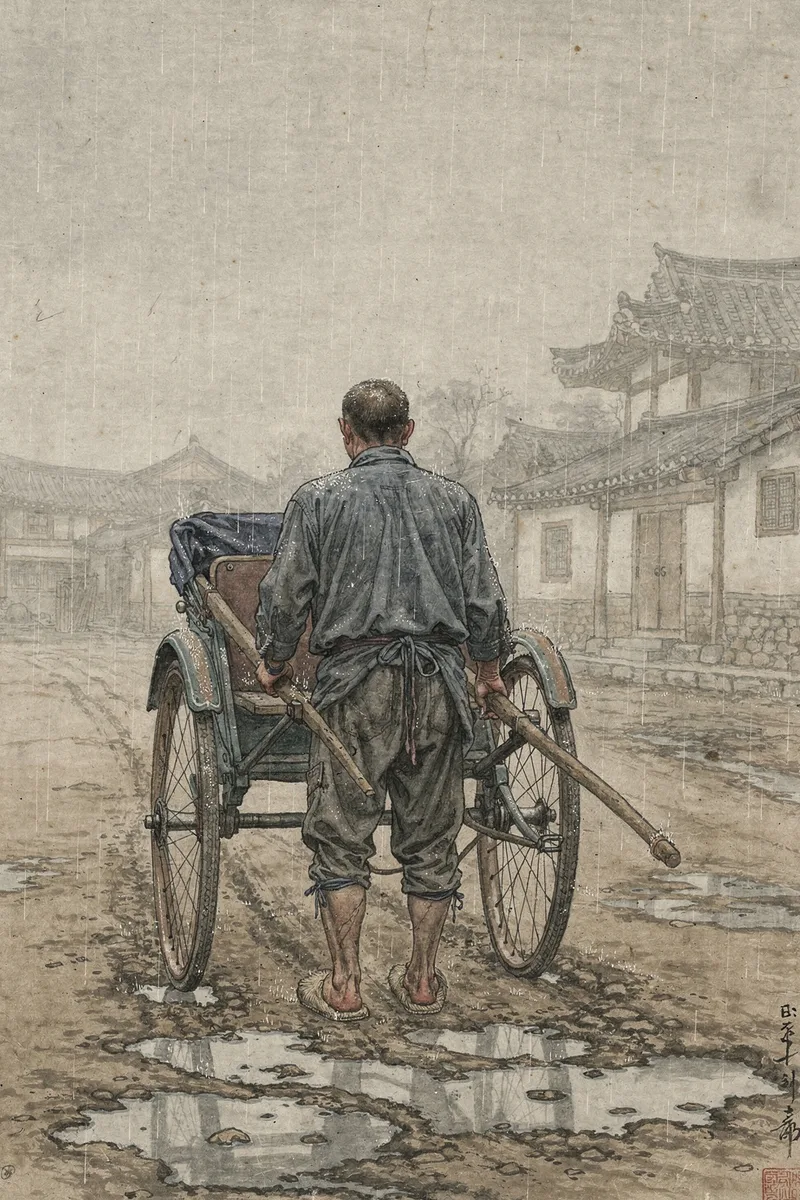
On a raw, drizzling winter day, Kim Cheom-ji — a rickshaw man scraping by outside Dongso Gate — is having the luckiest run of his life.
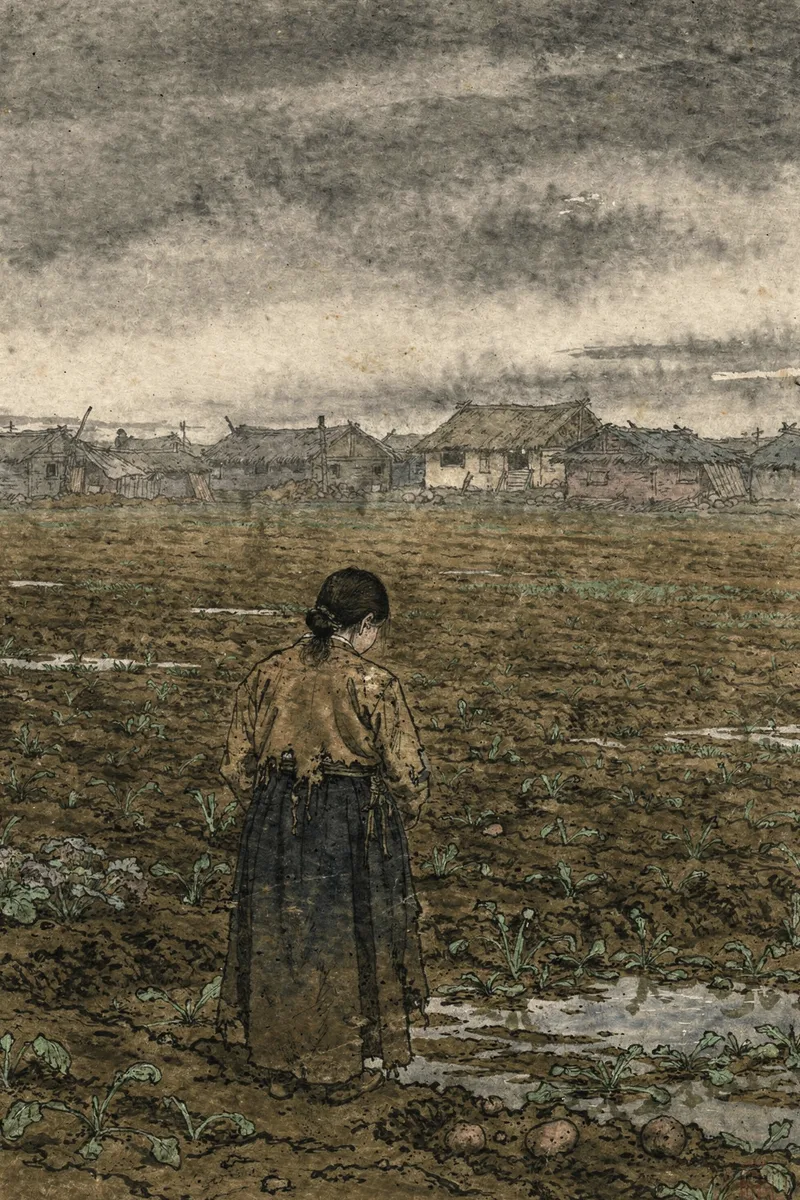
Born to a poor but honest farming family, Boknyeo is sold in marriage at fifteen and drifts, step by step, into the slums of colonial-era Pyongyang, where hunger rewrites every rule she was raised to obey.
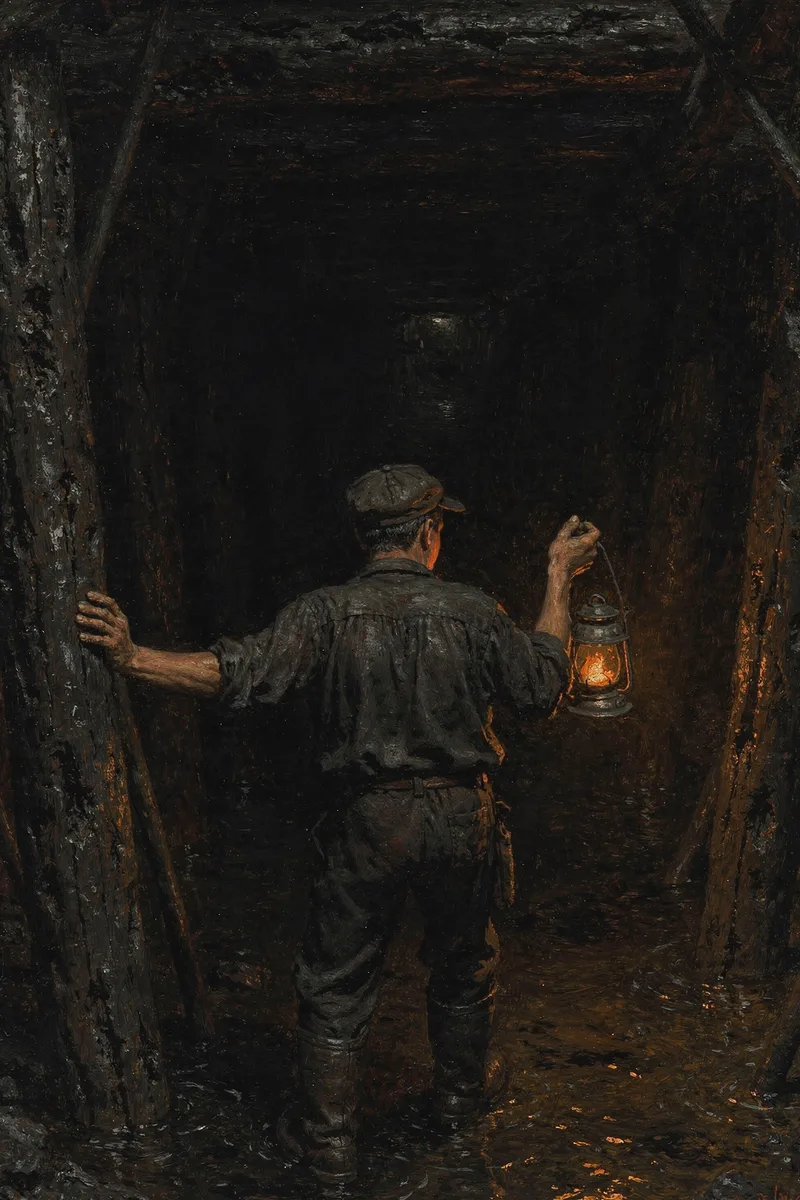
In 1904, Baldomero Lillo—the father of Chilean social realism—descended into the coal pits of Lota and came back with “The Devil's Shaft,” the most anthologized story in Chilean literature.
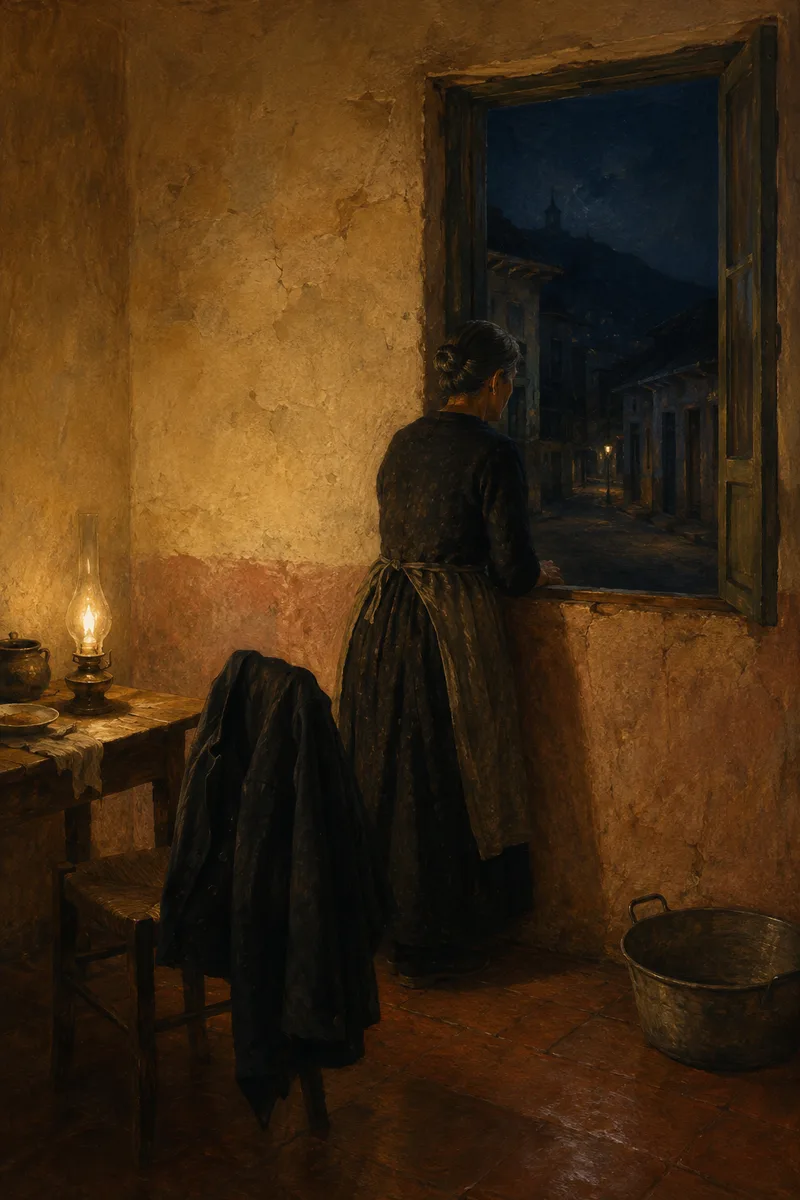
Nobody in the neighbourhood remembers her real name.